

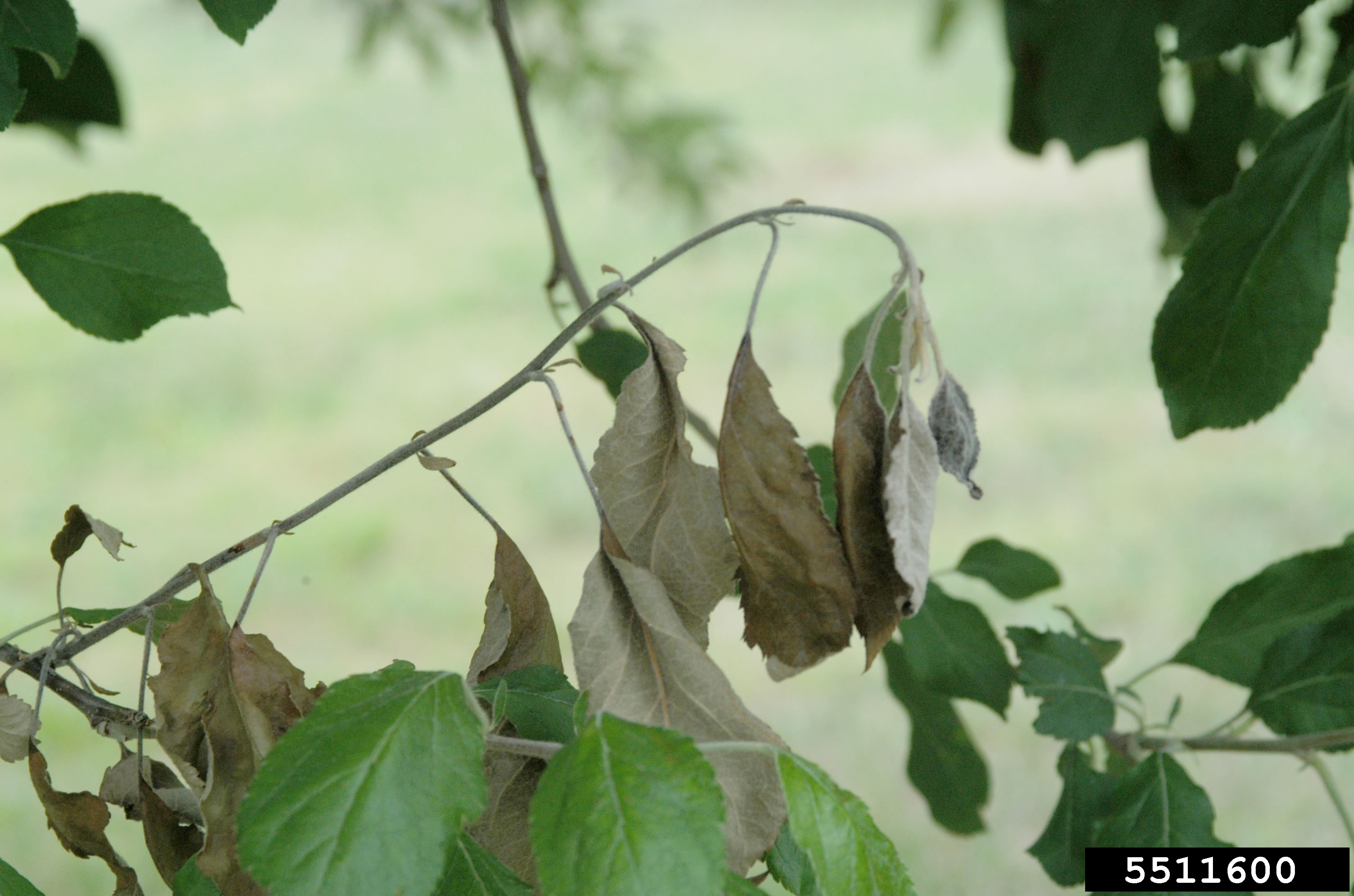
Fireblight
Erwinia amylovora
Fireblight is a bacterial disease caused by Erwinia amylovora. Fireblight infects trees in the Rosaeceae family including apple, crabapple, pear, raspberry, hawthorn and cotoneaster.
Fireblight gives the tree an appearance of being scaled by fire. Once a tree has this it will inevitably die. This disease can be slowed down if caught early by pruning out the infected tissue.
Fireblight infects the tree through the blossoms, leaves or wounds in the stems or trunk. The bacteria overwinters in crevaces on stems or the trunk. It spreads by rain, insects, or unsterilized pruning tools. Fireblight thrives in warm temperatures and high humidity. Sometimes fireblight is severe following hail storms which damages leaves and branches, and provide entry points for the bacteria. Fireblight thrives in high nitrogen conditions so be wary of your fertilizer use.
Symptoms:
- Flowers: Infected flowers wilt and turn brown. The pattern of flower damage may be random on a tree. Sometimes pollinating insects such as bees inadvertently transfer the bacteria as they move from flower to flower.
- Branch tips: leaves wilt and turn black as if scorched by fire. The tips of branches take on a 'shepherd's crook' appearance.
- Branches and trunk: bark has sunken, discoloured areas, cracks, bark-splitting or peeling. Sometimes these lesions emit a watery ooze.
Control:
- Prune out all infected branches to stop the infection from moving further into the tree, at least 10 cm (4") below the site of the infection.
- Do not prune when the tree is wet – this will also spread the disease!
- To locate a good place to make the cut, find the lower edge of the infection on the branch and then trace that infected branch back to where it is attached to another branch or the trunk. Cut out the branch without cutting into the branch collar. Do not leave stubs. For general fruit tree pruning information see: USask Fruit Tree Pruning Video
- Sterilize your pruners in between each cut to avoid spreading the disease. Use a disenfectant like Lysol (at label directions for concentration) or an alcohol-based disinfectant in a spray bottle. Spritz it on your pruning tools and wipe with a soft cloth. Do not use bleach as it will corrode your tools.
- Burn the cuttings or bag them and put them in the garbage.
- Do not fertilize trees with fireblight – lush growth can make the problem worse.
If the bacteria has entered the trunk of the tree, it’s best to remove the tree entirely, including the stump. Infected tissue allowed to remain in the planting is a source of bacteria to infect the rest of your trees. Once the main trunk is infected, trees cannot be cured of the disease.
Related research: Michigan State University to lead new study on ways to control fireblight (2020)