

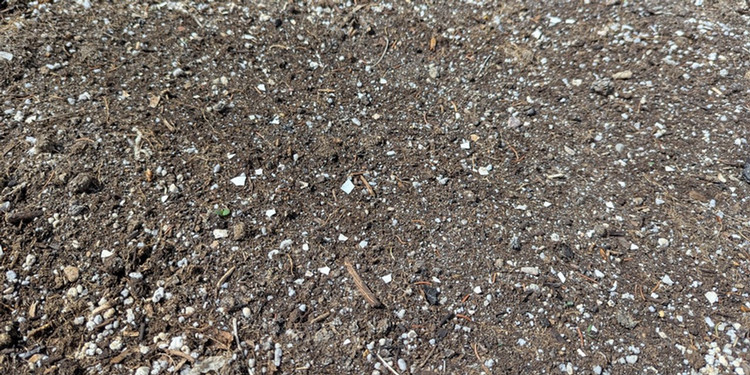
Peat and Peat Alternatives
Peat moss is an effective growing medium but comes with some issues
What is peat moss?
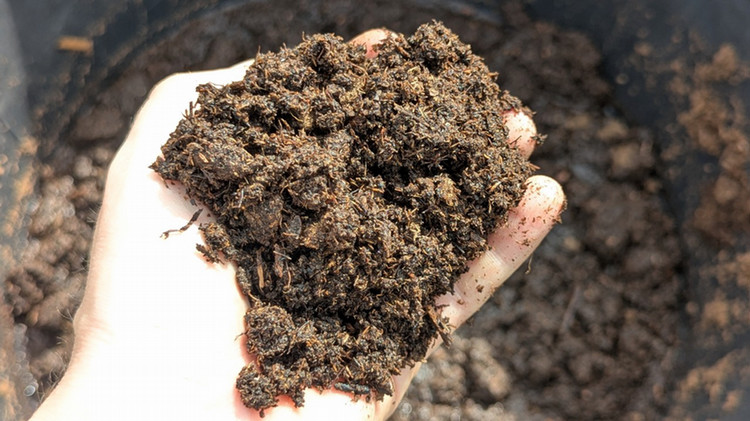
Peat or peat moss is the partially decomposed remains of various types of bog-based plants. It accumulates in bogs and similar environments over thousands of years through the slow decomposition of the plant matter under anoxic conditions (no oxygen). It forms dense layers at different stages of decomposition, with the darker more decomposed layers further down and less decomposed, lighter layers closer to the top.
Why do we use it?
Objectively, peat is an excellent soilless media for plant growth and maintenance. It holds nutrients and water well, has good aeration, has suitable pH and initial nutrient levels for plant growth, and is generally free of weed seeds, pests and pathogens. It is also relatively low cost and reliably available compared with most alternatives. For these reasons, it is used extensively as a soil amendment as well as for growing food, ornamental plants, and even cannabis.
What are some issues with peat?
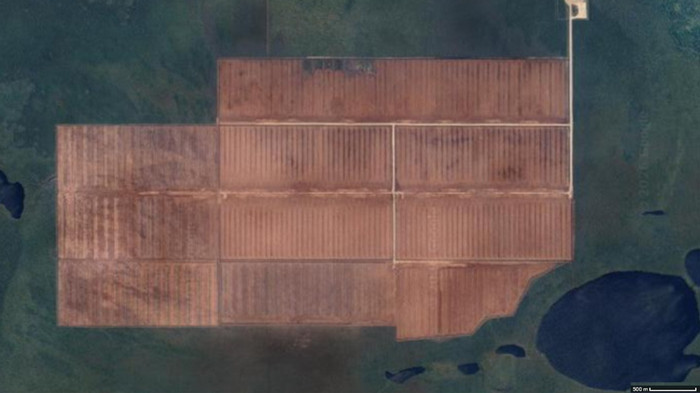
Peat is essentially a non-renewable resource as it takes thousands of years to form under very specific conditions. Canada has approximately 119 million hectares of peatlands, and only 0.03% of this area is mined. This might seem small, but the area affected can be substantially larger. For example, the draining of peat bogs can make downstream environments more acidic. This can affect the local plants, animals, water, and soils in unintended and sometimes detrimental ways. The bogs themselves provide very large carbon sinks (storage) relative to their overall area – despite only covering 3% of the total land area in the world, approximately 30% of all global soil carbon is stored in peatlands. This is more than the total amount of carbon contained in all the forests of the world. In addition, the total greenhouse gas emissions from peat mining are quite high—1.6 million tonnes CO2 equivalent in 2023. This is the same amount of carbon produced annually by driving 373,000 cars. Peat is essentially the “fossil fuel” of the horticultural industry.
What are the alternatives?
These are some non-peat growing medias that are often used to replace peat either partially or totally. Each has its own pros and cons but is worth exploring if you would like to lower your peat usage.
Coconut Coir (pronounced KOY-er)
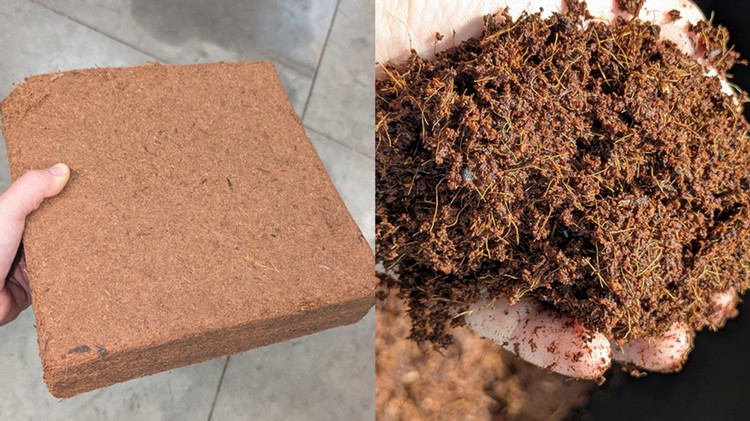
Probably the most widely available peat alternative. It is produced as a by-product of the coconut industry. Similar in texture to peat, it is made of the fibrous outer husk of the coconut. It comes as loose fluffy material, or as compressed bricks that require soaking.
Pros:
- Comes from a relatively renewable resource (coconuts).
- Neutral pH, high water holding capacity, high porosity, and slow degradation support plant growth and health.
- Similar texture to peat; can vary based on source.
Cons:
- Currently is produced in tropical countries like Sri Lanka, the Philippines, or Mexico and so the cost of transport, both economically and environmentally, can be high.
- Not always reliably available, especially depending on location and time of year. More sensitive to supply chain disruption.
- Can contain high levels of salts, especially of sodium and potassium. This can cause problems with nutrient uptake and plant health. Must ensure that material is thoroughly rinsed to leach out excess salts.
- Hard to trace origins. Some coconut trees sprayed with pesticides such as neonicotinoids which contribute to bee death. Workers in the industry can also be at risk due to dust generated during manufacture.
Decomposed Forestry Industry By-Products
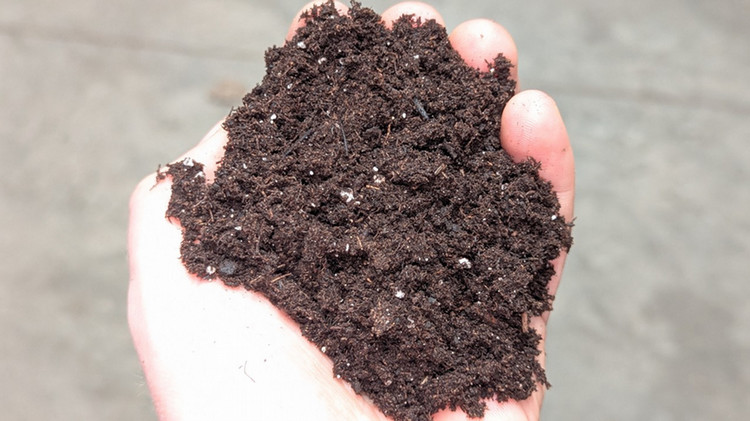
These products are made of heavily decomposed bark and/or wood fibres. They are produced as a by-product of the logging and forestry industry. Here in Canada, most of these products are made from softwoods like spruce and pine. Once fully broken down, the media resembles topsoil.
Pros:
- Excellent aeration.
- Great structural stability.
- Often locally available in areas where forestry is a major industry (e.g., Western Canada).
- Makes use of a waste product that would otherwise be discarded.
Cons:
- Denser and heavier than peat.
- Poorer water retention compared to peat. May need to water more often.
- Requires energy to produce, manage properly (but less than peat or coco coir).
- Not always available, depending on location.
- Potential to immobilize (“tie up”) nitrogen fertilizer if not fully decomposed.
Sphagnum Moss
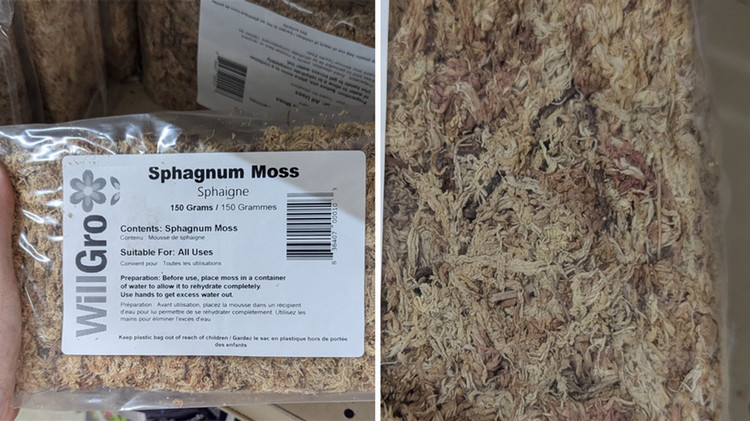
These are various species of sphagnum mosses that are harvested fresh, dried, and processed into a fine media similar to traditional peat moss. It is also used in an unprocessed form for orchid propagation, decorative applications, and packaging material.
Pros:
- Relatively renewable. It can be farmed and only takes approximately five years to regenerate. Can be grown on former peat mines as a reclamation strategy.
- Has similar pH and nutrient-holding capacity, with slightly lower water retention but higher porosity and air content.
- Excellent performance growing cucumber, tomato, and lettuce.
Cons:
- Not reliably available or economical in large quantities. Can be quite expensive.
- Most often found as dried, unprocessed plant fibres. Can be difficult to source processed sphagnum products.
Compost (various types)
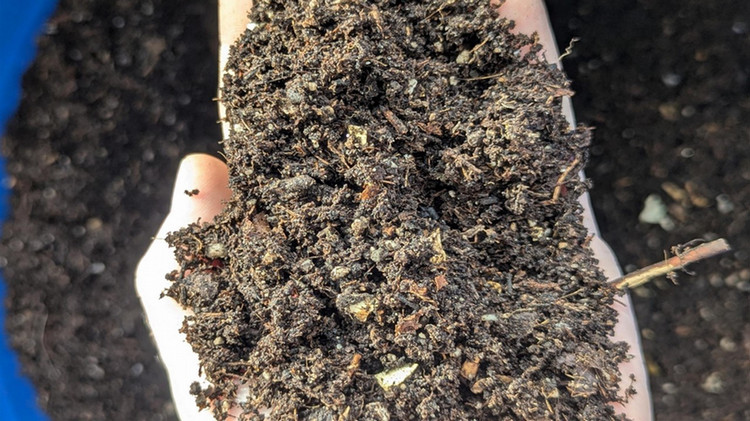
Composts of various styles are an excellent substitute for peat. Traditional compost is created through the decomposition of plant-derived organic matter. Mushroom compost is the reclaimed casing layer used in mushroom cultivation. Composted manure is decomposed and aged manure, usually from sheep or cattle. The characteristics of the compost are based on the type of material used to make it and can vary widely.
Pros:
- Excellent soil amendment in general. Provides plant nutrients and enhances water holding capacity and drainage.
- Can provide a suite of microbes that can be beneficial to plant health.
- Extremely economical when produced locally. Municipalities often have a public composting program with compost available for residents.
- Can make it yourself by home composting. Gives you complete control of inputs and eliminates the carbon footprint involved with production and transport of other amendments, including commercially produced composts. And it’s essentially free.
Cons:
- All composts are highly variable. Depending on inputs used and method of production, the result can vary widely in quality.
- Mushroom compost is often high in salts and needs to be rinsed (or used in smaller quantities) to prevent issues.
- Manure–based composts can contain unwanted substances (weed seeds, hormones, antibiotics, pathogens, etc.)
Gardener’s Note: Homemade compost is the author’s absolute favourite peat alternative/soil amendment.
Recommendations
While it is difficult to avoid using peat (it’s in a LOT of products), with some diligence and awareness, we can greatly reduce our consumption. Instead of using fully peat-based media, consider using one of the above alternatives in its place, either as a blend or to fully replace it (if feasible). Blending different types of media can often provide the benefits of both products and is a great way to incorporate locally produced, less impactful inputs (like compost!). Try mixing in one-third to one-half of your preferred alternative into your potting soil mix in place of peat. If using something heavier and denser (like decomposed bark), remember to add some perlite or vermiculite to help with aeration.
Another great option is to reuse your media. Just because you used it once doesn’t mean it’s no longer any good. Unless the plants had a disease or other problem, the potting soil should be perfectly fine to reuse again (and again). It is good practice to rinse or flush to remove any built up or excess salts, and it also can help to “fluff up” the media to help increase the air spaces and reduce any compaction that has occurred. This is also a great time to add in some new materials to the mix, such as coco coir or compost.
References
Canadian Sphagnum Peat Moss Association. (2023). Alternative materials and the wise use of peat (Part 4). https://peatmoss.com/files/resources/Part-4-Alternative-Materials-and-the-Wise-Use-of-Peat.pdf
Goldan, E., Nedeff, V., Barsan, N., Culea, M., Panainte-Lehadus, M., Mosnegutu, E., Tomozei, C., Chitimus, D., & Irimia, O. (2023). Assessment of manure compost used as soil amendment—A review. Processes, 11(4), Article 1167. https://doi.org/10.3390/pr11041167
Hussey, T. (2016) Peat vs Coco Coir. KiS Organics. https://www.kisorganics.com/blogs/news/99806785-peat-vs-coco?_pos=1&_sid=495fae932&_ss=r
Joosten, H., Sirin, A., Couwenberg, J., Laine, J., & Smith, P. (2016). The role of peatlands in climate regulation. In A. Bonn, T. Allott, M. Evans, H. Joosten, & R. Stoneman (Eds.), Peatland restoration and ecosystem services: Science, policy and practice (pp. 63–76). Cambridge University Press. https://doi.org/10.1017/CBO9781139177788.005
Peery, J. (2022). What’s in your bark-based growing media? GrowerTalks. https://www.growertalks.com/Article/?articleid=25872
Pouliot, R., Hugron, S., & Rochefort, L. (2015). Sphagnum farming: A long-term study on producing peat moss biomass sustainably. Ecological Engineering, 74, 135–147. https://doi.org/10.1016/j.ecoleng.2014.10.007
Surette, C., Brun, G. & Mallet, V. (2002) Impact of a Commercial Peat Moss Operation on Water Quality and Biota in a Small Tributary of the Richibucto River, Kent County, New Brunswick, Canada. Arch. Environ. Contam. Toxicol. 42, 423–430. https://doi.org/10.1007/s00244-001-0043-0
U.S. Environmental Protection Agency. (2024, November). Greenhouse gas equivalencies calculator. https://www.epa.gov/energy/greenhouse-gas-equivalencies-calculator
Taparia, T., Hendrix, E., Nijhuis, E., de Boer, W., & van der Wolf, J. (2021). Circular alternatives to peat in growing media: A microbiome perspective. Journal of Cleaner Production. https://doi.org/10.1016/j.jclepro.2021.129194