

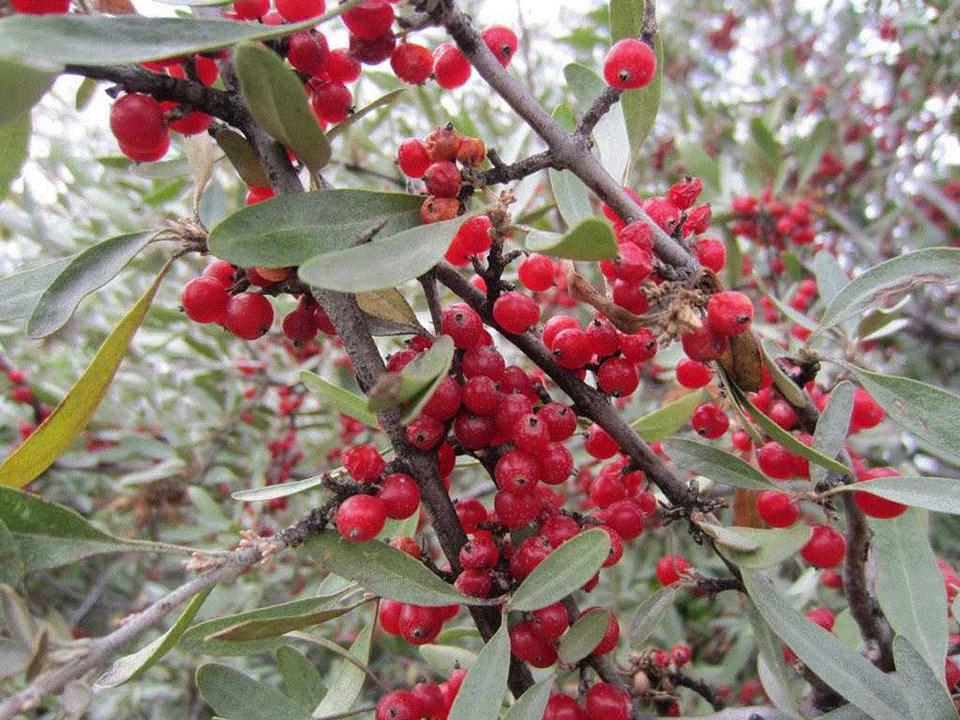
Buffaloberry
Shepherdia argentea
Buffaloberries are native to the prairies and lovely but they are not often cultivated. Small trees or large shrubs (depending on your point of view), buffaloberry will reach anywhere from 12-18 ft. tall and about 6-10 ft. wide. Closely related to Russian olive and sea buckthorns, they prefer to grow under similar circumstances. Full sun and average to poor soil with excellent drainage is ideal.
With their silvery foliage and stunning displays of ruby-red (or very rarely yellow) berries, you would think they would lend themselves to more widespread cultivation but in fact they do not. Buffaloberry suckers profusely and is exceedingly spiny; this is great for a shelterbelt or large hedge on a farm or acreage but is not generally preferred in urban gardens.
First Nations people loved these fruits and used them to flavor buffalo meat (hence the name) and combined them with other fruits such as saskatoons and chokecherries. They ripen late in the summer and if the birds do not claim them, they can be enjoyed by humans.
The fruit of the buffaloberry is both gorgeous and delicious. While the berries are tart and somewhat unpleasant when eaten raw, they make wonderful jams, jellies, and syrups and can be substituted in any recipe that calls for cranberries. The spines makes picking the fruit difficult, but they are well worth it!