

Germination
Stage one - pop those seeds!
By Chase BoucherOverview
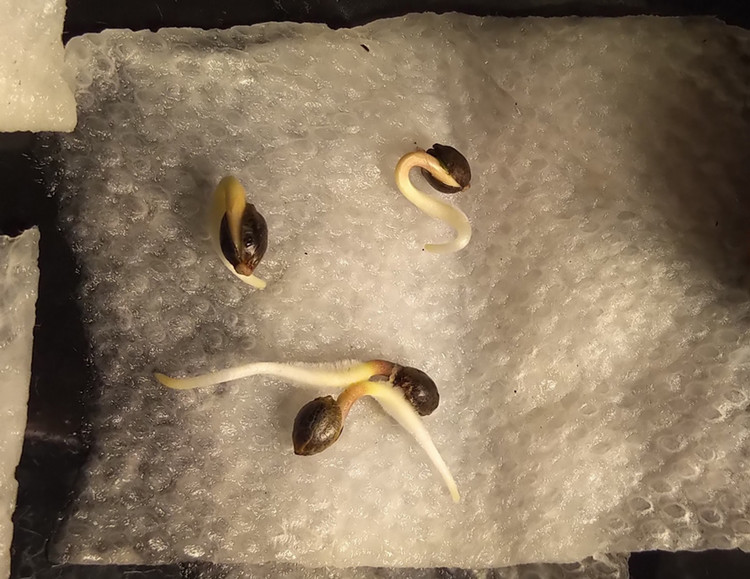
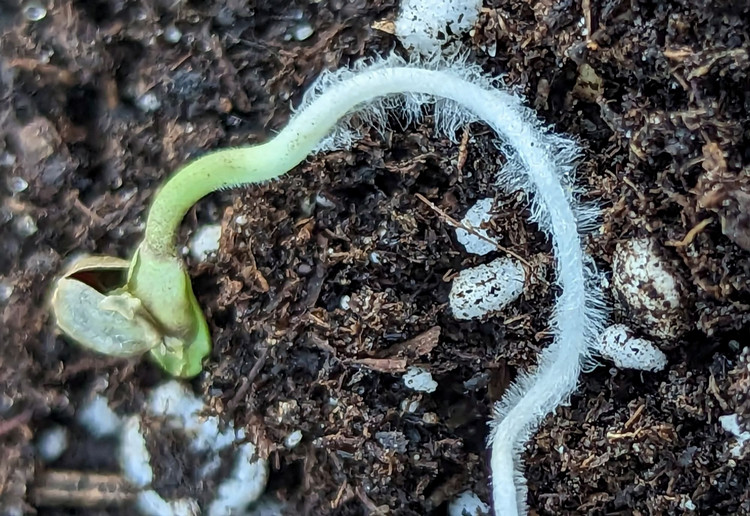
The life of a cannabis plant begins with germination, which is when the tiny seedling initially emerges from its shell (aka the pericarp). Germination isn’t so much a stage as it is an event and is very important! It occurs when the seed breaks its dormancy and opens, allowing the tiny plantlet within to begin to grow. Once open, a tiny root (the radicle) emerges. This is what will become the taproot of your plant. The taproot grows down into the medium and begins producing secondary roots and fine root hairs which contribute to the stability and begin absorbing nutrients and water for the plant.
Germination usually takes between two and seven days for most healthy, viable seeds.
Germination Requirements
Light
Light is not required for cannabis seeds to germinate. If they are viable, they will germinate regardless of the light quality or quantity. Once planted, low light levels of should be maintained until after emergence. Fluorescent lights work excellent at this stage.
Water
Water is required to initiate germination. Hormones and enzymes in the seed require water to be absorbed to become active and start the growth process. The seed must not be allowed to dry out once the germination process has begun. If your tap water is high in total dissolved solids (TDS) and/or has high electroconductivity (EC), using purified water like distilled or reverse osmosis (RO) may be a better option.
Nutrients
Germination does not require any nutrients to occur. If your seed is healthy and viable it will almost certainly grow. Some growers encourage the use of certain hormones or other products to enhance and encourage successful germination, but little data exists to substantiate these types of claims. Only clean water is needed.
Environmental
Cannabis seeds germinate best at a temperature between 23°C and 27°C. Soil moisture levels should also be kept high as to ensure the new plant does not dry out. Try to keep your medium or soil moist but not soaking wet – like a damp sponge. This ensures the roots have enough water without drowning them.
How to Germinate Your Seeds
Directly in the Medium
Place seeds approximately 1 cm deep in your prepared medium. Cover lightly and water conservatively, ensuring the medium is kept consistently moist but not soaking wet. Place under moderate intensity light. The light will also help to warm the soil, which helps the plant grow. Maintain moisture and light levels until emergence is observed, and process to the seedling stage
Soaking Seeds Before Planting
Soak seeds in water for 12-16 hours. If you start them in the evening for example, they should be ready by the next morning. Do not soak for longer than 24 hours as this can damage the seedling. Once the seeds have been soaked, plant them in your medium approximately 1 cm deep. If any radicles/taproots have emerged, take extra care not to damage them and orient them downwards when planting. Cover, place under moderate light, and keep medium near the seed moist until seedling emergence.
Paper Towel Method
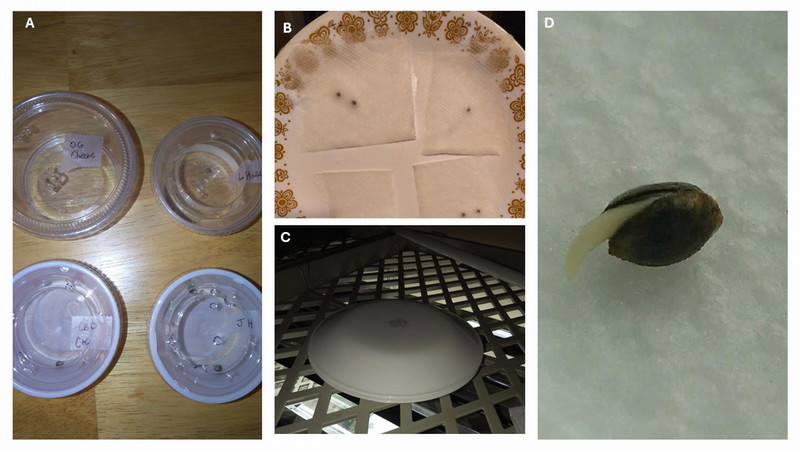
This is a commonly used strategy that is primarily used to ensure seeds are viable and successfully germinate. The author has spent many days waiting for non-viable seeds to emerge from the soil – it’s very frustrating! It’s often worth it to make sure your seeds are alive and viable before planting, much like a baker ‘proofs’ their yeast to ensure it is active before making bread.
To do this, soak seeds as described above. Once soaked, place the seeds in between some folded paper towel. Moisten the paper towel (but don’t soak it!), and place in an enclosed container or ziploc-type bag. Two dinner plates on top of each other also work well. Place this container or bag in a warm, dark environment, checking frequently to ensure the paper towel stays damp but not wet. After a day or two, the seeds should germinate (if viable) and begin growing their taproots. Carefully pick the seeds up (tweezers are best) and place them carefully about 1 cm deep, taproot pointing down, into the medium. Cover, place under low to moderate strength light, and water lightly, keeping the medium moist but not soaked until emergence.
Scarification
Scarification is when seeds undergo certain processes that help or encourage them to germinate. A common method commonly used is to lightly scuff and abrade the seed shell, which can help it to absorb water faster and more efficiently. This is especially helpful if using older seeds, as their shells tend to be harder and drier than fresh seeds. Place seeds in a small box lined with medium grit sand paper and shake vigorously. Remove seeds and soak in water as described above.
Gardener's Note: Very old or poorly stored seeds with low germination rates can sometimes be salvaged using a technique called tissue culture. This method is beyond the scope of this guide but is worth mentioning.