

Ventilation
Learn how to give your plants a breath of fresh air. They need it!
HVAC stands for Heating, Ventilation and Cooling. It is an occasionally overlooked but very important part of growing cannabis, for multiple reasons. Proper air circulation provides plants with fresh air to breathe while removing (and possibly filtering) the hot, stagnant, and smelly air. There are key differences between growing indoors vs growing outdoors that we will go over below.
Outdoors
Outdoors, HVAC is mostly left up to Mother Nature. There is not a lot we as humans can do about the weather, and so we hope that the season will be conducive for healthy and consistent growth. Standard horticultural practices like planting near a fence or other barrier can help to alleviate strong winds, and shade cloths can be used to help mitigate high temperatures.
Indoors
Indoors, proper ventilation is extremely important. If you don’t have proper air circulation, growing healthy cannabis will be extremely difficult. Whether you are growing in a room or in a tent (most likely), you are going to need effective air circulation and potentially filtration due to the strong smell.
Moisture
As plants transpire (exhale), they release a large amount of water vapour. If the water vapour is not removed from the grow space, the humidity will increase to a point where fungi like Botrytis cinerea (aka gray mold, bud rot) begins to thrive, with high potential to infect your plants. High humidity can also cause condensation on the walls of your room or tent, possibly dripping on your plants and/or equipment. This may be where the myth that “growing cannabis causes moldy walls” is derived from, though this can be easily avoided with proper monitoring and adequate ventilation.
Temperature
Heating and cooling are also important considerations, though if you are growing inside your house, the temperature is probably already ideal for growing a few cannabis plants. In general, if it is comfortable for you, it is comfortable for them. That said, the environment inside the tent will be much different than in your house. Both HID and LED Lights generate a lot of heat, especially in an enclosed environment like a grow tent. If this excess heat is not removed, temperatures can climb and plants and equipment can suffer.
Odour
Cannabis plants also give off an extremely pungent odour, some even in vegetative growth. This odour can be overwhelming for some people, and it also sticks in your clothes, causing you to smell like cannabis. This may not be bad for some people but for those of use who do not want to smell like a skunk, proper ventilation and filtration solves this problem.
Best Practices
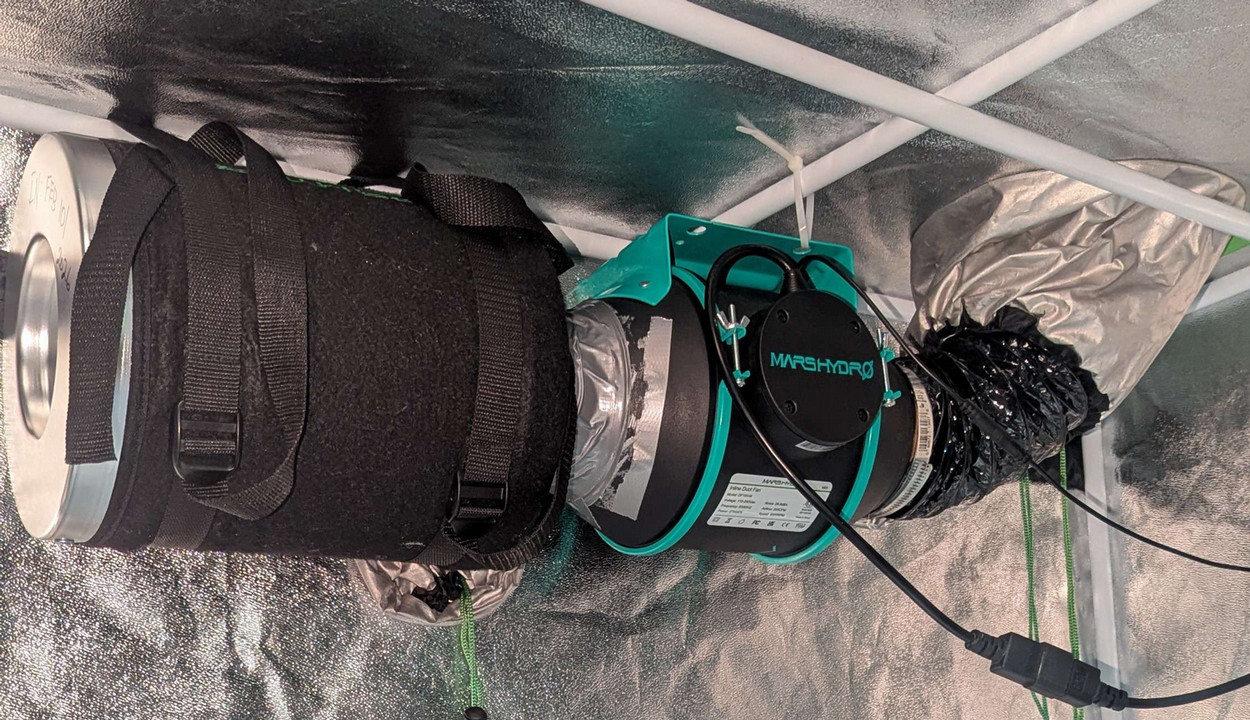
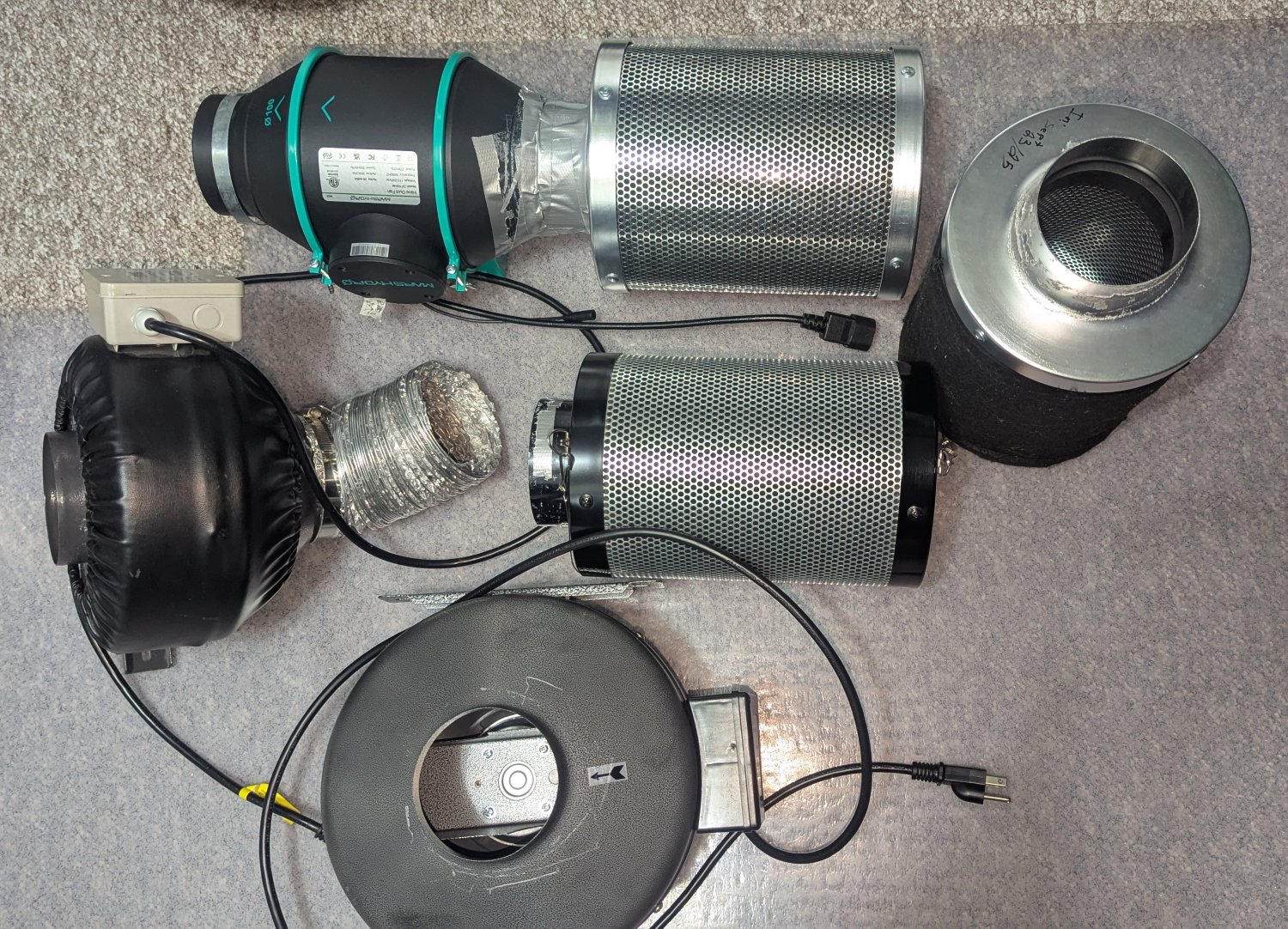
To manage these potential issues, most growers opt for an inline fan and filter combination. The inline fans come in the same sizes as standard furnace ducting for ease of connection and are rated by how much air they can move in cubic feet per minute (CFM). This means that you can size your fan for your room or tent based on the volume of the grow space. Generally, at least one full cycling of the air within a space per minute is desired. For example, in a 2’ x 4’ x 5’ tent, the total volume is 40 cubic feet (2x4x5). We would therefore need a fan with at least 40 CFM to exchange the air once per minute. This means that a typical 4” inline fan with a rating of 200 CFM would cycle the air 5 times per minute, which is more than adequate to maintain a comfortable grow space. If using a tent, be careful that your fan is not too large as this can cause too much negative pressure and “suck your walls” in, reducing the overall growing space and also putting stress on your fan.
For the odour, standard practice is to use an activated carbon filter. These connect to your inline exhaust fan’s input, and odour-filled air is pulled through the carbon, which scrubs the air, eliminating the odour and exhausting clean, neutral smelling air. This happens because the smell particles are attracted to and adsorb (get stuck) to the pieces of carbon in the filter, allowing the cleaned air to pass through. It is the same type of carbon used in activated charcoal filters used for water filtration. These filters come in various sizes, depending on the size of the growing area and the needs of the grower. The also come with a cloth pre-filter, which collects dust before the air passes through the carbon, extending the life of the filter.
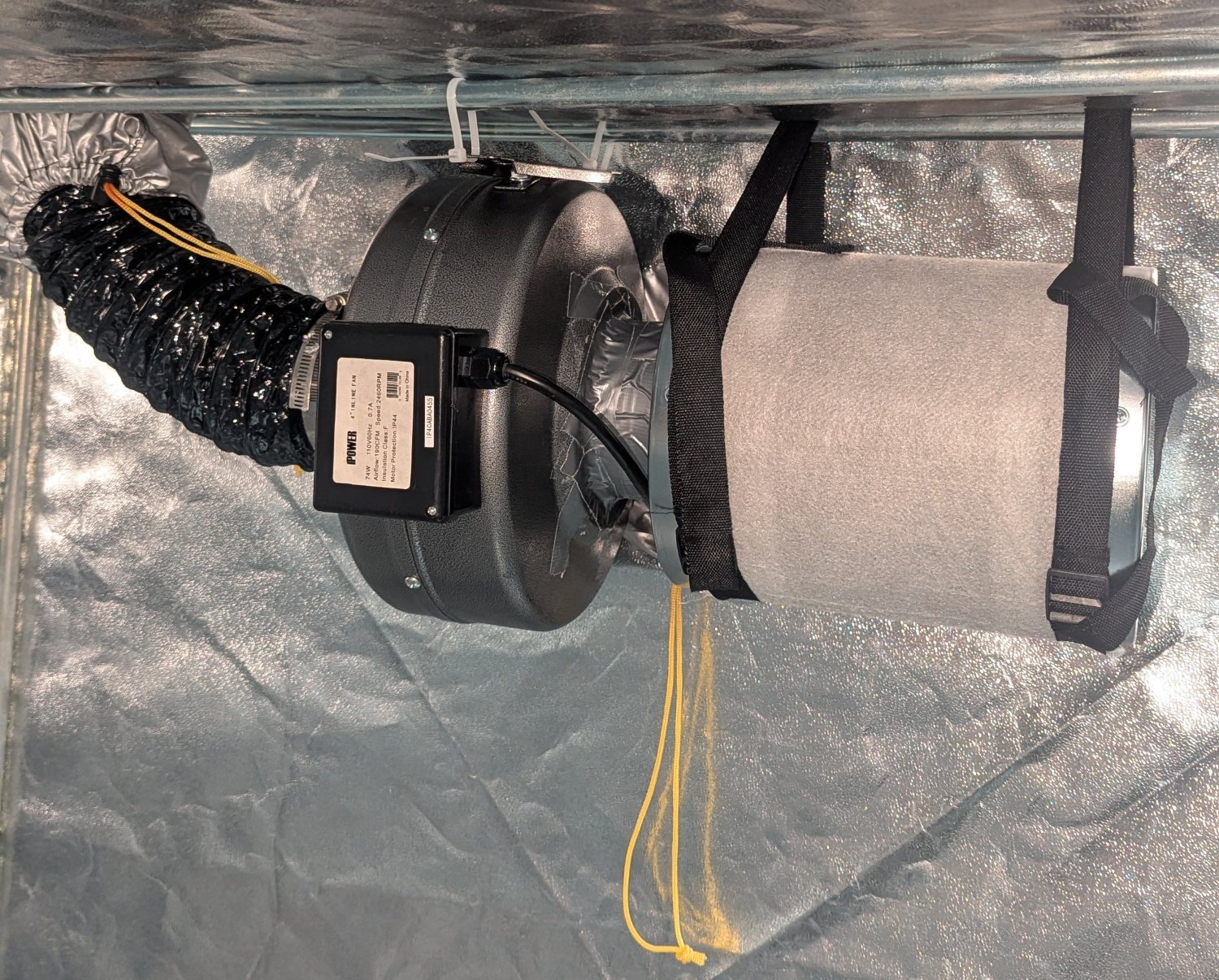
Alternatively, you can also vent directly outdoors if you have a way to do so. This eliminates the need for any filtration indoors but will also cause the area around your vent to smell, which may or may not be an issue, depending on where you live.