

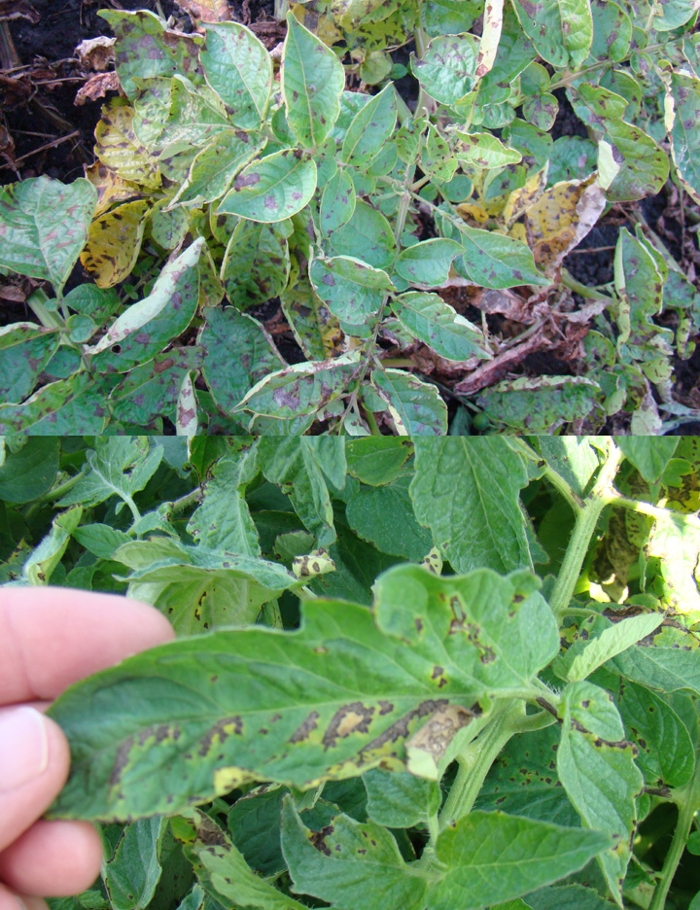
Early blight
Alternaria solani
Early blight (Alternaria
The fungus is soil-bourne and needs water for the spores to germinate and infect plants. The fungus is most active when temperatures are mild to warm and during rainy weather. Stressed plants are more vulnerable to early blight.
Symptoms:
- Leaves have small, brown lesions made up of concentric rings, almost like a bulls-eye. The lesions take on an angular shape as they are limited by the leaf veins. Pale yellow margins often border the lesions.
- Early blight is typically seen first on the older, lower leaves.
Preventing early blight:
- :Keeping tomatoes and potatoes healthy and vigorous will also protect them against early blight:
- Use high quality certified seed potatoes and high quality tomato seeds. Early blight resistant tomato cultivars are available. Check seed catalogues.
- Rotate crops. Do not plant in areas where tomatoes or potatoes were grown for at least three years.
- Keep tomato and potato crops well and evenly watered. Water early in the day to allow plants to dry off as the fungal spores germinate and infect leaves when they are wet.
- Avoid working around the plants when they are wet.
- Keep garden beds weed-free. Weeds can also harbour the spores.
- Consider mulching around potatoes and tomatoes to prevent soil-splash and to retain soil moisture.
- Clean up the garden at the end of the growing season and remove all garden debris.