

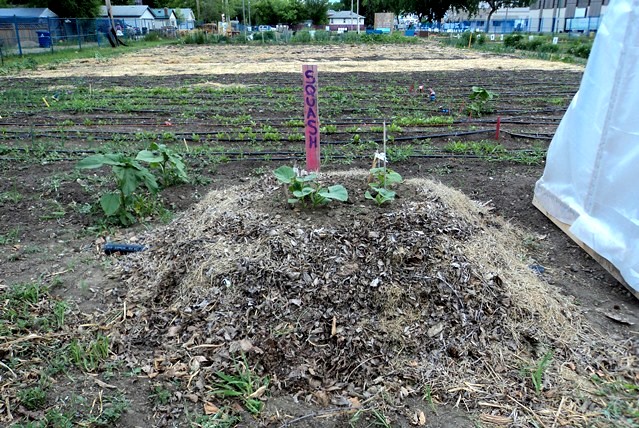
Grow piles
courtesy of the Saskatchewan Waste Reduction Council
For those with the garden space for it, green and brown materials can be mixed together and left in a low mound in a garden. Compost-tolerant plants such as squash, tomatoes, or potatoes can be planted on top of the pile in pockets of added soil. Gardening at USask recommends this method for squash but considers it viable though less ideal for potatoes and tomatoes as it may increase your likelihood of plant disease.
How to build a grow pile
- Start by laying down a 2-3" layer of brown material** (such as dead leaves, dead plants, woodchips, or shredded paper products) on the soil.
- Optional: Take a length of PVC plastic pipe about a foot longer than the intended horizontal size of your grow pile and drill small holes down it on at least two sides. Lay this down on top of the first layer of brown material. This pipe will let air get into the pile as it breaks down.
- Lay down a 1-2" layer of green material* (kitchen waste, green plants, or grass clippings) on top of the browns.
- Sprinkle a 1" layer of soil or finished compost over the greens. (Because active compost has a lot more air spaces that regular dirt, plant roots need more added soil to keep from drying out.)
- Continue adding layers of brown material, green material, and soil or finished compost until the pile is 24-36" thick. (Ideally this should be done all at once or within a few days.) Add enough water to dampen the layers all the way through.
- Add a final cap layer of brown material to insulate the pile.
- Make a hollow depression in the top of the pile. Fill this hollow with several shovels of soil. This will give the plants a good place to sprout.
- Plant compost-tolerant plants, such as squash, tomatoes, or potatoes into the soil pocket and water thoroughly.
- To maintain: Keep the plants watered.
Once they are established, the plants' roots will spread through the grow pile, benefitting from its nutrients, moisture, and beneficial microbes. If squash are planted, their broad leaves will also cover and insulate the pile from drying out. In the fall, after the plants are finished, the material in the pile can be raked out over the garden or you may continue to use it as a grow pile the following year.
What composting style does it fit?
Grow piles take little work after assembling, so they fit well with both hands-off and hands-on composters. They are most useful to gardeners who like to grow squash and other compost-tolerant plants.
What space does it need?
Grow piles should be assembled in a garden.
How does it work?
Grow piles are a form of aerated composting which relies on naturally-present decomposition microbes to digest organic waste and turn it into finished compost. These microbes require 5 things to function properly:
- Green material* (this should be about 40% of the mix)
- Brown material** (this should be about 60% of the mix)
- Moisture
- Oxygen (air)
- A small amount of soil or finished compost
*Green materials are nitrogen-rich, fresh stuff such as green plants, grass clippings, and kitchen waste. Kitchen waste here includes vegetables and fruits, tea bags, coffee grounds and filters, egg shells, and grain-based products but excludes meat, bones, dairy, and grease.
**Brown materials are carbon-rich, weathered stuff such as dead leaves, dead plants, sticks, woodchips, and shredded paper products.
Can you use it all year?
Grow piles are typically assembled in spring or early summer, although new organic waste can be added around the edges all year.
Sheet composting
For the healthiest soil and lowest maintenance, we recommend no till vegetable gardening whenever possible. However, sometimes it makes sense to till your garden. If you plan to till your vegetable garden in the fall, this is a great method to include since you can easily translate it into a sheet compost at the end of the year. Sheet composting is a fancy name for the common practice of tilling or digging leaves and other plant materials into garden soil in the fall. It is a great way to replenish the organic matter in vegetable gardens. Tilling the materials in during the autumn allows them to break down before spring planting.
Considerations:
- limit the amount of leaves you till in to about a 4" (10 cm) layer
- corn stalks and squash vines need to be shredded first
- extra nitrogen fertilizer or manure may be needed in the spring if decomposition is not complete