What style of composting is right for me?
courtesy of the Saskatchewan Waste Reduction Council
There are a variety of backyard and indoor methods for home composting. To find out what style will work best for you, take the SWRC's Compost quiz!
For a quick introduction to some of the most common home compost methods, check out the SWRC's Composting in 60 Seconds video series on our Composting tab or video page. Click on the links below to learn more.
Outdoor Composting
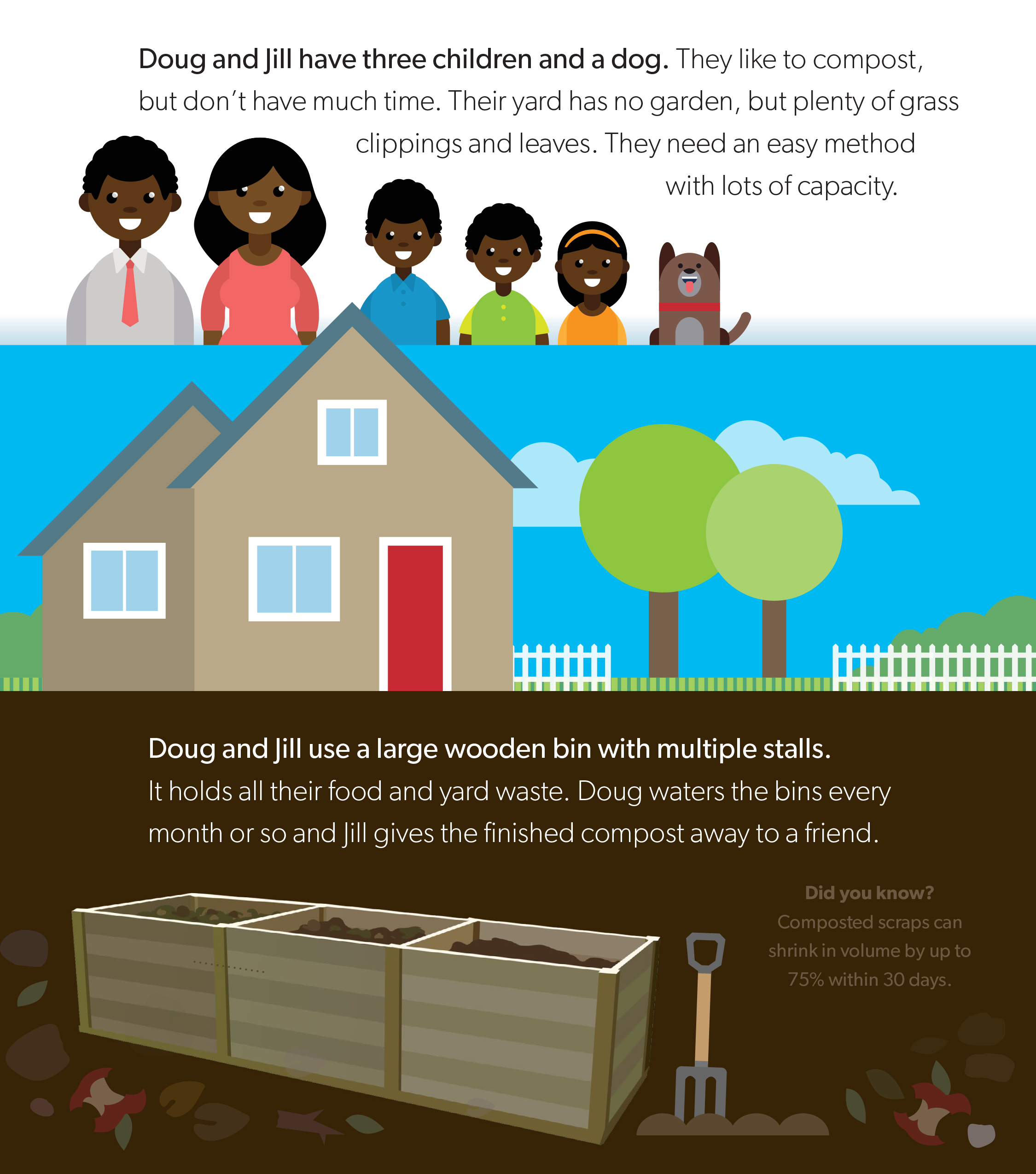
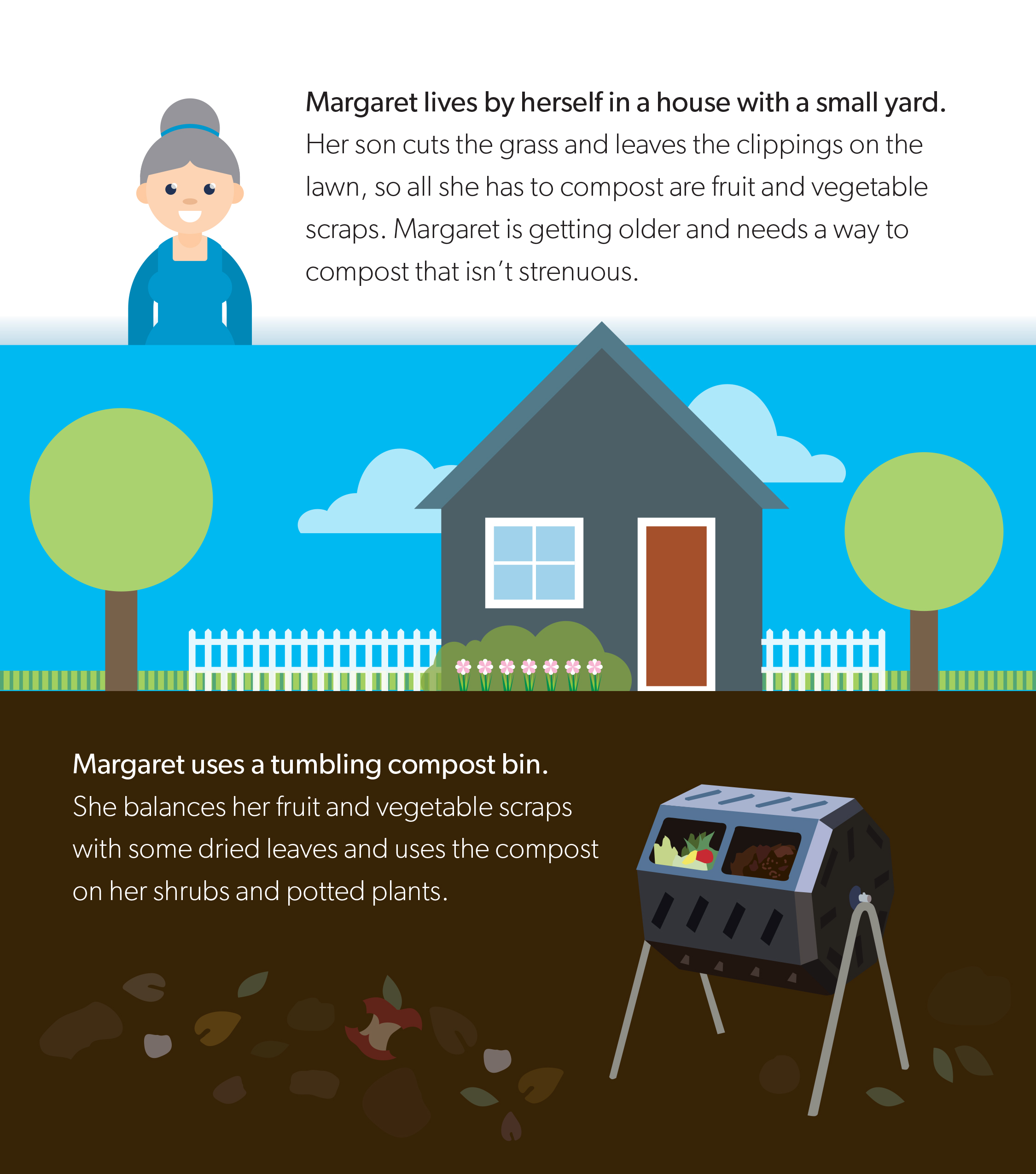
- Compost bins: Compost bins keep organic waste tidy in a sturdy container while it decomposes. They can be small, medium, or large. You can also choose a tumbling compost bin. For more information, watch the videos on Choosing a Compost Bin in 60 Seconds, Backyard Composting in 60 Seconds, Using Finished Compost in 60 Seconds, and Winter Composting in 60 Seconds in our composting tab or on our videos page.
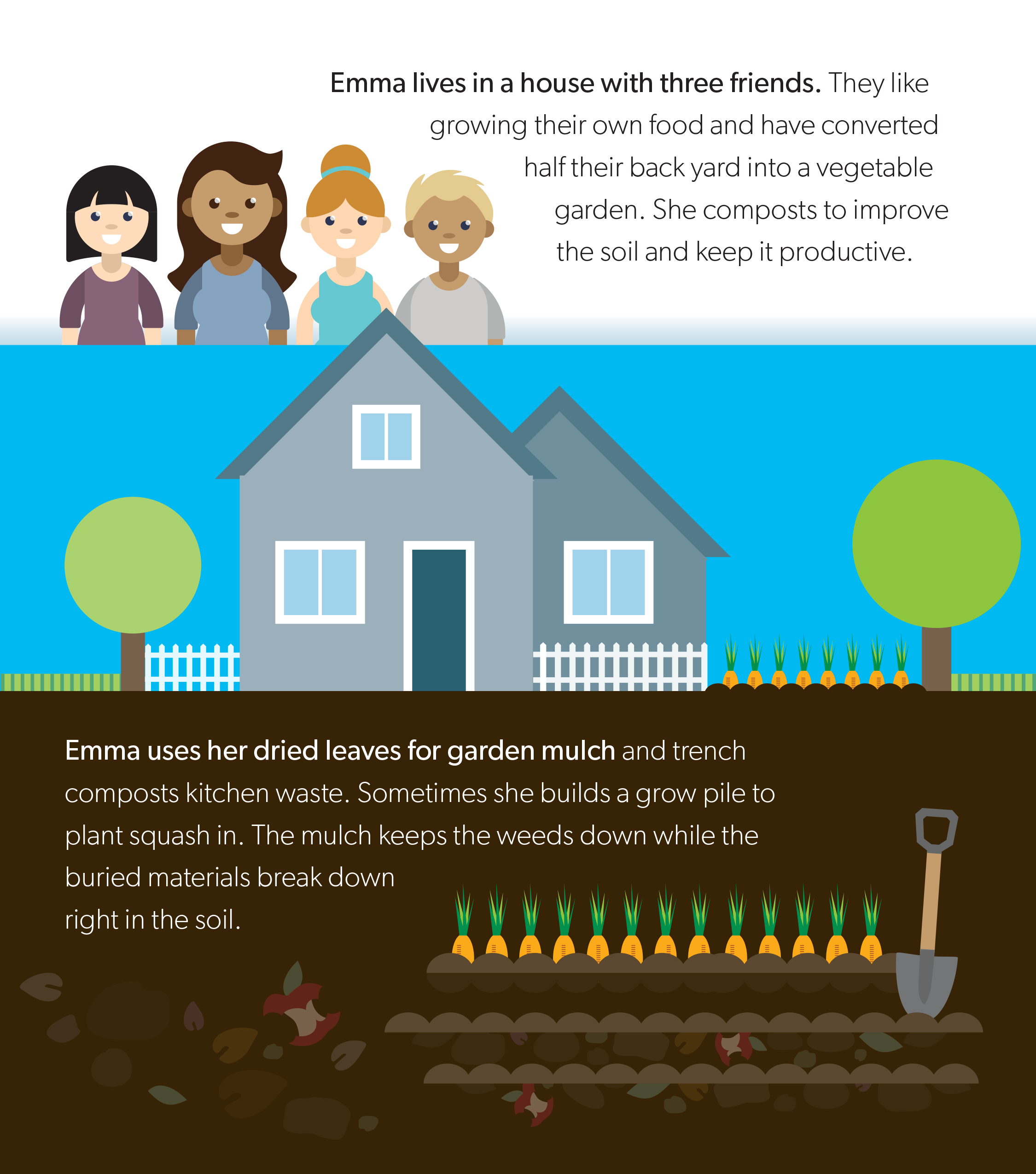
- Trench compost: Trench compost involves burying organic waste under several inches of soil and letting the soil food web do all the work. For more information, watch the Trench Composting in 60 Seconds video.
- Lasagna compost: Lasagna compost uses layers of cardboard and organic waste to smother existing grass or plants and create a new garden bed. Gardening at USask does not recommend this style of composting as layers of material do not break down as effectively as other methods and water movement is comprimised.
- Grow piles: Grow piles are compost heaps that double as beds for growing squash or other vegetables.
- Mulch: Mulch is a layer of woody organic matter (such as leaves or woodchips) laid on top of garden soil to lock in moisture and reduce weeding.
- Grasscycling: Grasscycling involves leaving grass clippings on the lawn, so they can decompose in place.
Indoor Composting
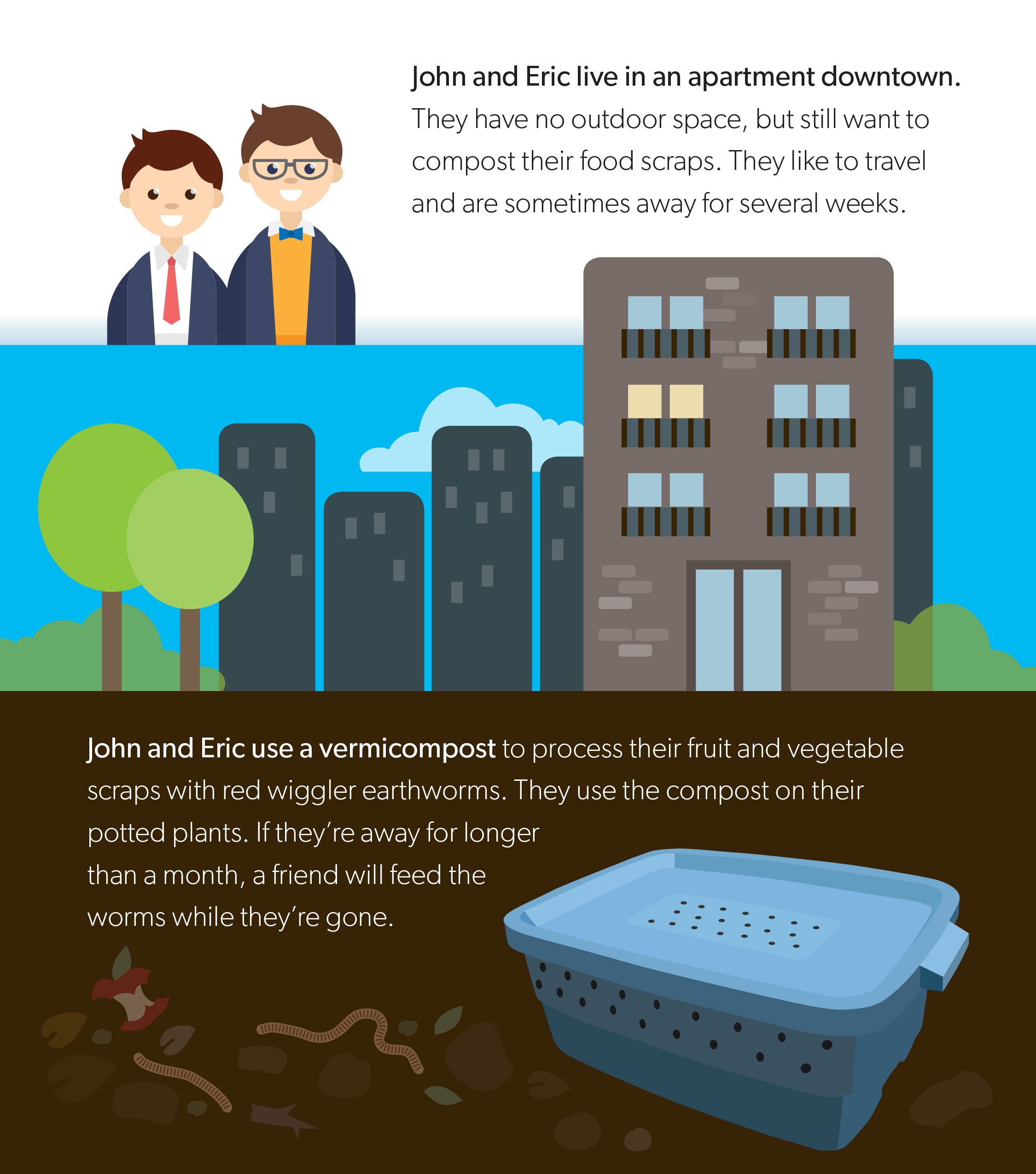
Organic waste can also be composted indoors, which is great for spaces like apartments, classrooms, and offices.
- Vermicompost: Vermicompost uses red wiggler earthworms in a small indoor bin to process food waste with no odours. For more information, watch the Vermicomposting in 60 Seconds video or download the SWRC's Vermicompost Fact Sheet. The SWRC maintains a list of current red wiggler earthworms suppliers in Saskatchewan here.
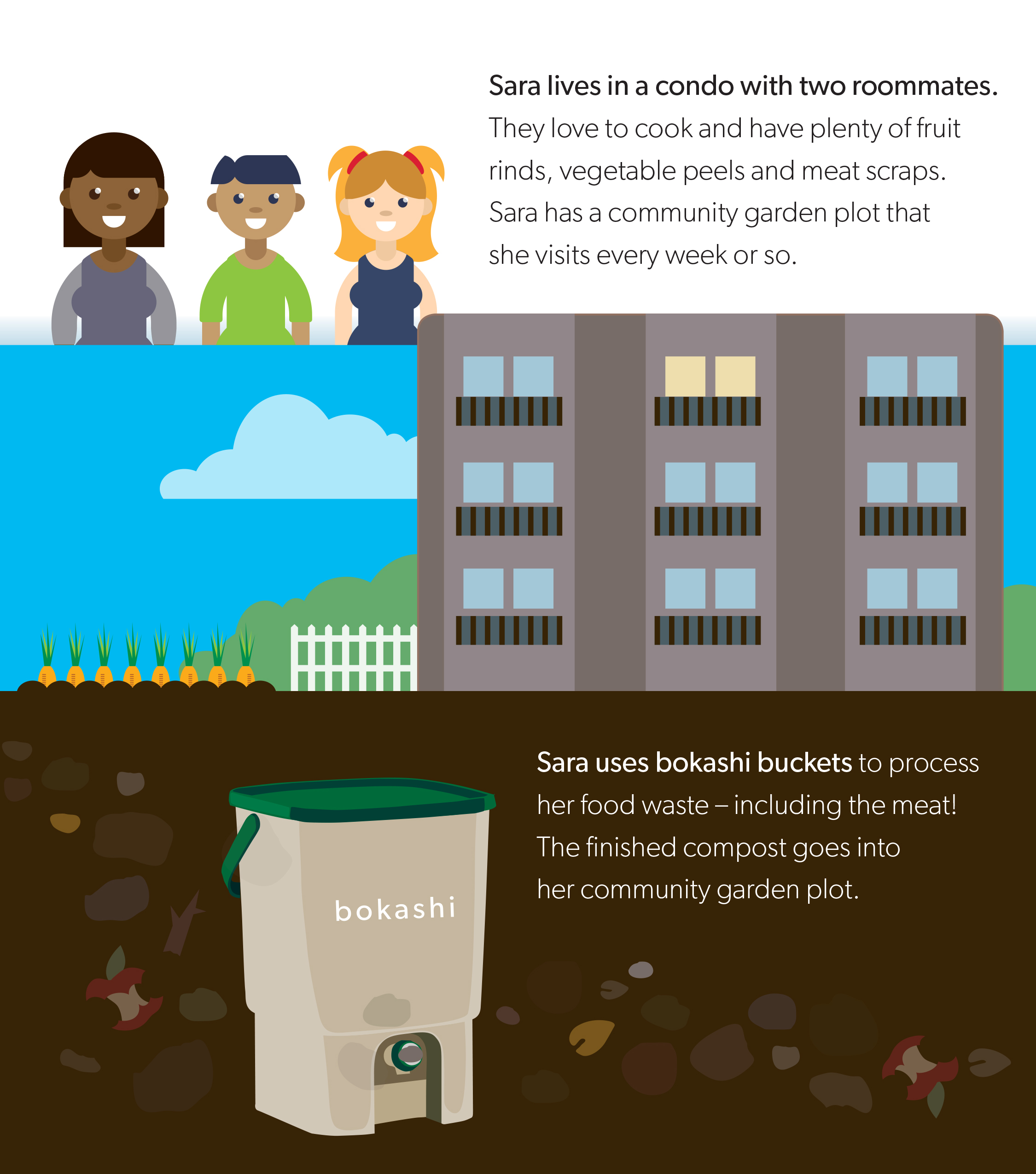
- Bokashi buckets: Bokashi composting starts by fermenting food waste in a sealed container. Bokashi buckets can process all food waste including meat scraps, bones, and dairy. For more information, watch the Bokashi Composting in 60 Seconds video or download the SWRC's Bokashi Fact Sheet.
- Compost tubs: Compost tubs balance ingredients and moisture to compost indoors in a large tub set on a drip tray, similar to an outdoor compost bin.
- Electric/countertop composters: Electric composters are kitchen appliances that use heat, stirring, and time to process food waste. Most units do not make finished compost, but simply dehydrate and pulverize food into an easy-to-use powder. While not technically compost, this powder can be added to the soil. Regardless of which method, Gardening at USask does not consider this an environmentally thoughtful choice in most living situations since purchasing unnecessary equipment involves manufacturing and transportation impacts and running the machine uses unnecessary energy. These impacts are not likely offset by the "compost" produced, especially if you take into account that there are other viable options in most living situations.