

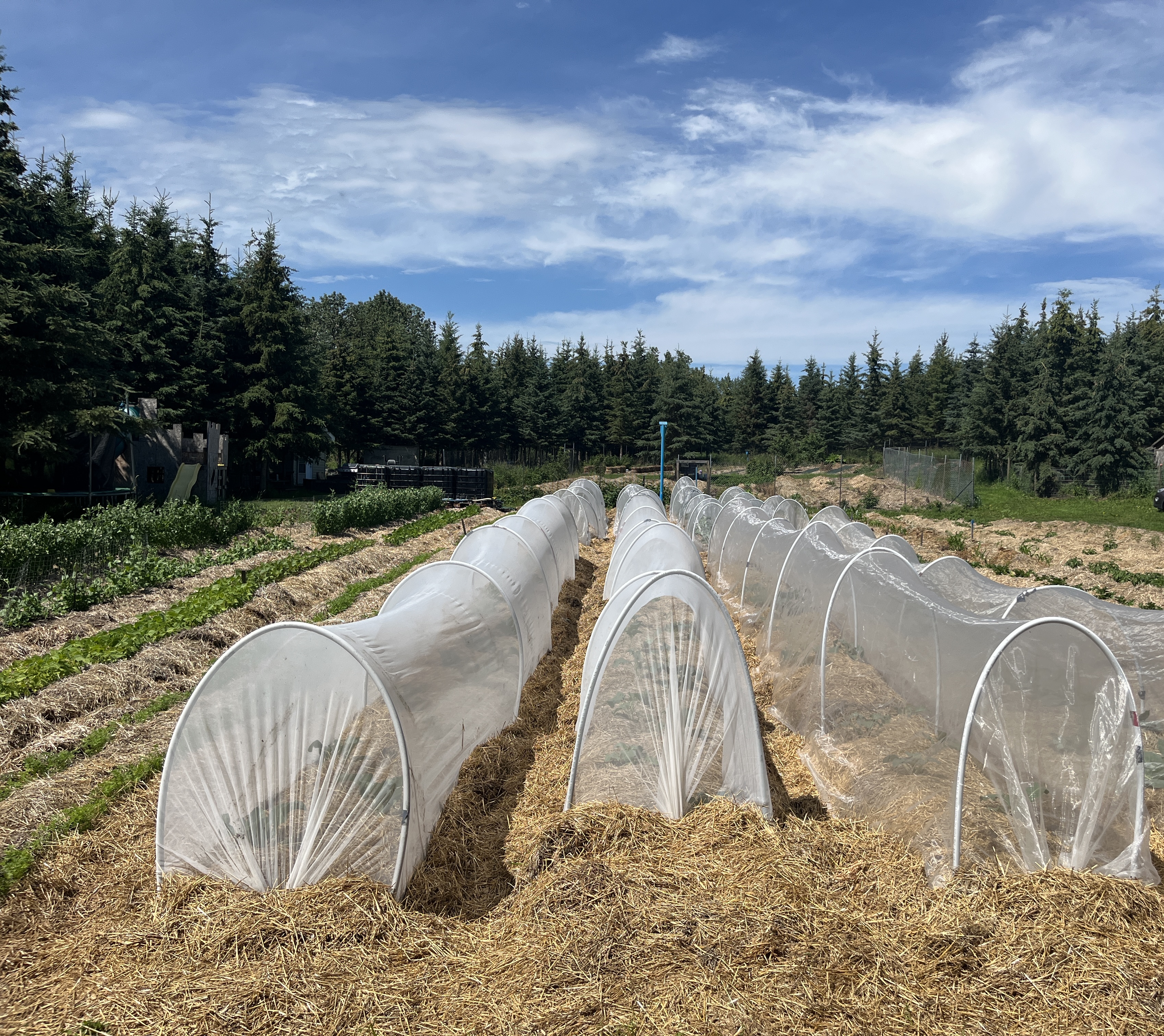
Row coverings in no till gardening
No till gardening is a system of gardening where the soil is mulched to prevent soil erosion, conserve water and reduce the pressure of weeds. Row covering helps to prolong the season and protect from insect pressure.
What are the different types of row covering?
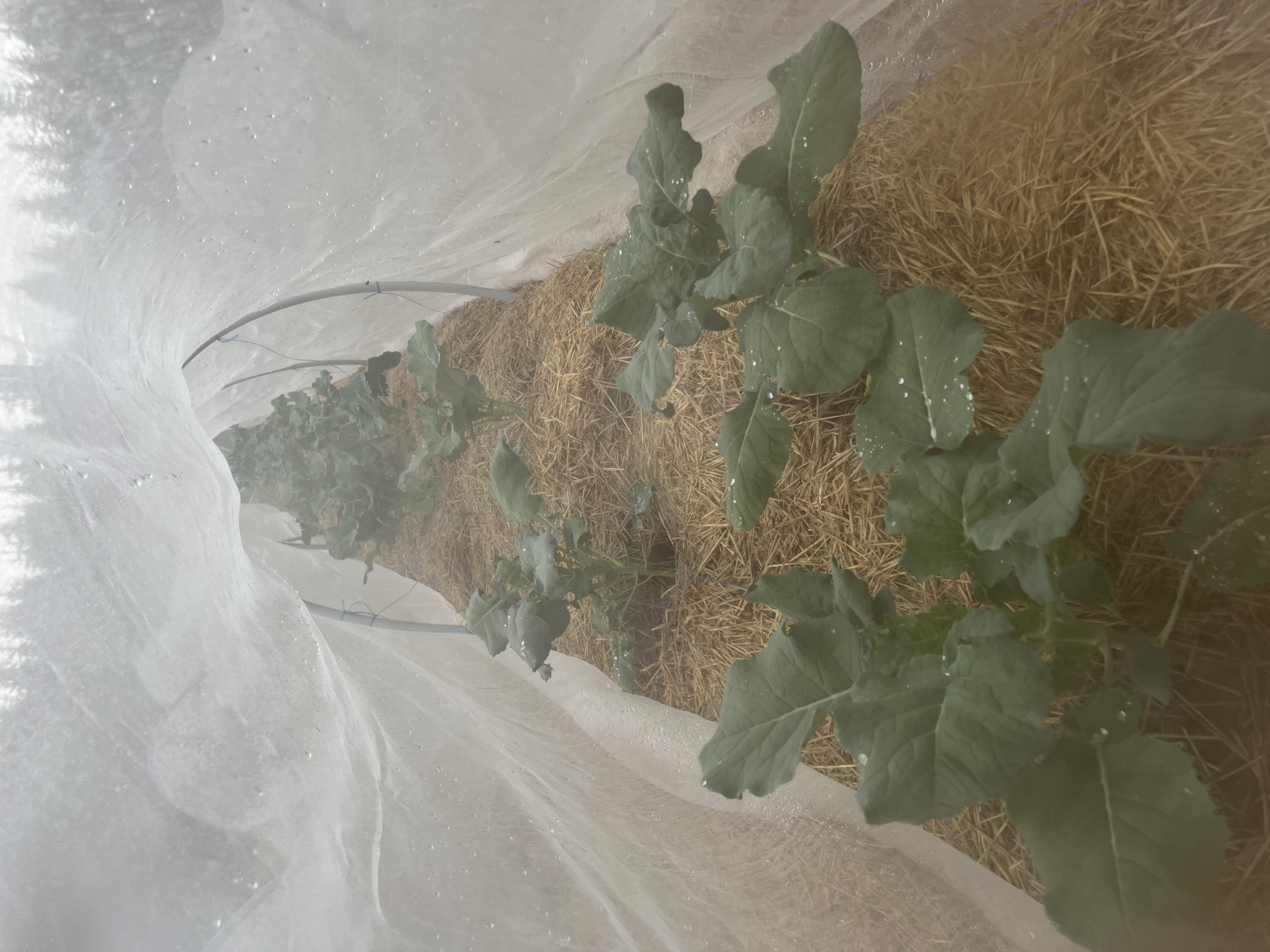
Row cover is an important part of gardening on the Canadian prairies. It can be used for season extension, protection from insects and to add additional heat units to heat loving plants.
Plan now to save yourself problems later! There are many ways you can use various coverings to manage common growing concerns. The material of the covering tends to dictate its usefulness. Here are some common examples:
Row Cover
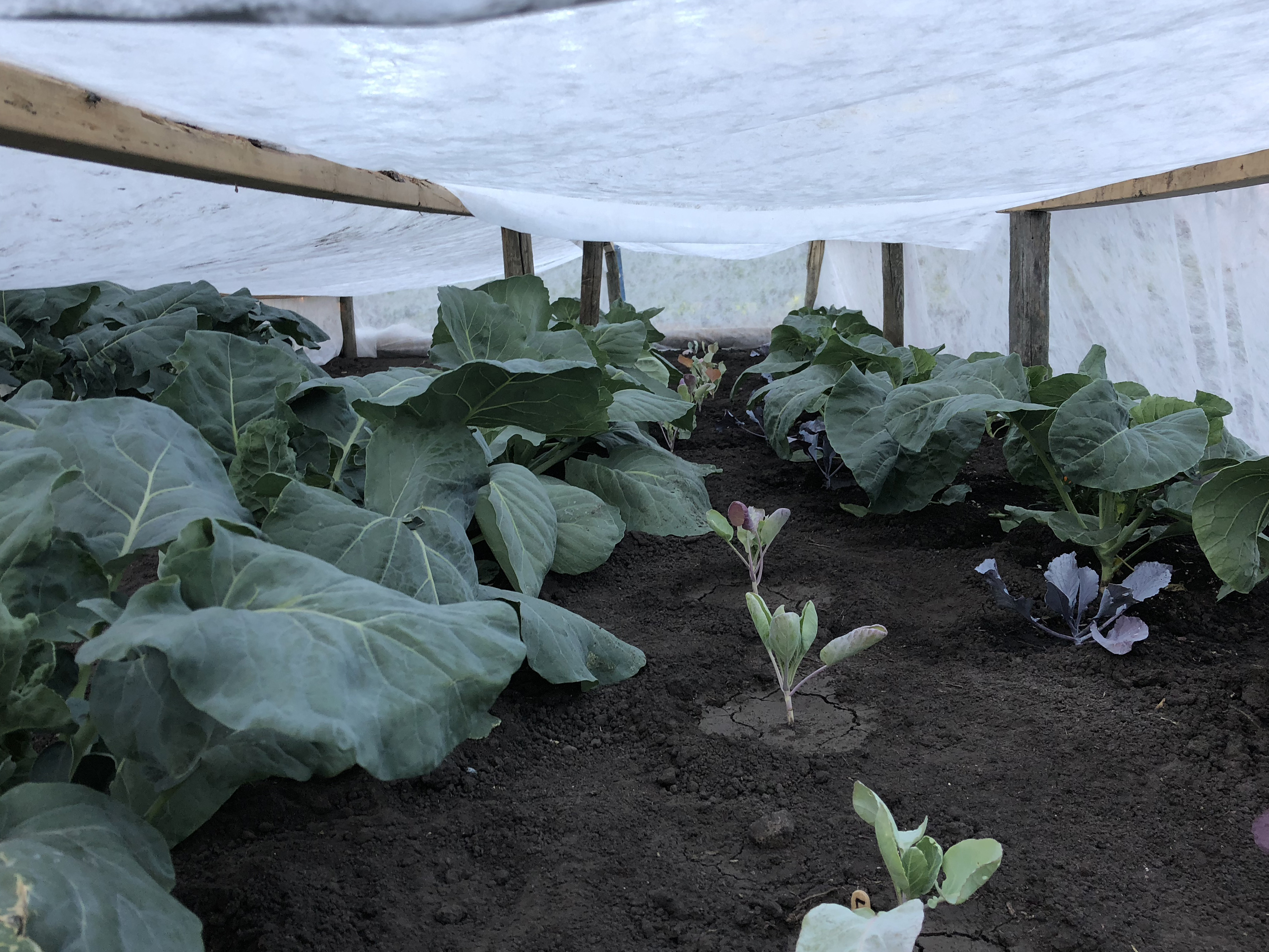
Row covers are lightweight, translucent fabrics, typically made of spun synthetics. It is a multipurpose fabric that acts as a barrier against insects while creating a microclimate beneath to benefit warm loving crops like tomatoes or peppers. They are usually described by how they are applied. If they're touching the crop, they're called floating row covers. These are typically used for salad greens, strawberries, root vegetables, or other plants that grow from a crown. A low tunnel uses hoops to support the fabric off of the plants, which is important for plants that would be damaged by rubbing like tomatoes or peppers. Row covers must be secured before the target insects emerge and are left on for the season, aside from intermittent or partial exposure for pollination.
Plastic Mulch
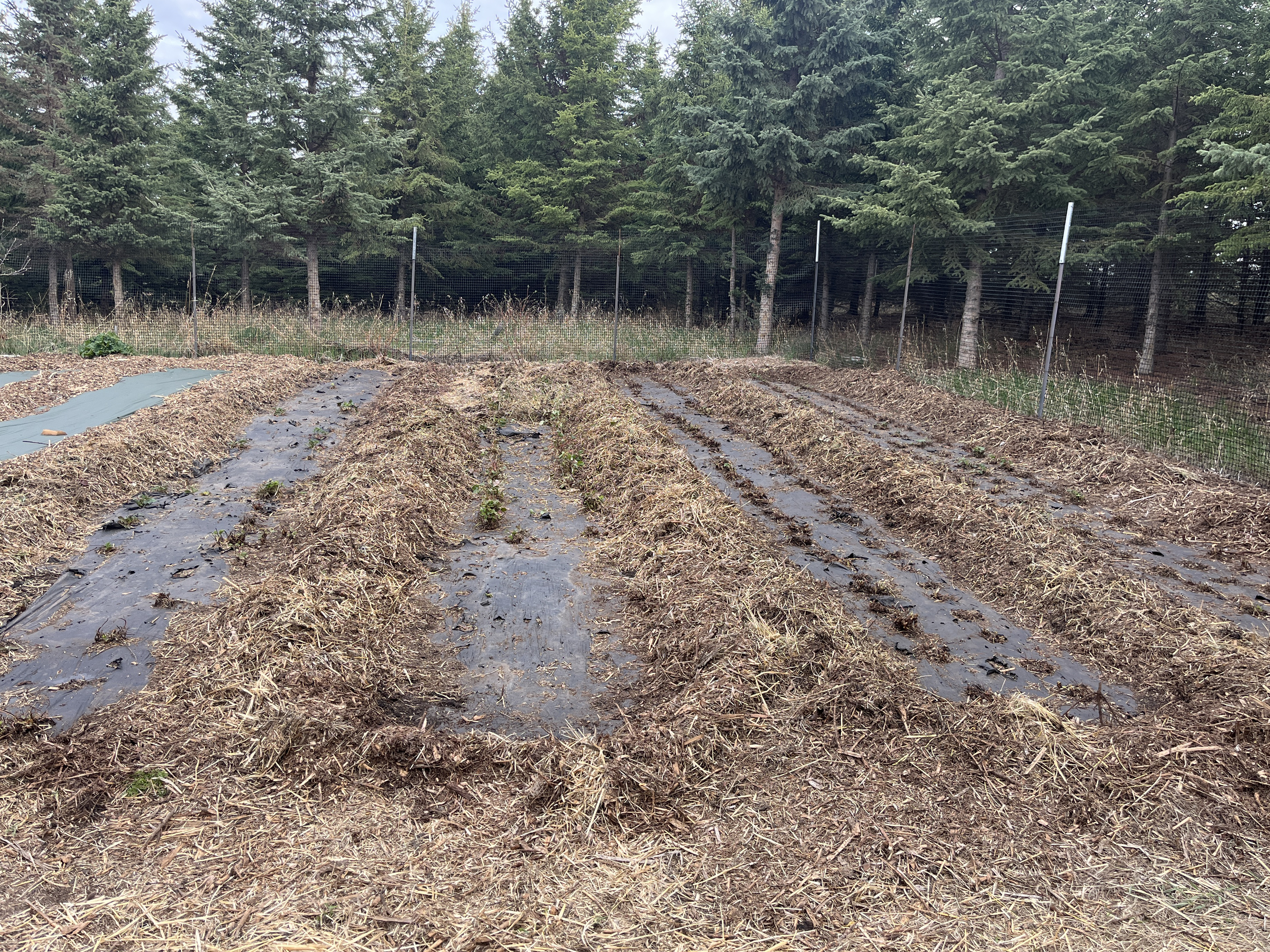
Black plastic like silage tarps can be used to warm up the soil in the spring by laying it on a row. It will help to absorb heat from the sun to warm up your soil. You can plant cool season crops (lettuce, spinach, kale, carrots) once the soil temperature has risen to 5 to 10C. The plastic is removed once the soil is warmed.
Plastic mulch can be laid to help with weed control and used all season. We do not however recommend this as the soil beneath the plastic does not absorb moisture from rain nor does the plastic improve soil fertility. This means the plants in plastic mulch will need regular watering.
Frost Cloth
Frost cloth, row cover or remay cloth can be used to cover plants to protect them from minor frosts (one to two degrees of frost). It is not meant to stay on your rows long term as the wind will rip the cloth. Mulch can be used to protect plants from frost as well.
Insect Netting
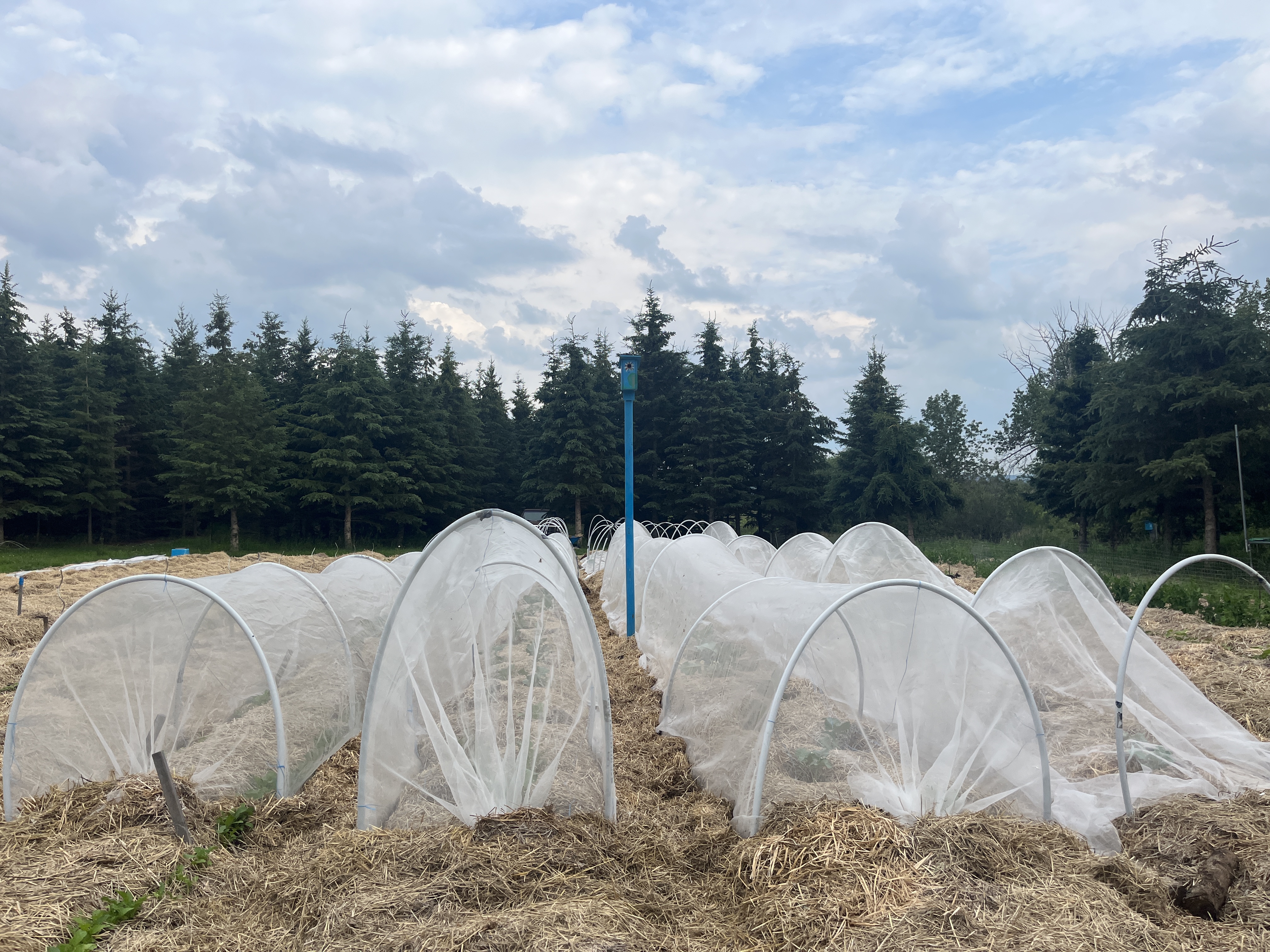
Insect netting is similar to row covers in that it acts as a barrier to insects when properly secured, however it provides less heat capture so it's better suited to cold season crops. It looks like a fine window screen that keeps insects as small as flea beetles away from your plants. If you plant broccoli, cabbage, Brussels sprouts or cauliflower, using an insect netting over them will protect them from cabbage worm damage.
To learn how to make a simple hoop house from locally sourced supplies, click here.
You can purchase any of these from larger garden centres or online. Be sure to get it wide enough to secure the sides securely even when plants are at full maturity and ideally long enough to cover the entire row. All coverings can be reused seasonally so it's worth investing in a quality product.