Harvest Timing
When is cannabis ripe and what is the ideal time for harvesting?
By Chase BoucherTiming Your Harvest
As the grow comes to an end, it is time to begin to prepare for the harvest! Your hard work and time spent will soon pay dividends. And just like with your fruits and vegetables in the garden, harvest timing is critical to ensure peak ripeness resulting in the best quality, flavour, and experience possible.
Deciding when to harvest can and will be based on many factors. Some are objective measurable characteristics, and others are based on personal preference. Very generally, most available varieties will be ready harvest 8 – 10 weeks after initiating flowering. Some seed companies include the average time to harvest in the info on their packaging, but should be taken as very general guidelines, at best.
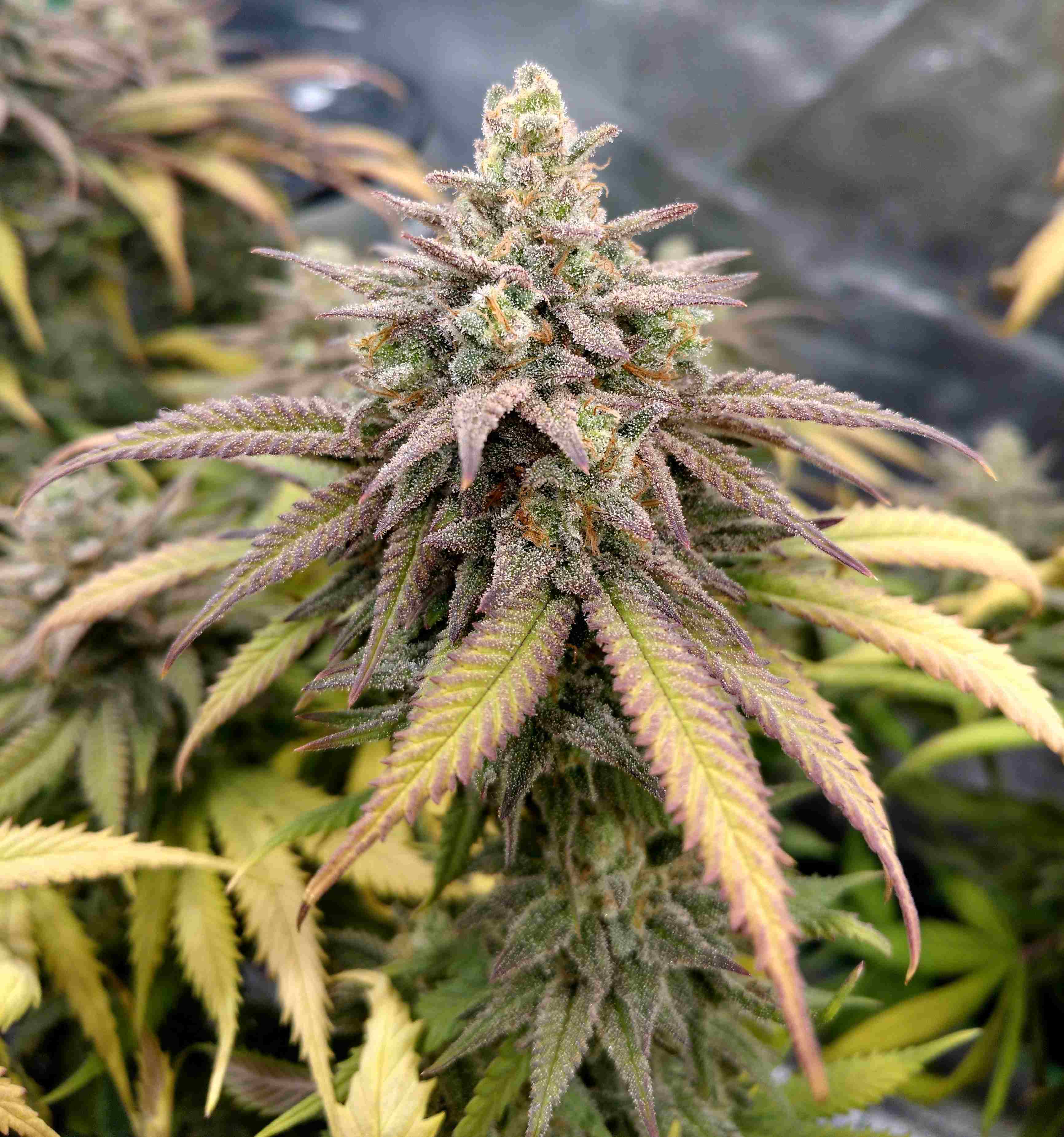
Physical signs that your plant is ready for harvest include yellowing in the leaves, decreased water uptake, and a cessation of bud swelling and growth. These indicate the plant has nearly completed its life cycle and is preparing for death (senescence). The white hairs (aka stigmas) also will turn from a healthy white to a rusty brown colour. This is sometimes associated with ripeness with more brown stigmas indicating more mature plants. In the author’s opinion, this is a less accurate way to assess maturity but is still valuable to consider.
Probably most used method of judging ripeness is by observing the capitate-stalked trichome heads, the round bulbous glands that hold the sticky resin containing the cannabinoids and terpenes. These trichome heads change colour as they mature, going from clear to cloudy to amber orange. There have been some studies showing that peak cannabinoid content coincides with mostly cloudy trichomes, and so for the highest THC or CBD content, a grower could harvest when most of the trichome heads are turning from clear to cloudy.
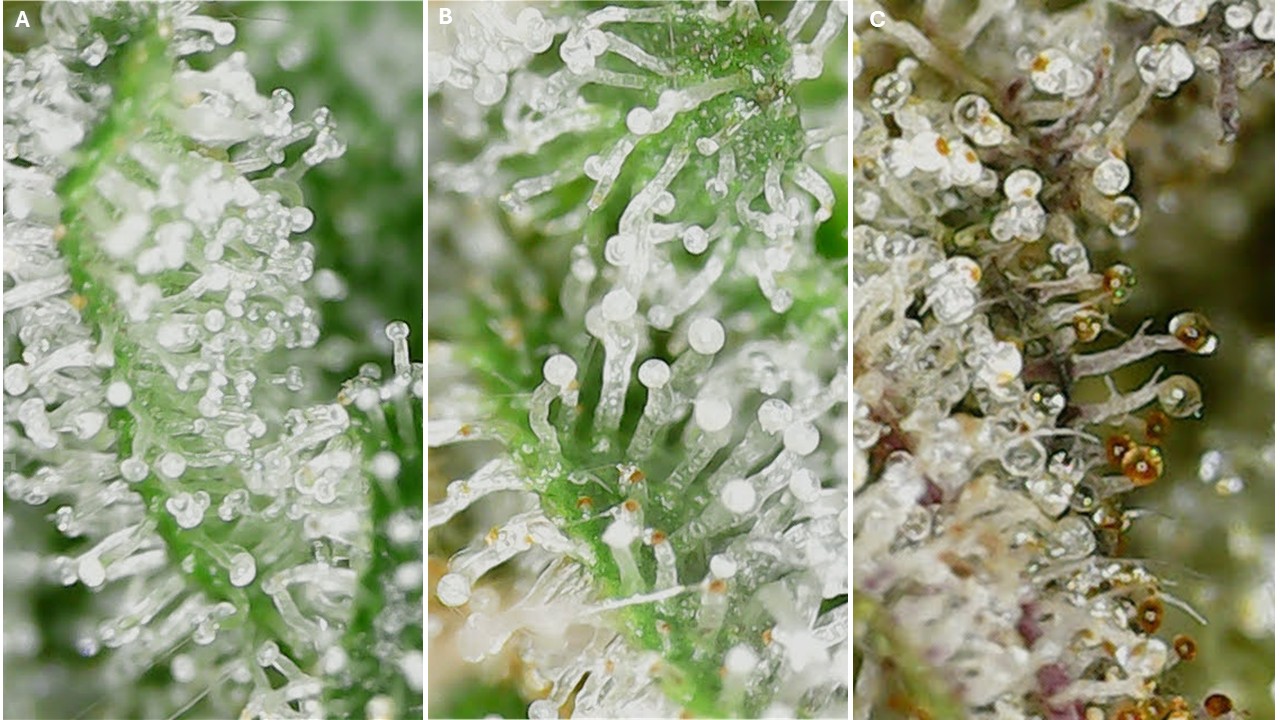
The author’s preferred strategy is to watch both the plant and the trichomes, harvesting when the heads first begin to go from cloudy to amber, as well as when the plant begins to yellow and enter senescence. There is usually about a 5-day window where peak ripeness is more or less maintained, after which the trichomes begin to degrade and cannabinoid levels fall.
There are many anecdotal reports that harvesting with mostly clear trichome heads provides a more energetic, stimulating effect while harvesting with mostly amber-coloured trichome heads imparts a much more sedative, relaxing, and sleepy effect. To the author’s knowledge there are no studies quantifying or qualifying this, but it is nonetheless a very common way to assess and “personalize” the effect of your cannabis.
Helpful Tips
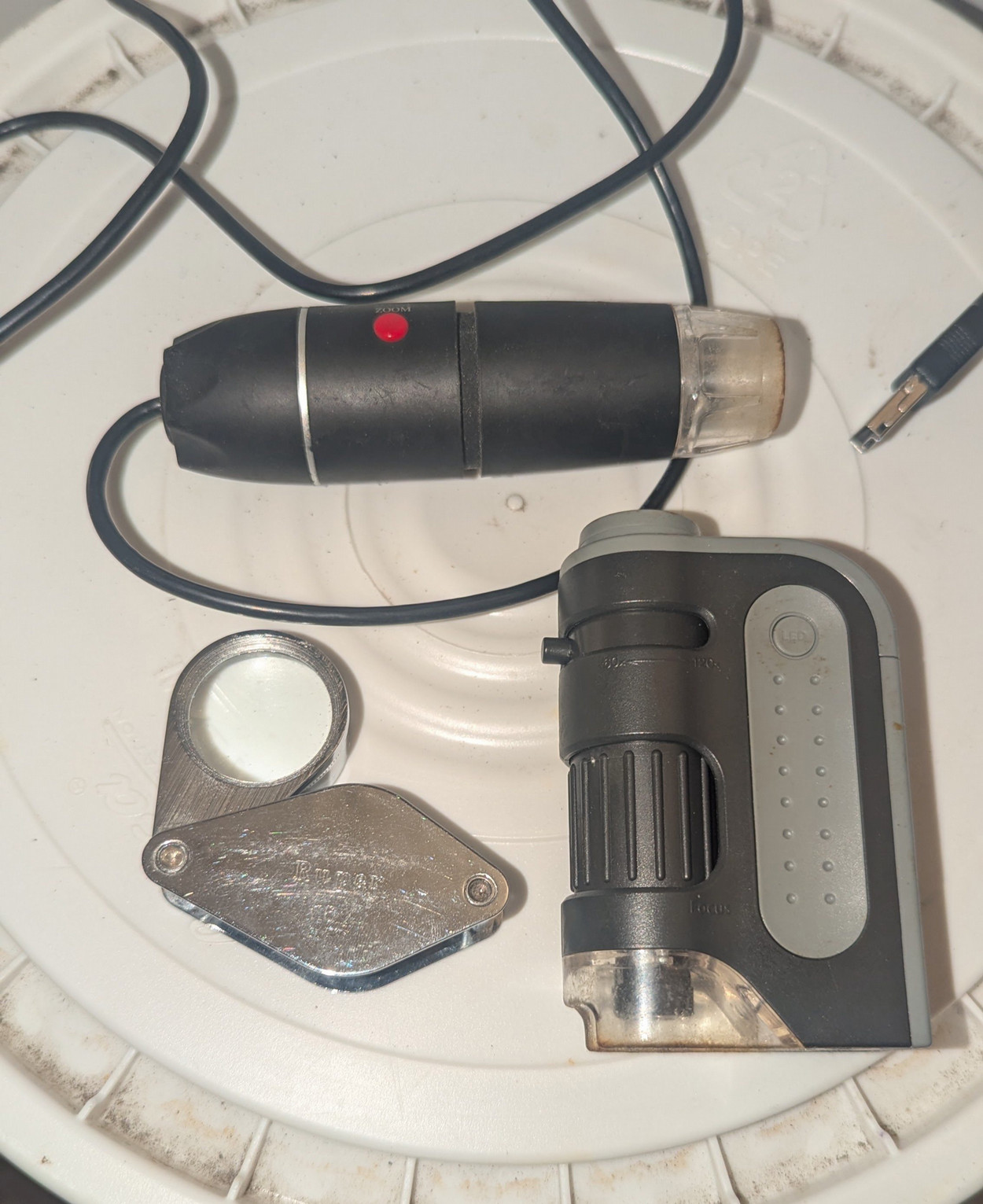
- A good hand lens or jeweler’s loupe can be extremely valuable in helping to see the colour of the trichome heads. Try to use at least 16x magnification for best clarity. Digital USB microscopes also work very well for this, and can sometimes be used to take photos, depending on their software capabilities.
- Outdoor cannabis will tend to have more amber coloured trichomes earlier in its life than indoor grown plants. This is due to the harsher conditions that they are subjected to compared to the ideal environment of an indoor setting. Since resin colour may not be a reliable indicator for outdoor grown cannabis, bud swelling (or the lack thereof) and general senescence may be a better signal of maturity.
When checking trichome colour, be sure to look at multiple parts of the plant. Trichomes exposed to more heat and light tend to degrade faster than those that are protected and so be sure that you take an average of a few locations on your plant when making your final decision.