

Flowering
Transitions,"The Stretch", bud and resin production, and that smell!
By Chase BoucherOverview
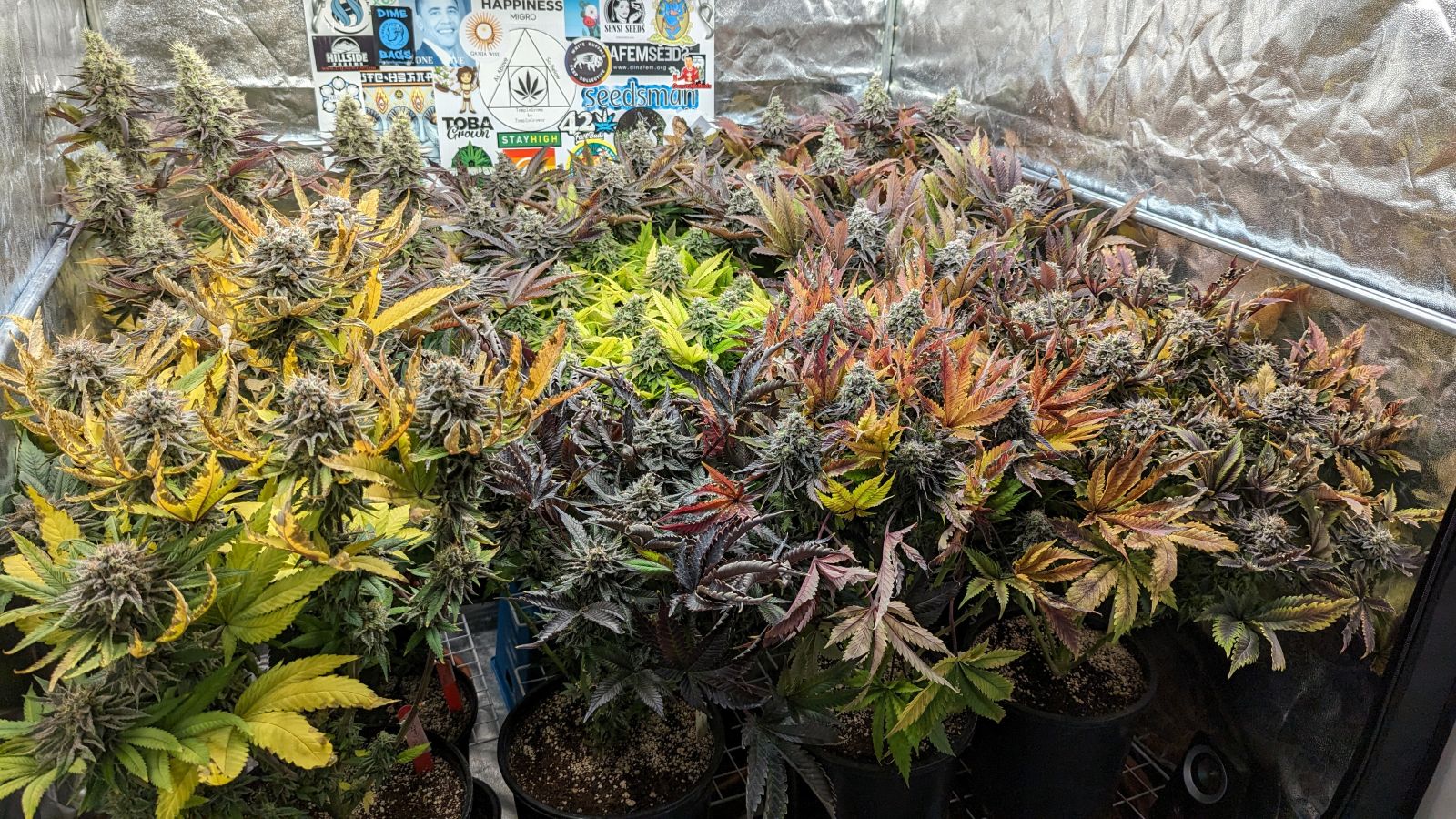
The final stage in the cannabis plant's life is flowering. During flowering, the amount of light per day is reduced to a critical amount, new leaf and new stem production slows, existing stems elongate, and the plant begins to redirect its resources towards reproduction – making seeds and pollen. In photoperiod-type plants, this stage is triggered by subjecting the plants to 12 hours (or more) of uninterrupted darkness. Autoflowering plants will begin to flower automatically (hence the name) after approximately 4 -5 weeks of total growth, regardless of the amount of light in the day.
This stage can be highly variable in length depending on what genetics you are using. Some “indica-type” plants will mature in as little as seven to eight weeks, where some exceptionally long flowering “sativa-types” can take 20 weeks, or even longer! Most commercially available plants will finish flowering between eight and ten weeks. This stage is often broken up into two sections: early and late flowering.
Early Flower
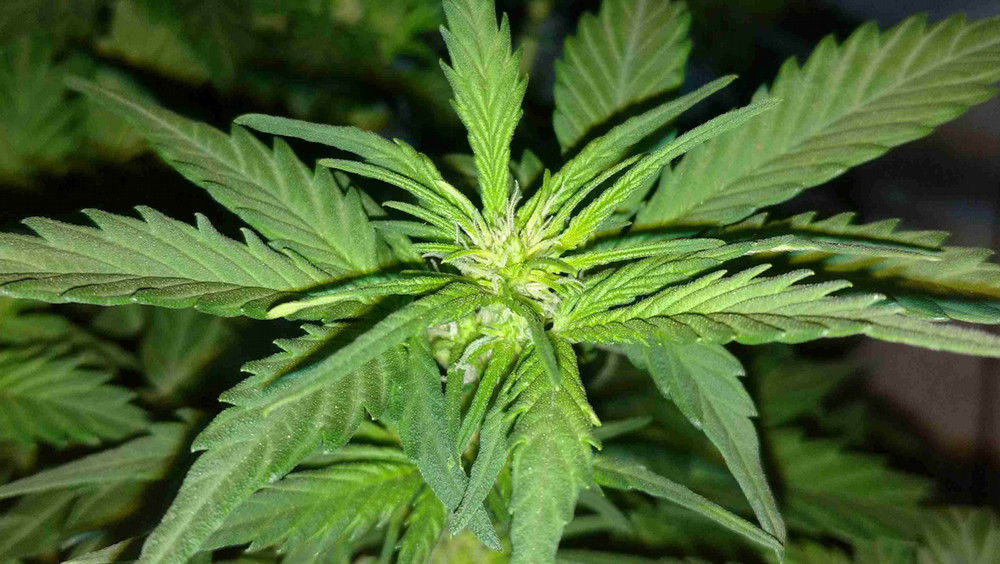
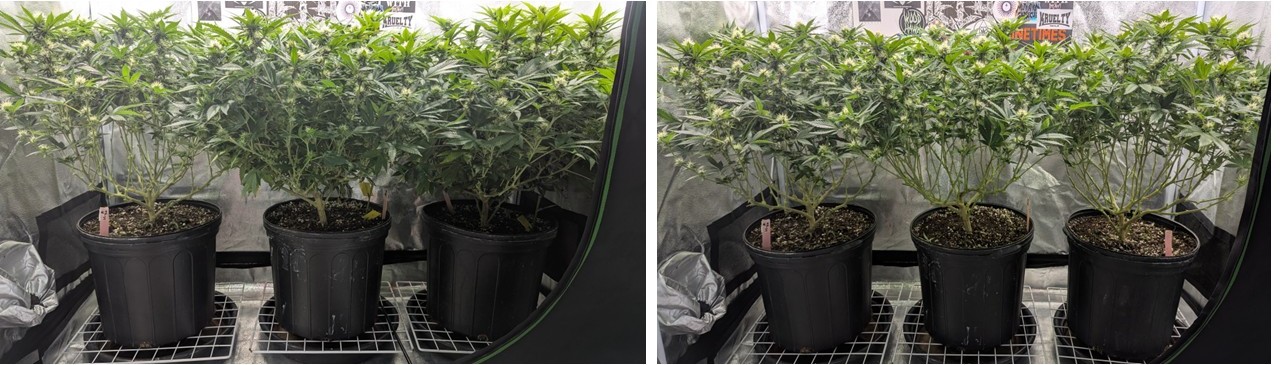
During early flowering, plants begin reallocating resources and preparing for reproduction. Nutrient needs change, now requiring more phosphorus, potassium and calcium and less nitrogen than in vegetative growth. New leaf and new stem growth slows, and existing stems begin to elongate in what is often referred to as “The Stretch”. During this period, plants can sometimes double, triple, or even quadruple in height, so it is important to be aware of the general growth characteristics of your genetics to avoid issues with space and excessive height. The author has had to cut the tops off plants to fit under the lights on more than one occasion – best avoided if possible! Pruning branches should also be avoided during early flowering as it can cause excessive stretching beyond what would normally occur.
In female plants, white hairlike structures will also begin to appear at the growth tips and nodes. These are stigmas and are growing from the newly forming flowers. Stigmas are the female reproductive organ of the plant and are where the pollen lands (if present) and completes fertilization, resulting in a seed. As most growers do not want seeds, any remaining pollen-producing males should be identified and removed at this time. This results in the female plants continuing to grow unfertilized flowers, resulting in seedless cannabis (“sinsemilla”). For most commonly available varieties, early flowering lasts for about 3 weeks. In some of the more exotic “sativa” types this can last for 6 weeks or more.
Late Flower
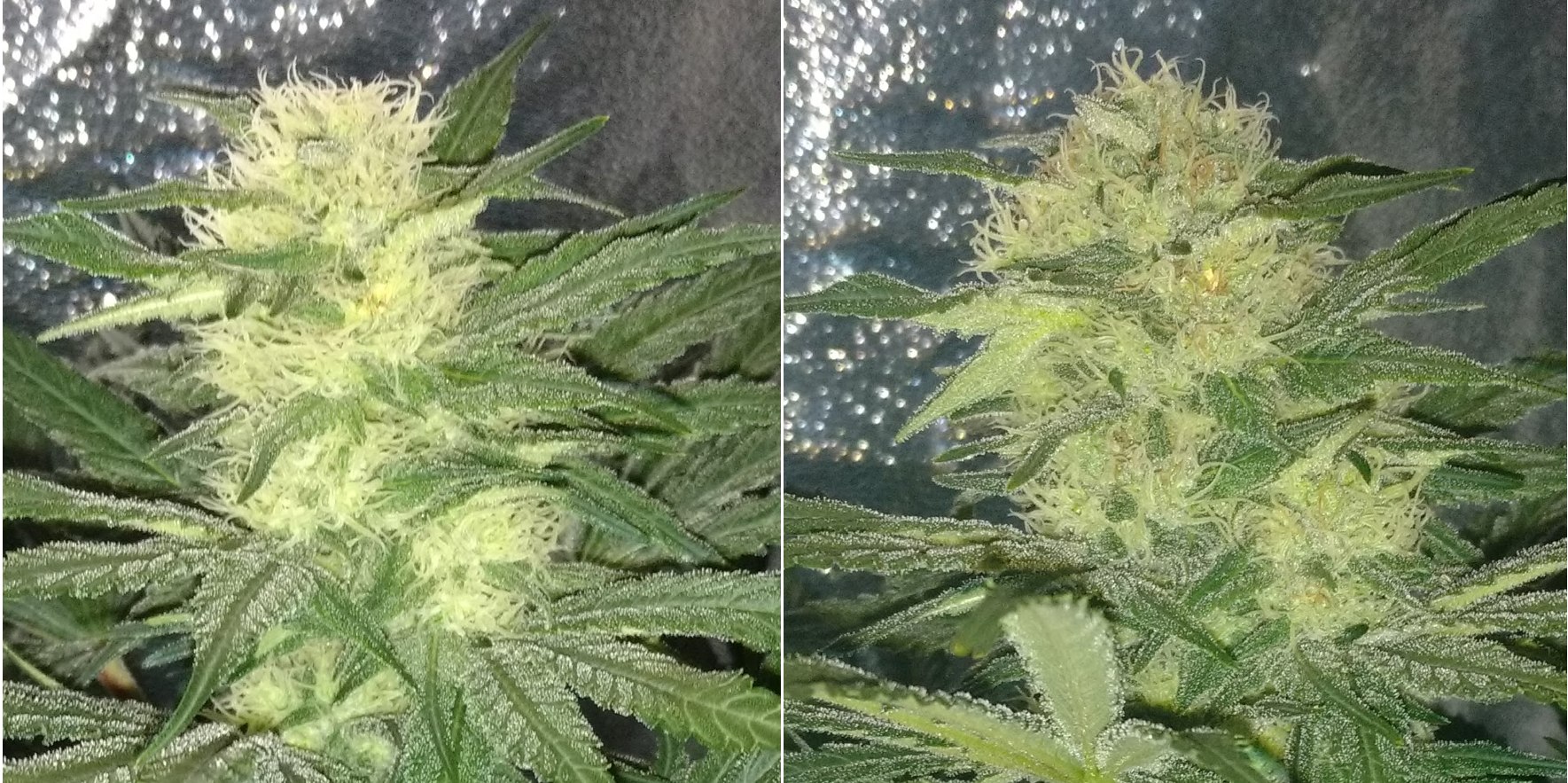
Late flowering begins when the plant has stopped growing vertically (“stretching”) and is now exclusively focused on producing flowers, pollen, and seeds (if pollinated). This is probably the most exiting part of the grow as you finally, and quite literally, get to see and smell the fruits of your labours! Flower bracts continue to grow at the growth tips and nodes. The same 12/12 light/dark schedule and nutrient regime are maintained from early flowering, and the plant now begins to produce resin on the rapidly growing flowers. This resin is made up of “capitate-stalked” glands (a type of trichome) and contains sticky cannabinoids and aromatic terpenes. This resin most growers’ desired product and is what produces and delivers the effects of cannabis.
As the weeks progress, the flowers continue to grow and begin to form clusters. These clusters of buds, when trimmed and dried, are what most cannabis consumers are familiar with as “dried flower”. Flower production continues as the buds bulk up and pungent odours begin to mature and develop. Some plants may even require staking and/or support as the buds develop to hold up the increasing flower weight.
During the final couple weeks of flowering, new flower growth slows and existing flowers swell, increasing in weight and trichome density. Once the plant has reached its peak weight, trichome density, and cannabinoid maturity, it should be harvested.
Late flowering lasts for approximately four to six weeks for most commonly available varieties, in some exotic ‘sativa’ varieties, late flowering can take as long as 10 weeks, and sometimes longer!
Best Practices
Light
In photoperiod-type plants, 12 hours of darkness is what triggers the plant to begin to flower, and so your timer should be switched to a 12 hour light/12 hour darkness schedule. This schedule should be maintained throughout the entire flowering period. Ensure there are no interruptions in the dark period as this can confuse the plant and result in unwanted vegetative growth as well as greatly reduced flower and resin production. Indoors, intensity should be as high as possible without causing damage. If lights are too close, they can cause “bleaching” and decreased cannabinoid and terpene contents, so ensure they are at an appropriate distance from the tops of the plants. Between 20-30cm is usually appropriate for most LED lights.
Alternatively, if growing autoflowers indoors, a light schedule of 18 hours of light and 6 hours of darkness is often used for the entire grow. Light intensity should be as high as possible while still maintaining full and equal coverage of the canopy.
Gardener’s note: If growing photoperiod type plants outdoors in Saskatchewan, the 12/12 light/dark periods naturally occur beginning in mid to late September, making it very difficult to complete the flowering stage before the plants are killed by the cold weather. This is why autoflowering plants are recommended for outdoor growing!
Water
Watering needs will be very similar to vegetative growth throughout most of the flowering period but will lessen as the plant reaches the end of its life cycle. If you are noticing that your plants are drinking less compared to previous weeks, and at the same time nearing the end of the flowering cycle, this is a good hint that the plant is very close to being ready for harvest.
Nutrients
Nutrient requirements change during the flowering stage. Now, much less new green growth is being produced, so much less nitrogen is required. Plants still require some nitrogen, but more focus is on phosphorus and potassium as these nutrients are important in proper flower development. There are many fertilizers formulated for the flowering stages of other plants and these should also work great with cannabis. Ratios like 15-30-15 or 10-30-20 are common in salt-based flowering fertilizers. Natural fertilizers, such as a combination of bone meal (6-12-0) and kelp meal (0-0-17) work great as well. See our article for an in-depth look into fertilizers for more information and help in choosing something that works best for you.
Nutrient needs will be the same for both early and late flowering. Many growers will stop fertilizing for the last 1-2 weeks to allow the plant to use up the remaining amounts in the medium, as well as begin to translocate nutrients from the leaves to the flowers.
Environment
In early flower, temperature and humidity should ideally be maintained at the same levels as in the vegetative stage, around 21-26°C and 50% humidity. Again, cannabis will grow well outside of these ranges but will do best if they are maintained. Most people’s houses are already the perfect temperature and humidity for growing cannabis.
During late flowering, temperature and humidity become very significant factors in determining the quality of your finished product. The ideal ranges are between 21°C and 26°C and between 35% and 45% relative humidity. Temperatures ideally should stay consistent throughout the grow, but humidity should be kept lower during late flowering. As the flowers grow and begin to cluster, airflow naturally becomes restricted within the bud clusters (colas). This becomes an ideal environment for mold to begin to grow, specifically Botrytis cinerea (aka gray mold or bud rot). Keeping humidity levels lower greatly reduces the chances of the mold spores being able to infect the plants, and so managing your moisture and humidity at this stage is very important.
Gardener’s Tip: Beware of power outages! Your plants will continue to transpire moist air even if your exhaust fan has stopped working, causing rapid and significant spikes in humidity!
Other Considerations during Flowering
Pruning
Pruning during flowering is optional but recommended during the transition from early to late flower, around 3.5-4 weeks for most available varieties. Indoors, common practice is to remove lower leaves not receiving light, especially those that are covering bud sites. Dense foliage can restrict airflow and cause moisture and stagnant air buildup. Small, lower branches should also be removed as these will not usually produce high-quality flowers due to the lack of light under the canopy.
Pruning techniques vary widely among growers, some choosing to remove most of the leaves, while others (the author included) choosing to leave as much as possible, only taking off what is necessary. Leaves perform photosynthesis, so it makes sense to keep as many attached to the plant as possible to maximize the plant’s resources. Leaves also function as nutrient stores and can contribute certain nutrients to other parts of the plant if/when needed. As long as the canopy is full and utilizing all the light it can, your plants will be in good shape. All dead or damaged leaves should be removed as soon as possible, regardless of pruning strategy.
Pruning outdoor plants during this stage is generally not necessary as the plant should be getting enough exposure and light from the sun to sustain consistent growth in all parts of the plant.
Odour
As the resin begins to develop and mature, pungency and complexity of the odours become very evident – they don’t call it Skunk for nothing! Using carbon filters in your grow tent and/or exhausting to the outdoors can significantly reduce the intensity of the odour in your growing area and house.
Transplanting
Transplanting is generally not recommended once the flowering stage has begun.