Watering your indoor plants
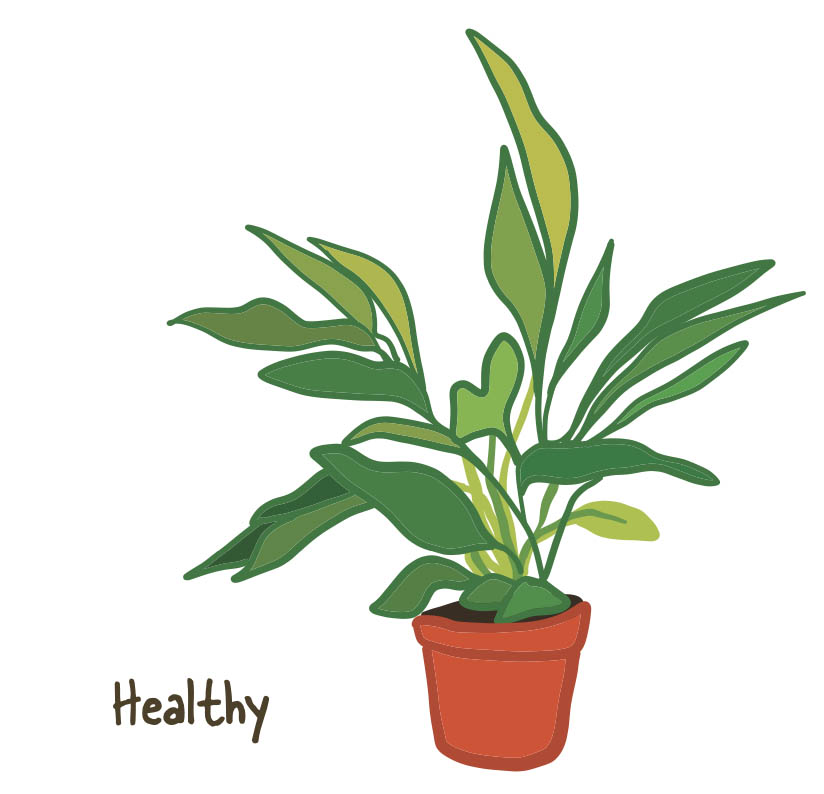
Learning how to water plants growing indoors is a bit of an art. Paying attention to the messages your plants are telling you will help you identify when plants need water.
The Water Cycle
Water is constantly being recycled! The water in our bodies could have once sat in the Atlantic ocean! The water your garden plants transpire might one day be soaked up by the roots of a desert cactus. Transpiration is the process where a plant absorbs water through the roots, draws it up through the stem and allows it to evaporate out it's leaves. This helps the plant in several ways; it cools the plant on hot days and it helps the plant translocate water and nutrients up to the leaves through the xylem. This then allows sugars created from photosynthesis to be pushed back down through the phloem to other areas of the plant to be used for food. 95% of the water a plant takes in is evaporated out of it's leaves for the purpose of transpiration! It simply flows through the plant and out again! Without water, a plant cannot do photosyntehsis, move nutrients up into the plant, cool itself or move food down through the plant to where it is needed.
To see transpiration by the leaves in action on your plant, cover the leaves of a well-watered plant with a bag. What will we find in the bag if we leave it overnight? Why? You’ll find water in the bag from the plant transpiring!
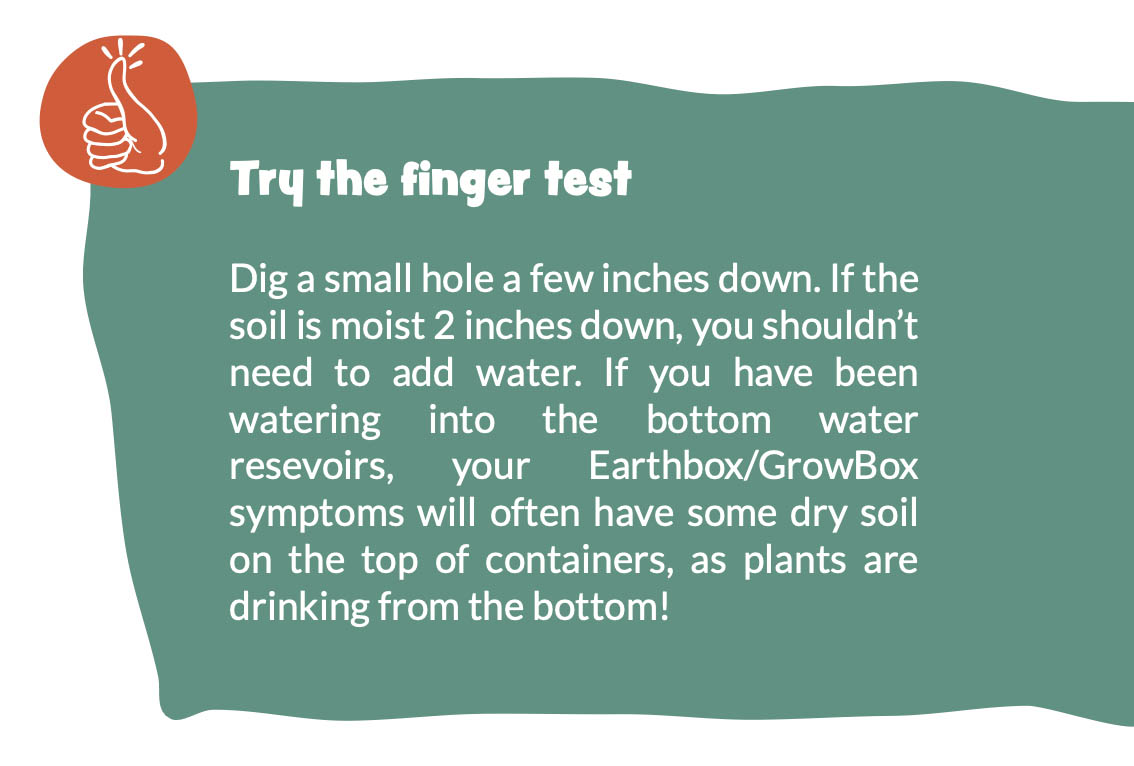
A moisture meter that can be purchased from a garden center can help you learn when to water your plants. The top surface of the soil may be dry but deeper down by the roots it can be moist. Too much water can drown the plant and too little can cause wilting. A moisture meter is pushed into the soil and will tell you if your plant is dry, moist or wet. The goal is to keep it in the moist area.
Key benefits of watering from the bottom include:
- Even and efficient watering
- Stronger roots
- Better nutrient absorption
- Salts are pushed away from the growing medium to keep the dirt moist
- Conserves water
- Easier for plant's roots to absorb the nutrients and deliver to the rest of the plant
How do self-watering containers work?
Different plants require different levels of water consumption. Having a full reservoir takes care of this need. Your plants are smart. They know what they need and how much to drink. They’ll help themselves to the water provided whenever they need it, which is why the reservoir should always have water available.
Tips for watering seedlings
For small seedlings, we recommend watering plants from below by adding water to the bottom tray and allowing plants to soak up what they need. Until you are comfortable with the amount of water to use, add a small amount of water, check the plants with a moisture meter and repeat until they are moist. Ensure any standing water is drained after one hour to prevent high humidity levels in your home. Using a dehumidifier near your plants will help you collect water to use for watering them but will also ensure your home's humidity levels don't rise above 50% which can begin to cause issues with mold in your home.
You can place your clear plastic dome over your seedlings if you leave a few days, to ensure moisture levels in your plants. Remember, over-watering can be as harmful as under-watering – keep an eye for signs of stress!
Troubleshooting
Don’t let your water reservoirs dry out! If the reservoirs go completely dry and the soil has dried out, it will be very difficult for soil to wick water.
Water-logged soil may be a symptom of an improper soil mix being used in your growing containers. Ensure that you are using a potting mix, not topsoil or pure compost. Your mix should be peat-based (70%-80%) that contains perlite or vermiculite. It should be light and fluffy when dry, and spongy when wet.
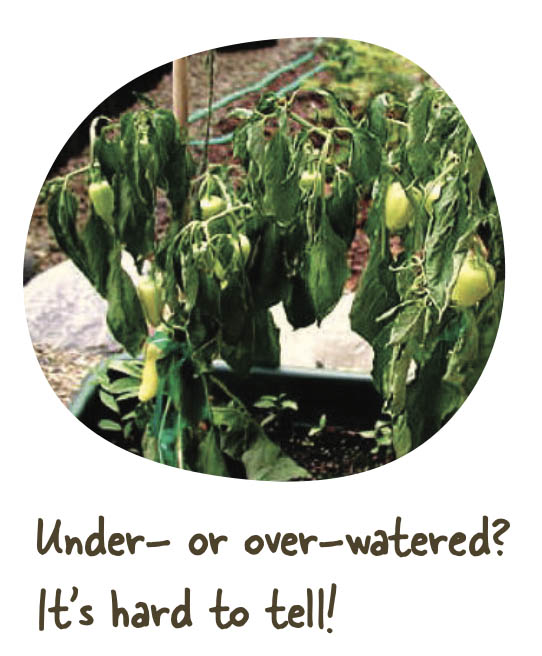
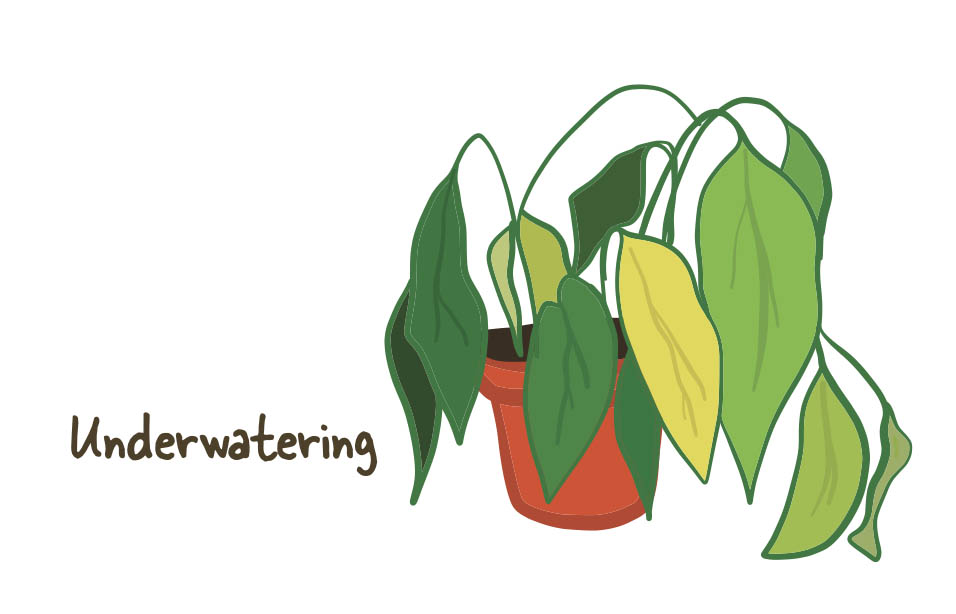
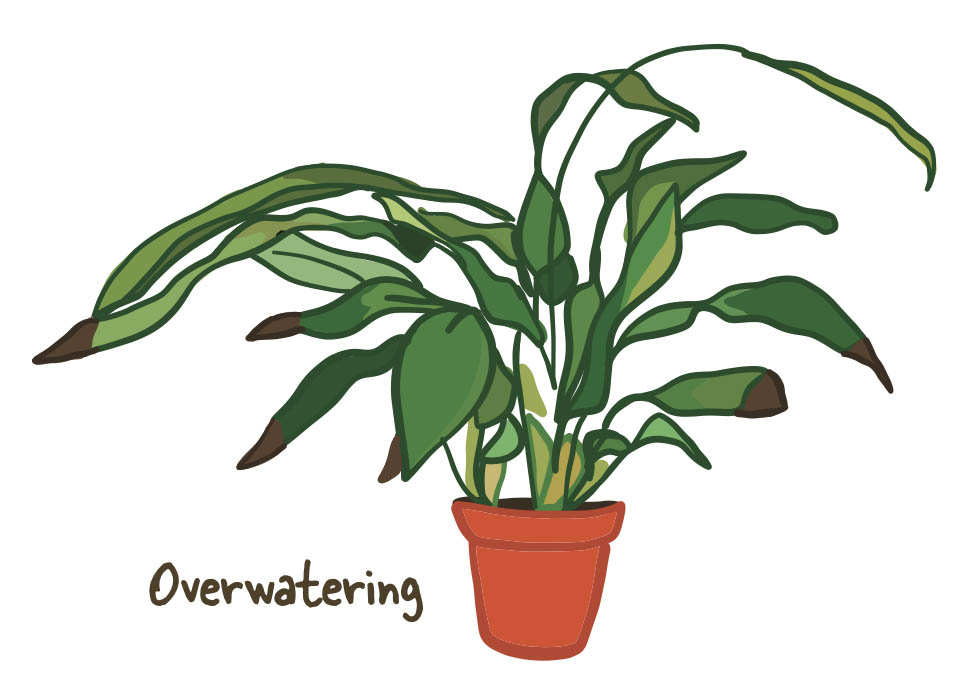
On occasion a gardener may see an indoor plant wilt and think it is dry but in fact it may have been over-watered and the roots are rotting or can’t take up nutrients. This can also results in wilting. Watering at this point can cause great harm to plants. Inspect your soil moisture!
The symptoms of over under-watering often mimic over-watering, so be sure to investigate your soil. It may be dry on the surface, but should have moisture 2 inches down.
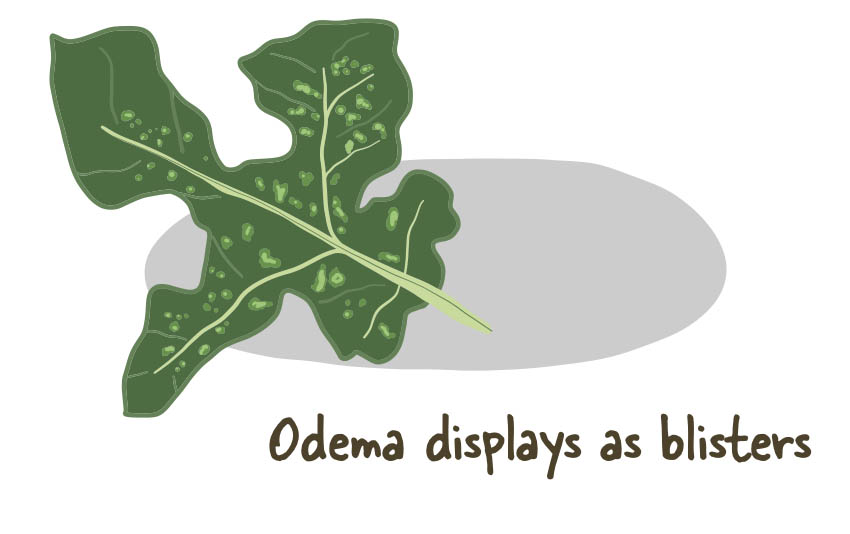
Odema is a disorder that develops when roots take up water faster than it can be used by the plant or transpired through the leaves. Water pressure builds up in the internal cells of the leaves causing them to burst, leaving dead cells that are visible as a blister, primarily on the undersides of leaves. It is often the result of erratic watering or excessively moist conditions.
Lack of Water
Symptoms
- Leaves wilt
- Growth is slow
- Brown spots appear on margins of older leaves, which eventually turn yellow and fall
- Soil is dry 2.5 inches down
Solution
- Adjust watering
- If soil does not wick water, water soil from the top to re-activate soil wicking properties
Over-Watering or Poor Drainage
Symptoms
- Leaves wilt
- Growth is slow
- Brown spots appear on leaf tips
- New and older leaves eventually turn yellow and fall
- Soil is constantly damp or drainage is too slow
- Roots become spongy, turn brown and rot
Solution
- Water less frequently
- Turn on oscillating fan to encourage air circulation
- Ensure that you’re using the proper potting mix
Thanks to Little Green Thumbs for providing the information and images on this page.