

Vegetative Growth
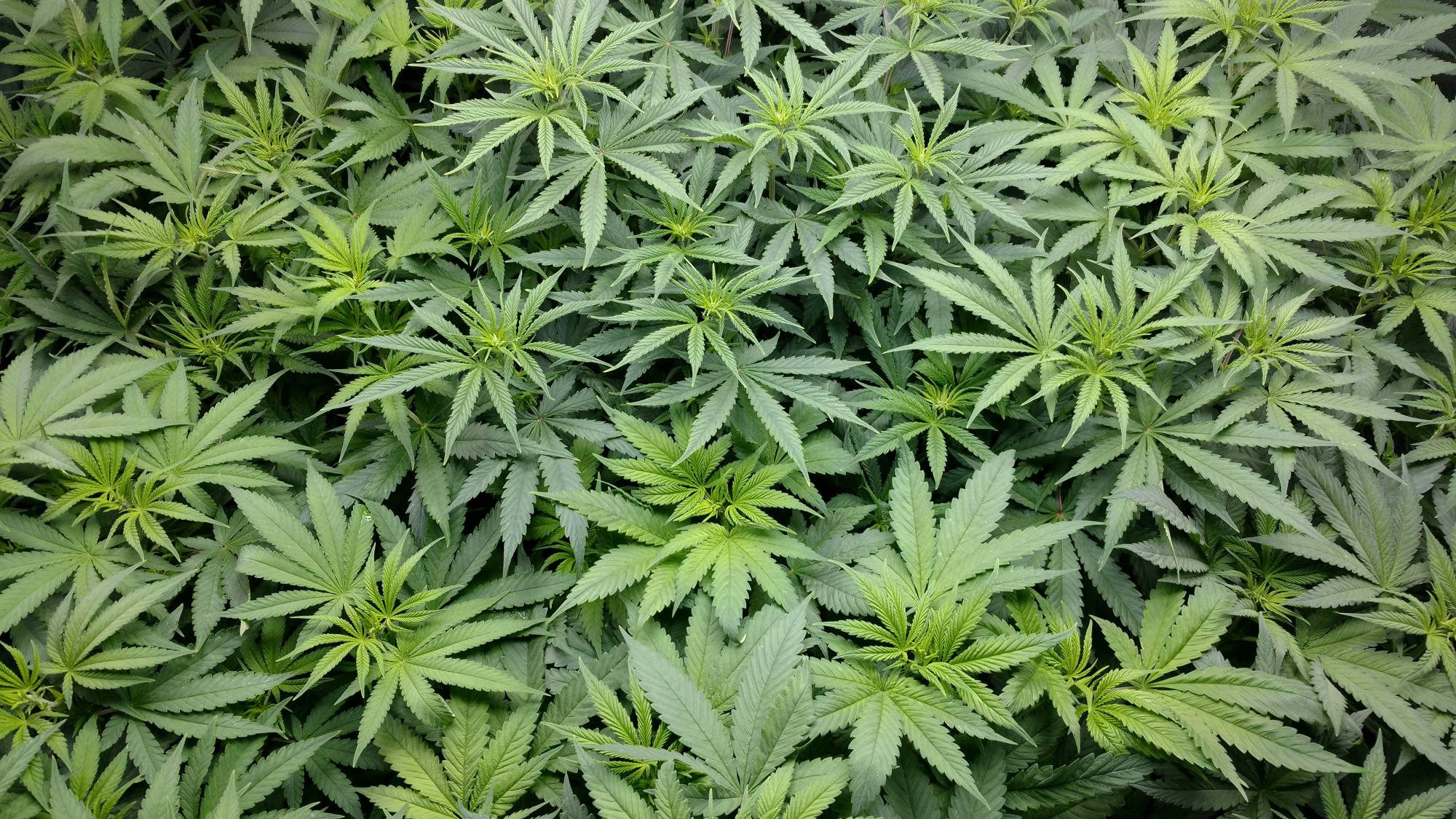
Vigorous growth with lots of leaves and stems!
By Chase BoucherOverview
At the end of the seedling stage, foliar growth rates increase significantly, and vegetative growth begins. The vegetative stage is the time in the plant’s life where the most growth occurs. This is the “bulking up” stage – plants are grown until a desired size and shape is attained. Photosynthesis is at its highest rate under long periods of intense light. Water and nutrient needs increase substantially as the plant grows, rapidly increasing the volume of its roots and shoots, and so it is important to ensure the plant is not limited by anything to maximize efficiency, yield, and overall plant health.
Other considerations such as training and shaping your plants, transplanting, and gender identification through “pre-flowers” are also important during vegetative growth. More on this below.
The length of this stage can vary greatly depending on the grower’s goals and desired plant size. In general, the longer you “veg” your plants, the larger they will get. If growing photoperiod-type plants outdoors in Saskatchewan, this stage lasts until early to mid September when the day length naturally shortens to less than 13 hours. Indoors, many growers grow their plants vegetatively for 3-4 weeks, but this can be highly variable depending on the desired outcome. For autoflowering plants, this stage typically lasts three to five weeks.
Some special cases also exist. “Mother plants”, for example, are kept in vegetative growth indefinitely to perpetually provide cuttings and clones.
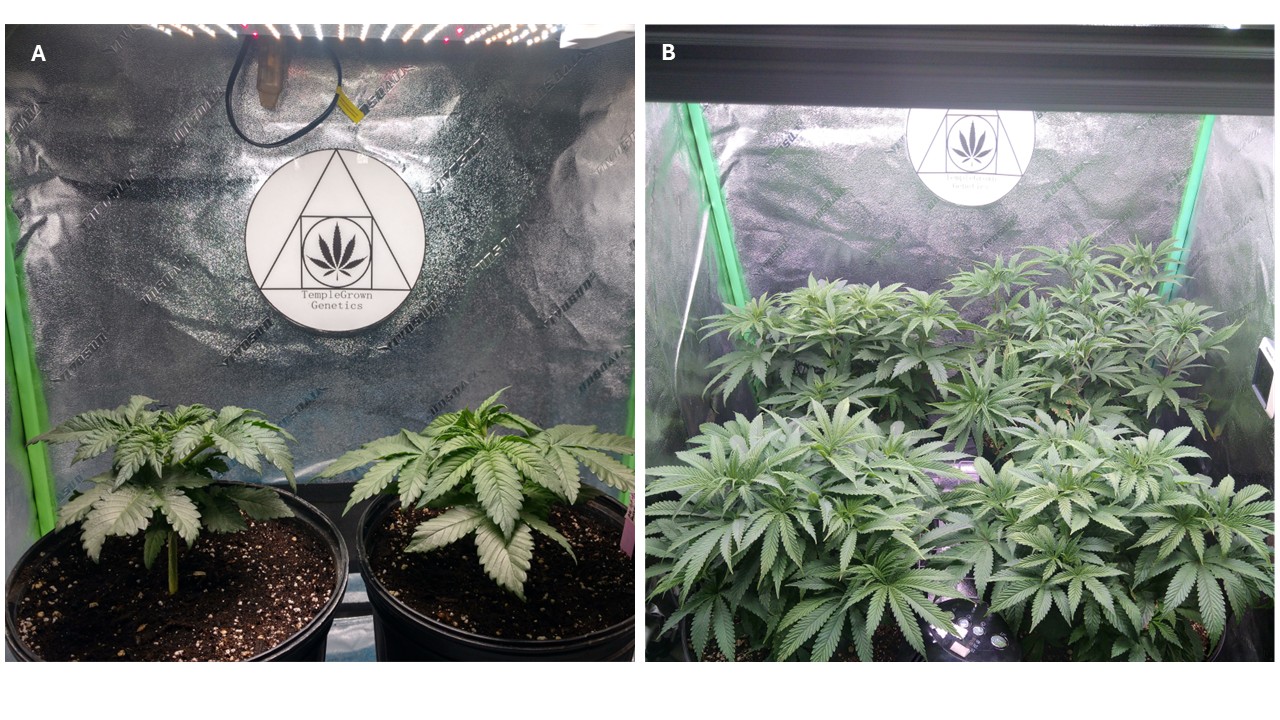
Gardner’s Note: It is even possible to grow cannabis in a bonsai style. This requires a very long vegetative period with intense training and manipulation. The author has never attempted it but would be very interesting to try!
Best Practices
Light
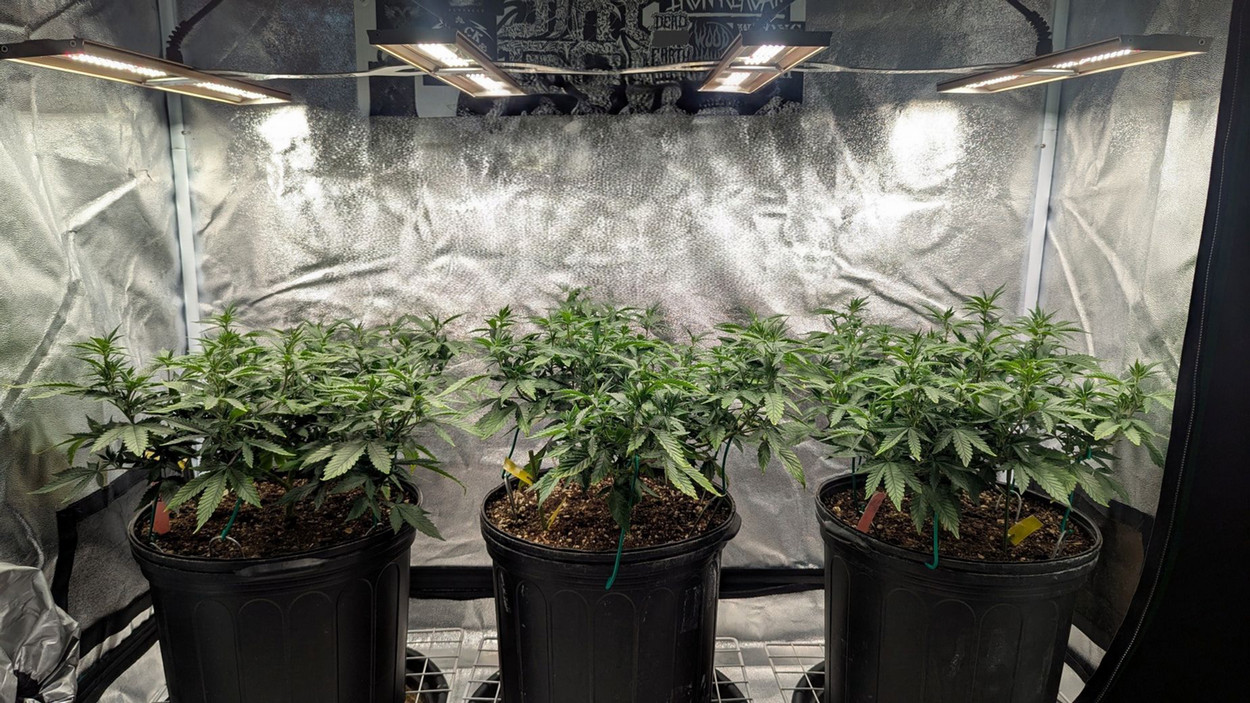
During vegetative growth, at least 14 hours of daylight is required, but a schedule of 18 hours of light and 6 hours of darkness is commonly used. The length of light is what triggers the plant to go from vegetative growth into flowering. Indoors, the grower oversees this schedule while outdoors it is mostly left to Mother Nature. In this stage, it is important to give your plants as much light as they can handle. Photosynthesis and growth are at their peak, and so the more light the plant has access to, the more energy and food it can produce, and the more efficiently it will grow. Some darkness is also required for the plant to perform certain processes and complete its metabolism. Plants need to "sleep” too!
Keep lights as close as possible without damaging the tops of plants. Most modern LEDs can usually be kept 20cm and 30cm (8” to 12”) above the tops of the plants. HIDs should be further away, around 45cm to 60cm (18” to 24”) or more depending on the strength of your lights. Remember, if it is too hot for you, it is too hot for them. Fluorescent lights are not recommended for vegetative growth as they are not powerful or efficient enough for strong and healthy growth.
Water
As the plant grows larger, it will require more water to keep itself properly hydrated and healthy. Plant tissue (leaves and stems) is approximately 80-95% water, and so the more tissue there is, the more water is needed. It is difficult to say how much to water as each grower’s situation will be different, but a good rule of thumb is when the pot is half as heavy as it is when it is fully saturated, it is a good time to water.
Watering enough that there is some runoff from the container is also good practice as this can help prevent a build up of salts which can be detrimental to plant health. Ensure the pot does not dry out to the point where gaps form around the edges of the container. Allowing the medium to dry out too much can damage the delicate root hairs and cause slowed growth and overall poor health. Also ensure that the plants are not overwatered, as this can also cause damage to the roots, encourage rot, and degrade plant health.
With the larger volumes of water now required, pH is important to consider, especially when growing indoors in a “closed” system like a container. Outdoors in your garden, there are many things in the soil that can buffer and naturally adjust pH. This is why watering with your garden hose is not a problem. Indoors, because the medium is much less diverse and less able to naturally deal with low or high pH, using water with a pH between 6.2 and 6.8 is ideal.
Nutrients
Like water, the plant’s nutrient needs will also increase substantially as it grows. These nutrients are what the plant is literally using to create and build new shoots, roots, and leaves, so ensuring this process is not limited is very important to be able to get the most out of your grow.
In this stage, complete fertilizers with a higher proportion of nitrogen are generally favoured. Nitrogen is used extensively in the production of new roots and shoots and so is usually the limiting factor during this stage of growth. Most general all-purpose fertilizers, such as a standard 20-20-20 mix will work well. Natural based options such as fish emulsion are also excellent. Check out our article about fertilizers for more details and help in choosing a something that works for you!
Environmental
Temperature and humidity should ideally be maintained between 21-26°C and between 50-60%, respectively. Cannabis will grow just fine outside of these ranges (to a point) but does best and tends to be the least stressed if this can be maintained. If it is too hot and/or dry, it can cause the plant to uptake greater amounts of water which can cause nutrient imbalances, as well as reduce the efficiency of photosynthesis. It makes it hard for the plant to breathe! If too cold and/or wet, this can impair the efficiency of the roots in absorbing nutrients, as well as slows overall growth. Fortunately, if growing indoors, most people’s houses are kept within an ideal range for growing cannabis. If growing in a tent, always make sure your ventilation fan is working as a tent will heat up quickly if not exhausted properly!
Additional Considerations
Preflowering
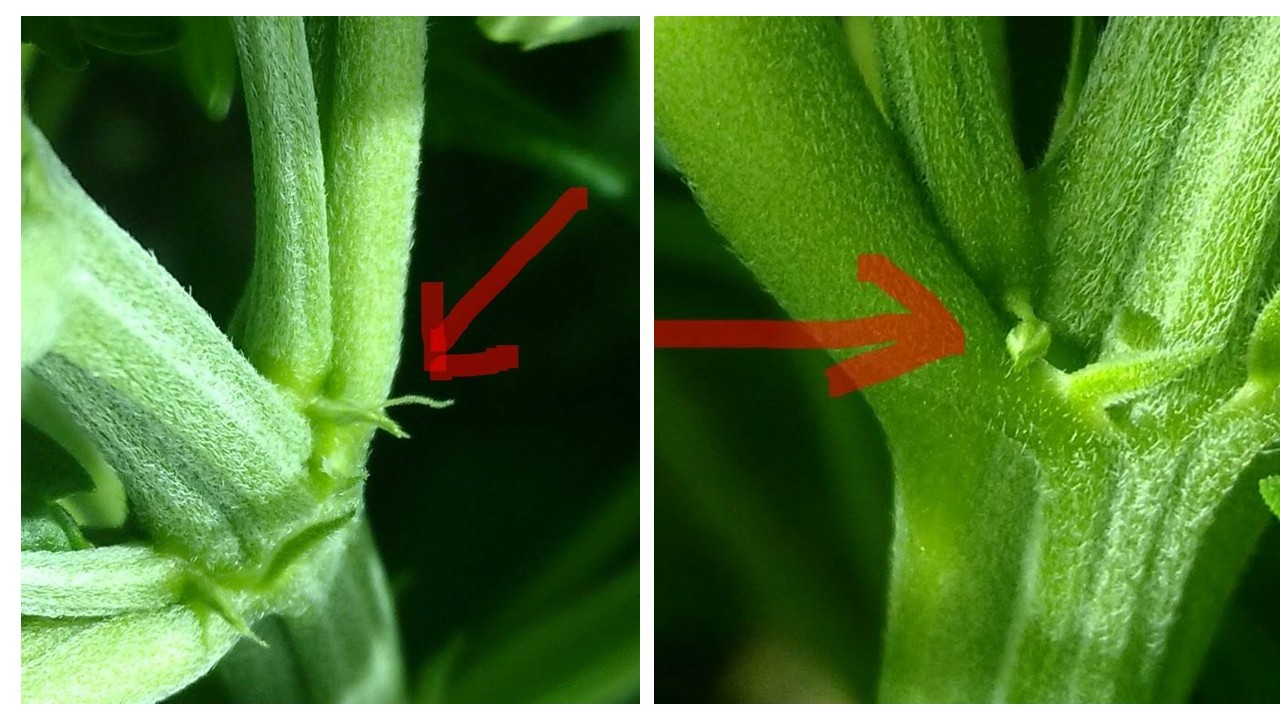
Cannabis will become sexually mature at around 4 to 5 weeks of total growth and will begin to grow and show “preflowers”. These are singular male or female flowers that grow out of the nodes (where the branches and leaves meet the stem) and can be used to identify the gender of the plant. This is very useful so that time, space, and resources are saved by removing males early and focusing on the females. The female plants produce the flowers and resin that we are ultimately interested in.
Beginning at around four weeks of growth, look closely at the top few nodes of the plants. This is where preflowers will grow from. If you can see a teardrop-shaped growth with a white hair, it is female. If it looks like a rounded head on a thin stalk, it is male.
Stipules are small green outgrowths that can sometimes be confused for a stigma. An easy way to tell them apart is by colour - stigmas are always white, where as stipules are always green. Additionally, stipules are usually much larger than stigmas.
Training
Physical manipulation (“training”) of the plants also happens during vegetative growth. Training is completely optional and is mostly done to control the shape and size of the plant and maximize the spread of the canopy for increased yields. Cannabis, like most plants, has a feature called “apical dominance”. Very basically, this means that there will is one dominant main central stem, with secondary branches and stems growing out of it. If no training is done, these secondary branches tend to stay much smaller than the main stem, forming the classic “Christmas tree”-shaped plants. By manipulating the plant through methods like bending stems or pinching growth tips, these secondary branches and stems can also be encouraged to grow large, resulting in a bush-like plant and potentially increasing the overall yield of your plants.
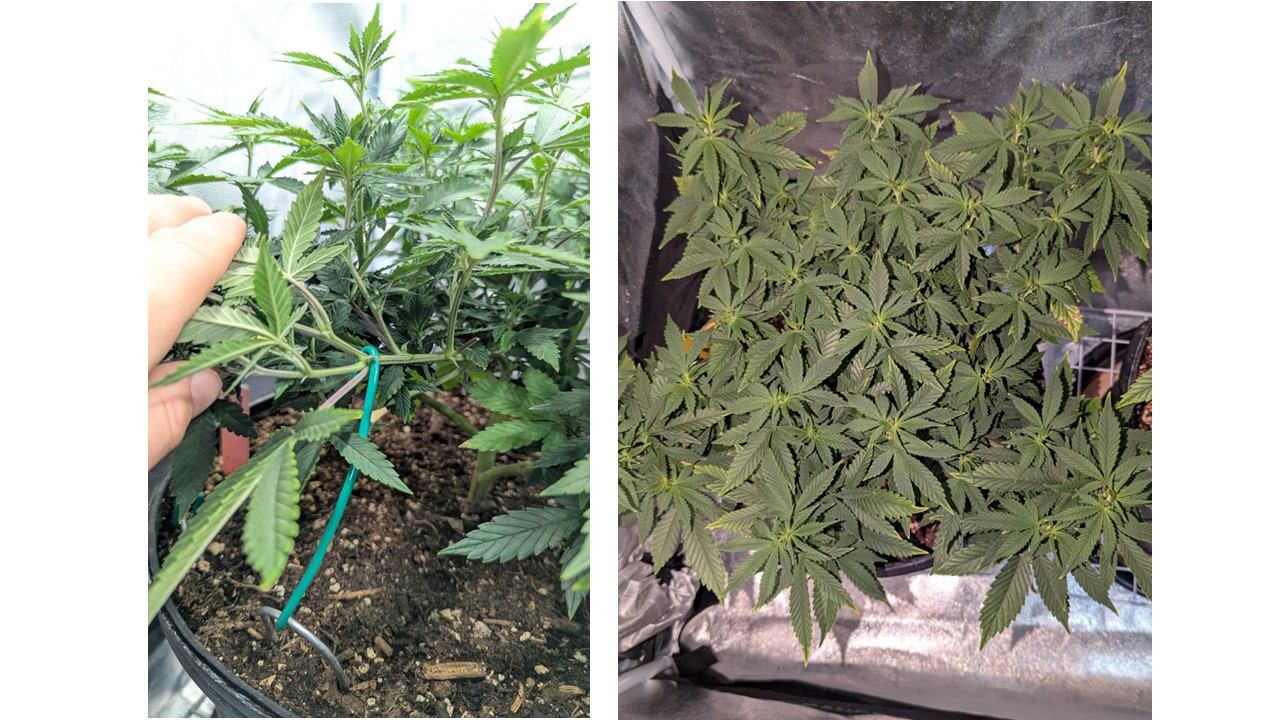
Left: A branch being bent nearly horizontal and tied down using a wire plant tie. Lower branches begin to grow vertically, increasing canopy size. Right: a top view of the plant. Each branch has been tied down allowing for more bud sites to be exposed to the light. (Photos by C. Boucher)
Transplanting
Transplanting should be done as needed during this stage. Always ensure your plants have enough room for their roots so that they do not become restricted and stressed. It is also important to make sure that your plant is in a large enough container so that you do not need to transplant during flowering as this can stress the plant and be detrimental to the overall quality of the cannabis flowers.