

Seedlings
The first stage of growth.
By Chase BoucherOverview
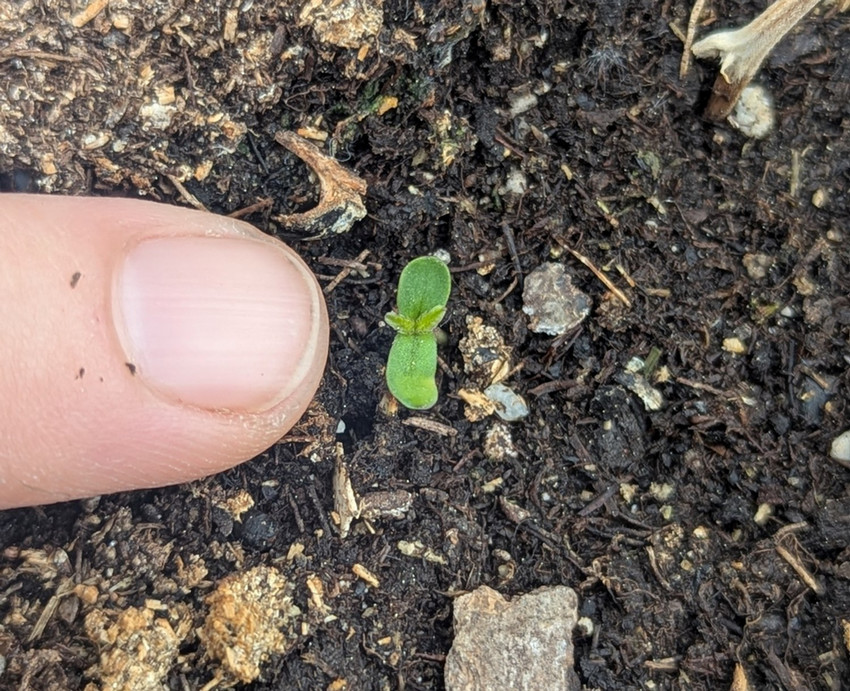
After germination/planting, once the new plant has emerged from the medium, and with the appearance of its first “true” leaves, it is now officially a seedling. During this stage, the plant will begin using light and photosynthesizing to produce food to use and grow. For the first week or so after emergence, there will be slower above-ground foliar (leaf) growth as the plant is focused on setting up a robust rootzone. You can think of it as if the plant is “getting settled” in its new home. Soon after, leaf and stem growth will catch up to the roots and the plant will continue to grow for another couple of weeks, after which it begins vegetative growth. The seedling stage usually lasts for about three weeks.
During this time, its is crucial to provide the plant with proper conditions to prevent issues and avoid future problems. The rootzone is sensitive to both moisture and temperature fluctuations and so ensuring these parameters stay relatively constant is important.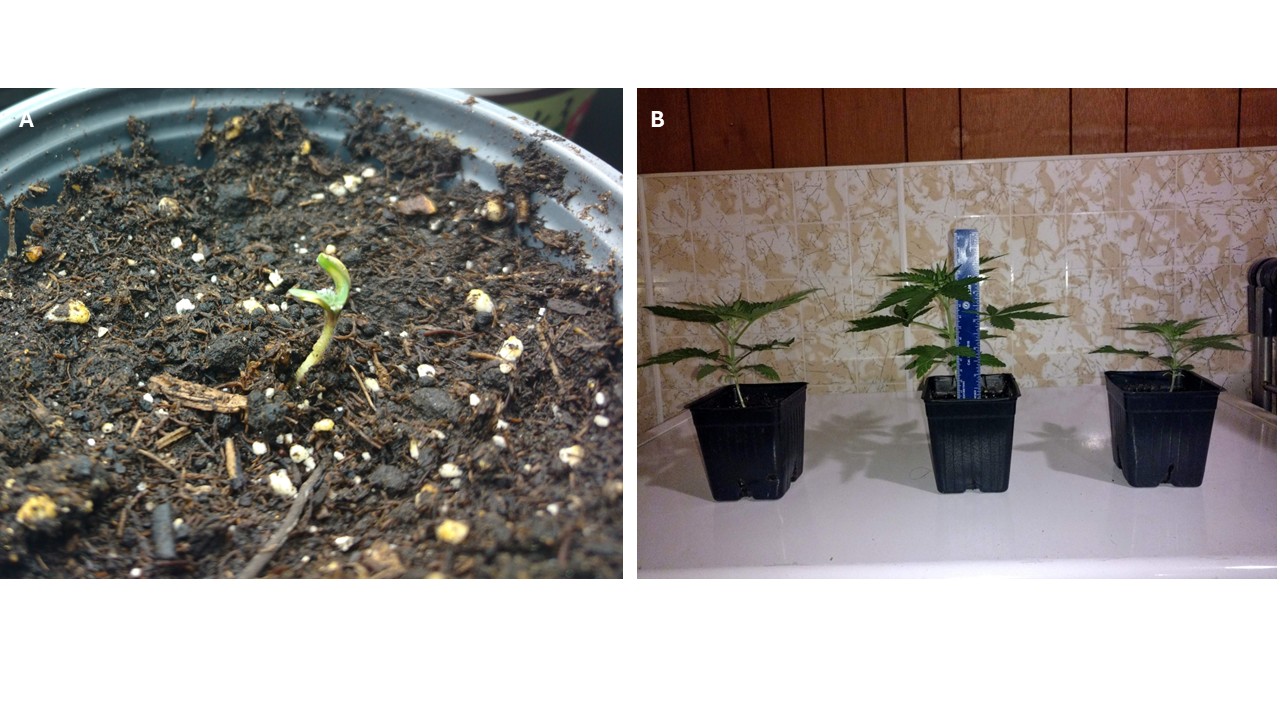
Seedling General Requirements
Light
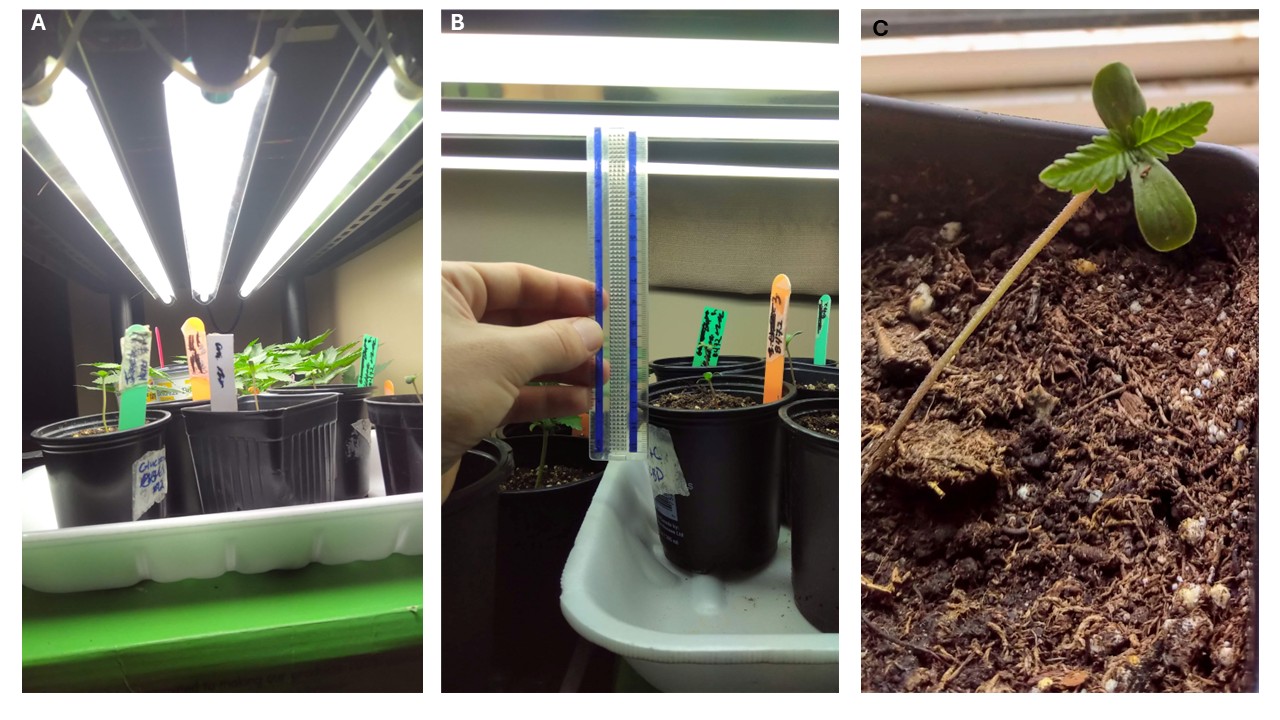
Cannabis seedlings require at least 14 hours of light, but 18 hours is commonly used. In this stage, fluorescent lights work well as they are not too intense and do not give off much excess heat. LEDs also work well, though are generally more expensive than fluorescent types. HIDs can also be used but care must be taken not to overdo it as these lights are very bright and very hot. If seedlings do not get strong enough light, they will grow long, weak, spindly stems that are challenging to manage and often fall over.
If using fluorescent type lights, a distance of 10cm to 15cm between the tops of the plants and the lights is usually enough. For LED type lights, start with approximately 30cm (12”). If they are becoming too tall and leggy, move the light closer to prevent more elongation. If using HIDs, start with 90cm (36”) and adjust as needed. Remember: if it is too hot for you, it is too hot for them.
Gardener’s Note: A couple of basic LED “shop lights” sold at most local hardware stores work great for seedlings and are often much more affordable than dedicated “grow” lights.
Water
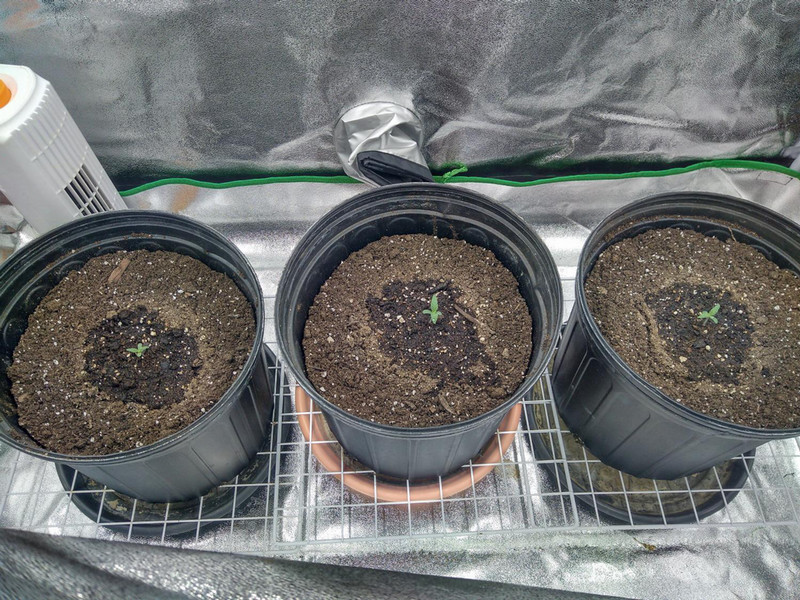
Water is very important in the life a young seedling, both in quality and in the amount given. Lack of water can cause the tiny, delicate root system to dry up and become damaged, severely stunting or even killing the young plant. Too much water can also be fatal, causing the roots to literally drown and/or promote diseases like root rot (Fusarium sp. or Pythium sp.).
A light but consistent supply of water is all that is required – using small amounts of water more often is better than larger amounts all at once. Ideally, the medium should feel like a damp sponge – enough to feel wet but not dripping or over saturated. Start with small amounts directly around the small plant. Its much easier to add more water if needed than to remove it once it is in the soil. As the plant grows and increases in size both above and below ground, gradually increase water amounts while always maintaining a moist but not soaking wet medium.
Water quality should also be monitored. Water with very high electroconductivity (EC) or large amounts of dissolved solids (TDS) can be detrimental to plant growth, especially in these early stages. Fortunately for us here in Saskatoon, our water is excellent quality and at this stage can be used straight from the tap without issue. Check out our article on watering and water quality for more information
Nutrients
Seedlings do not generally need to be fertilized until after the first week or two of growth. The cotyledons provide food for the plant to use in its early stages, and so external inputs are usually not immediately required.
When beginning to fertilize your seedlings, it is good practice to start with half strength (or even one quarter strength) fertilizer. Full strength is often too strong for the delicate plant and can cause more damage than good. If using a pre-fortified soil such as a supersoil, mix 1:1 with regular potting soil to dilute the mix and provide the seedling with a more comfortable growing environment and prevent fertilizer burn. If growing outdoors, placing some slow release, organic fertilizer in or near the planting area is ideal.
Environmental
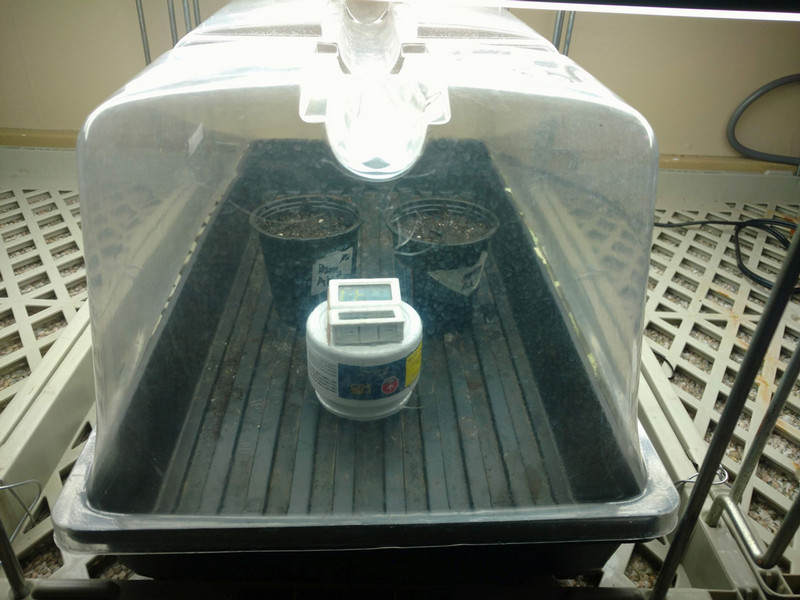
Temperature and humidity should be maintained around 21°C to 27°C and 60 – 70% relative humidity. Excessive temperatures (>30°C) can cause stem elongation, and cooler temperatures can slow growth. Higher humidity while the plant is very small reduces transpiration (plants “exhaling”) and helps to reduce stress on the roots which are the primary way plants uptake water. As the plant grows and produces more leaves, humidity can be gradually reduced. Trays with “humidity domes” and plant heat mats can be used if conditions are unfavourable in your grow space.
Growing Outdoors
When direct seeding outdoors, most environmental conditions are impossible to control so ensuring your plant has enough water and is kept moist is the most important thing to consider. Also beware of insects such as cutworms as well as birds like sparrows as these critters seem to very much enjoy munching on young cannabis plants! It may be worth starting your plants indoors in small pots or plugs and transferring them to your garden when they are larger and have been hardened off – just like you would with your tomatoes or pepper plants. For more information, see our article about hardening off seedlings!
Gardeners Note: If using clones as starting material, there is no seedling or germination stage, as these events only occur once in a plant’s life. Clones are produced asexually through vegetative propagation and, once they are established, begin their life in the vegetative stage.