

Watering your Cannabis Plants
It may seem straightforward but there are a few tips and tricks to be aware of!
By Chase BoucherGardener's Note - this article is mostly intended for indoor growers but there are some good points geared towards outdoor growing as well.
Watering your plants may seem straightforward (and it mostly is!) but there are few key considerations to keep in mind in terms of both water quality and watering methodology.
How/When to Water
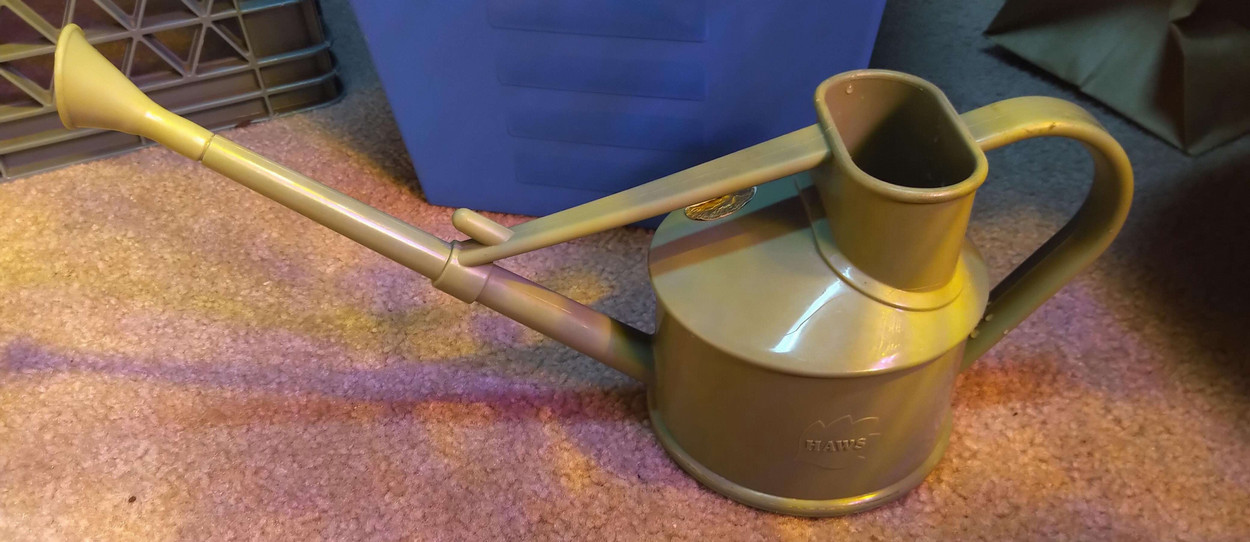
This may seem obvious but there are a few tips and tricks to consider. When growing outdoors, keeping our plants well hydrated is important, especially in our dry and hot Saskatchewan climate. Your standard watering can or hose-based attachment is ideal. If growing outdoors in your garden, most cannabis plants need about 2.5cm (1 inch) of water per week. If using containers, water slowly and evenly, allowing the water to percolate down to ensure even saturation. Water will always take the most efficient way through the medium, and so can create channels which can cause uneven saturation, especially in very dry media. To avoid this, ensure that you are watering the entire surface of the pot and allowing it to move into the medium. Some runoff (excess water dripping from the pot) is ideal as this prevents salts from building up near the bottom of the pot due to being dissolved and transported with the water as it moves downwards through the medium.
Additionally, don’t let your container sit in a tray of water! This can damage the roots and cause other issues. If you let your container dry out too much, you may see gaps between the edge of the soil and the walls of the container due to the soil "shrinking" as it lost its water. This is hard on the plant as it can cause many of the delicate root hairs to dry out and die. If this happens, water slowly, allowing the water to soak in and re-saturate the medium. You may immediately see a lot of runoff but just take your time and allow the water to percolate down and slowly soak through.
Deciding when to water will vary greatly depending on the size and overall stage of your plant, the temperature of the growing area, as well as the genetics themselves. A very general but good rule of thumb for plants in the vegetative and flowering stages is when the container weighs roughly half as much dry as it does wet, it is a good time to water. During the seedling stage, it is important to always keep the root zone damp/moist. More details on specific watering recommendations can be found in the respective growth stage articles.
Total Dissolved Solids (TDS)
Water is known as the “universal solvent” for a good reason – many things can mix with and dissolve in water. These solutes (the things that dissolve) can have varying effects on plant growth and are often detrimental in high concentrations. TDS, very basically, is the number of dissolved solutes or minerals in the water, measured in parts per million (ppm). It is related to both pH and hardness, as well as electroconductivity (EC). High TDS levels indicate that there is a lot of material dissolved in the water, which can interact with and cause issues in plants directly, as well as interact with things like fertilizer that might be added. If you have relatively high TDS (>300 ppm), it may be worth using filtration or collecting rainwater (if feasible).
Hardness
Very basically, hardness is a measure of the concentration of dissolved calcium and magnesium in the water. High hardness can cause nutrient imbalances and problems with uptake through competition with other essential nutrients. It can also form crusts in the medium and cause issues with water retention and infiltration. Hardness is measured in mg/L of calcium carbonate (CaCO3). In Saskatoon, our water is considered “moderately hard” at around 160mg/L. In the author’s experience, this level of hardness does not require any extra treatment. For those with hardness over 300mg/L, RO-filtration or using a water softener may be beneficial. If using “softened” water, be aware that sodium levels will be much higher due to the water softening process.
pH
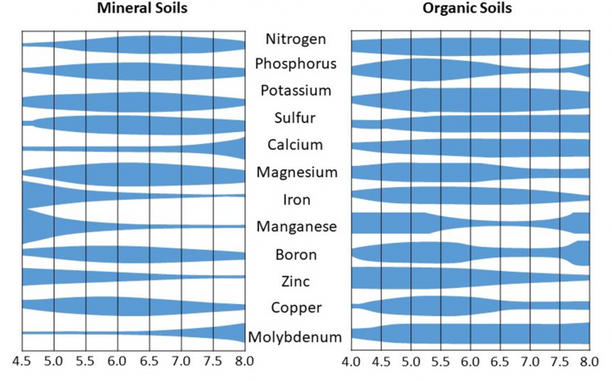
Again, very basically, pH is a measure of how acidic or basic a solution is. Most plants grow best with pH levels between 6.2 and 7.0, cannabis included. The pH of your water then is very important as it will ultimately dictate the pH of your medium. If it is too low, soils become acidic and many nutrients become “locked out”, causing plant health to suffer. The same happens if pH becomes too high – many nutrients are no longer available for the plant to use and so plants grow poorly, or not at all. The pH will also vary based on your water source. Rainwater tends to be slightly acidic to neutral, around 6.8-7.0. This can, however, be affected by local conditions such as high levels of pollution. Groundwater is highly variable depending on the source and local geology. In Saskatoon, our tap water is sourced from the South Saskatchewan River and has a pH of approximately 8.2, which is fairly high in terms of providing maximum nutrient availability potential to plants, and can cause the pH of container-based media to drift over time. Most common synthetic or salt-based complete fertilizers cause a drop in pH and so adjustment is usually not needed if using these products. If not using salt-based fertilizers, products like phosphoric acid (“pH Down”) can be used to adjust irrigation water to appropriate levels. These products are corrosive, so ensure proper protection is used.
Gardener’s Note: Using this water directly in your garden is not an issue as there are many soil-based organisms and processes that buffer and adjust the pH to an appropriate level without our intervention.
How to Test Your Water
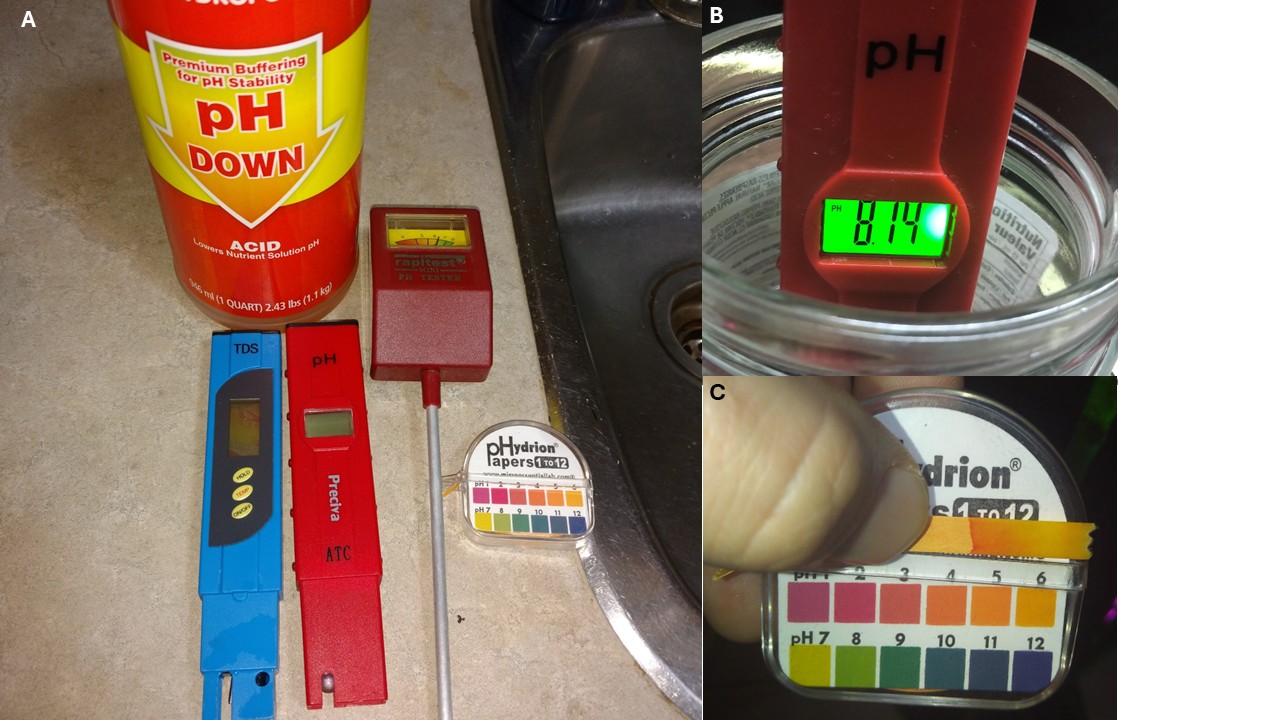
To test your pH, home gardeners have a few different options. The most inexpensive option is to use an indicator strip paper. The paper is dipped in the water, and the colour change is compared to a key showing different colours that represent different pH levels. This method is quick but only as accurate as the observer's eyesight. For more accurate observations, a pH meter can be used. Simply place the meter in the water and read the display. These work very well and can be purchased quite inexpensively but must be properly calibrated to ensure accurate readings.
To test for total dissolved solids (TDS), using a TDS meter is recommended. These can also be found quite inexpensively and are a worth while investment. These work the same as the digital PH meter – just place the tip in the water and read the display. Higher quality testing devices are used in more commercial or research-based settings but are expensive and unnecessary for typical the home grower.
Water Sources
- Ground water (or well water) in central to southern Saskatchewan tends to have high amounts of dissolved ions such as iron, sodium, magnesium, or calcium due to the mineralogy of our soils. This is why many farms and acreages in Saskatchewan use filtration/treatment systems for their potable water.
- Rainwater is free and is relatively clean (depending on how you collect it), so is an excellent option if you have rain collection barrels, especially if growing outdoors. Did we mention it’s free?!
- Tap water is highly variable depending on your location and the water treatment capabilities of your town or city. Here in Saskatoon, we are fortunate to have relatively high-quality water that can be used with little adjustment. If using tap water, make sure to check your local water quality report and/or test it yourself to determine whether adjustment or filtration is needed.
- Distilled/Reverse Osmosis (RO) water is very pure due to the processes used to make it. It can be used as well but is usually unnecessary (and expensive). As these types of water contain very minimal dissolved materials, they can be used to flush and wash your medium out, “resetting” it back to baseline if problems in the root zone begin to occur.
Chlorine/Chloramines
Chlorine and chloramine are added/formed in drinking water to disinfect and kill any harmful organisms before consumption. They are very common and used in most major water treatment processes. Chlorine is also considered a plant nutrient and is used in small amounts in the healthy growth and metabolism of plants. Excessive amounts can cause root browning and poor plant health. Many cannabis growers encourage the removal of chlorine and chloramine (if present) from water before using. Here in Saskatoon, our tap water has both free chlorine and chloramine present in very low concentrations and in the author’s experience, has never caused an issue with healthy growth or development, and so does not need to be considered. If you do choose to treat your water to remove chlorine/chloramine:
- Chlorine should evaporate if set your water out and exposed to air for 24-48 hours, stirring occasionally. The chlorine will eventually off-gas and escape into the atmosphere.
- Chloramines are compounds formed when ammonia hydroxide combines with chlorine. This compound is a dissolved solid and must be filtered using reverse osmosis (RO) or treated chemically as it does not evaporate.