Preventing common problems
Prevention is the best way to avoid problems in indoor growing.
Remember, even the greenest thumb can’t prevent everything!
Depending on the amount of light, water quality, the ambient temperature, humidity and air circulation in your growing space, you might be faced with some challenges.
Some of these challenges may have an easy solution; others may be out of your control. Be sure to enjoy the many varied experiences of the growing season. If you encounter challenges, do what you can or have time for, but don’t lose sleep over it! This section is meant to help you navigate some of the issues that are facing your indoor garden.
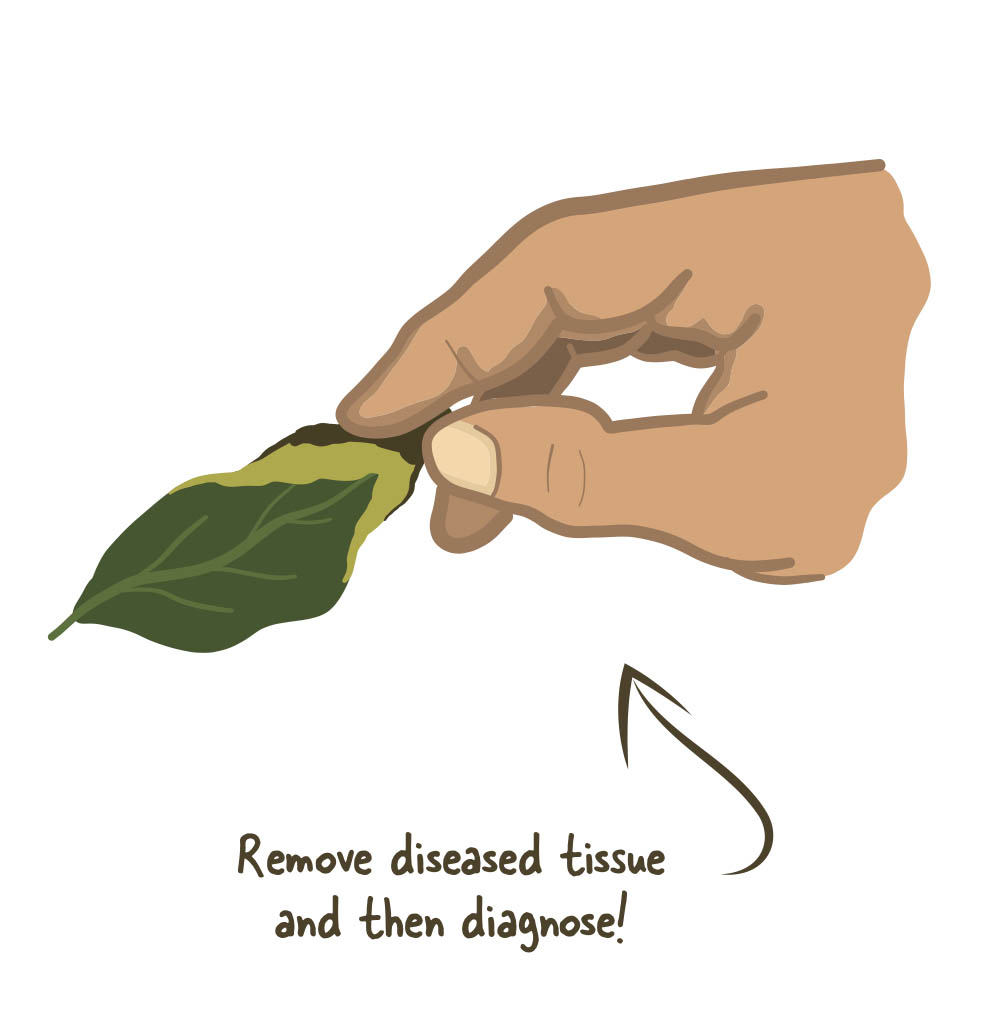
Remove diseased, damaged or weakened plant material regularly in your indoor garden. These weakened parts will attract pests and will provide the conditions for disease to develop!
Diagnosing the Issue
Have a problem? Don’t panic. The first thing to do is make sure you actually DO have a problem.
Before rushing for a pest or disease diagnosis, remember to think back to the maintence of L.A.W.N.S. as this is what a plant NEEDS to survive. Plant growth is affected by light, temperature, humidity, water, nutrition, and soil. Does your plant have all of its needs met? Is it stressed? Do you know what the healthy version of the plant looks like?
Often times the problems in an indoor garden are environmental - due to lighting, temperature or moisture, and can be fixed by restoring favorable growing conditions. Ensuring ideal growing conditions is also the best way to avoid other garden problems. When plants are grown under stressful conditions (such as low light and excess water), soil-borne pathogens and pests are more likely to develop.
Abnormalities in your plant's growth are typically caused by one of three things:
Disorders
Disorders (environmental problems) are abnormalities usually caused by environmental factors, such as light, temperature, humidity, water, nutrition, and soil.
Diseases
Diseases are abnormalities caused by microorganisms or other pathogens invading your plant. For a disease to happen, three factors must be present: (1) a susceptible plant, (2) a viable pathogen, and (3) a favorable environment.
Pests
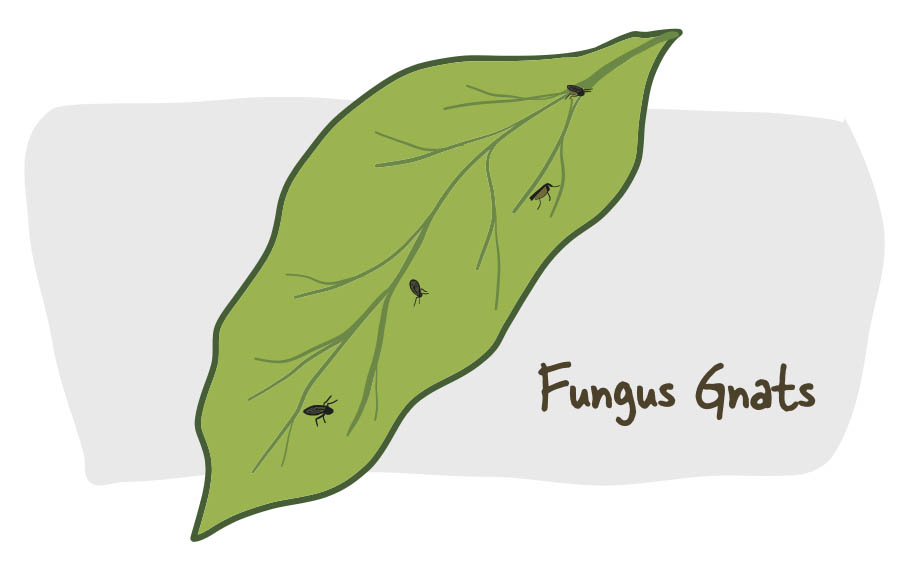
Pests are insects which cause harm to your garden plants, such as whiteflies, aphids or fungus gnats.
Do I know what a healthy plant looks like?
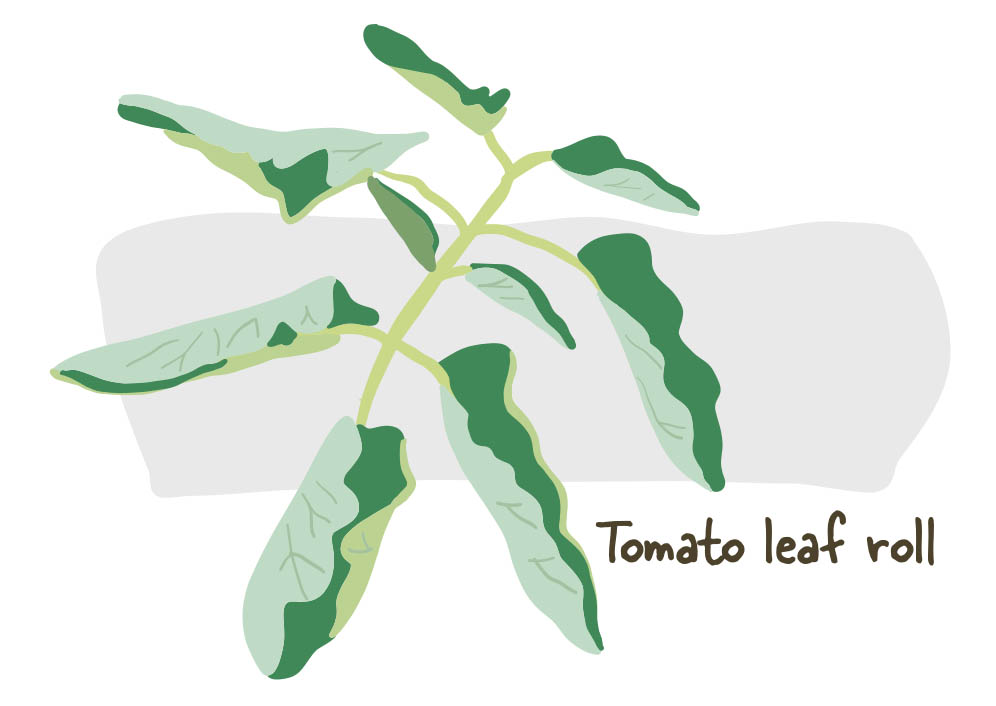
Often times gardeners will panic about something “normal”. Tomato leaf roll is an example. Some tomatoes are supposed to be yellow or green at maturity. If your issue is a very small problem, either remove the tissue or isolate the offending plant. If your plants are strong and the problem small, they may not need your intervention, especially if it’s caught early. Use your judgment and experience and be ruthless in discarding diseased, damaged or weakened plant tissue.
Is it slimy or moldy?
If so, dispose of the rotten/ rotting stuff, disinfect the watering trays, adjust your watering practices and install a fan to promote air circulation.
Does it move or fly?
If you’ve ruled out an environmental disorder, inspect your plant more closely. Give your plant a shake. If it moves, or you see small bugs flying, it looks like it’s been chewed, has swollen areas that could be eggs, or if you find webs, eggs or droppings, it’s probably a pest. Decay or discoloration can be a sign of disease (assuming fertilization isn’t an issue). Spots on leaves can indicate pests or disease. Check out the “Common Issues: Pests & Diseases” section to see if anything looks familiar.
Remember, everything that can possibly be named in biology has a name, likely a long Latin one! General treatment for many of the issues in your classroom garden is often similar. Does it really matter what name you call your issue? Remove infected plant parts first, restore the garden to favourable growing conditions and utilize your pest controls. In dire situations of viral disease, discard of the entire plant, sterilize the growing materials, replace the soil and grow again. Do what you can, but don’t stress! Remember, success in the garden and learning is not the absence of failure; it’s the persistence through failure.
Generally, the presence of plant problems will require one of two approaches:
Minimal Intervention
If only a few plant parts are infected, you can dispose of these parts and the disease/pest may be easily managed. The issue may still be around, and you can try adjusting your environment to reduce it, but it remains manageable by monitoring and removal of infected tissue. Use a clean pair of scissors or pruner to remove the tissue - don’t just pluck it off or you may bruise the plant. You may find that you can control pests by simply squishing bugs, dabbing with rubbing alcohol on a q-tip, or using sticky traps to capture them. If outdoor conditions permit, take an affected plant outside in a protected area where natural predators can come to rid the plant of the pest.
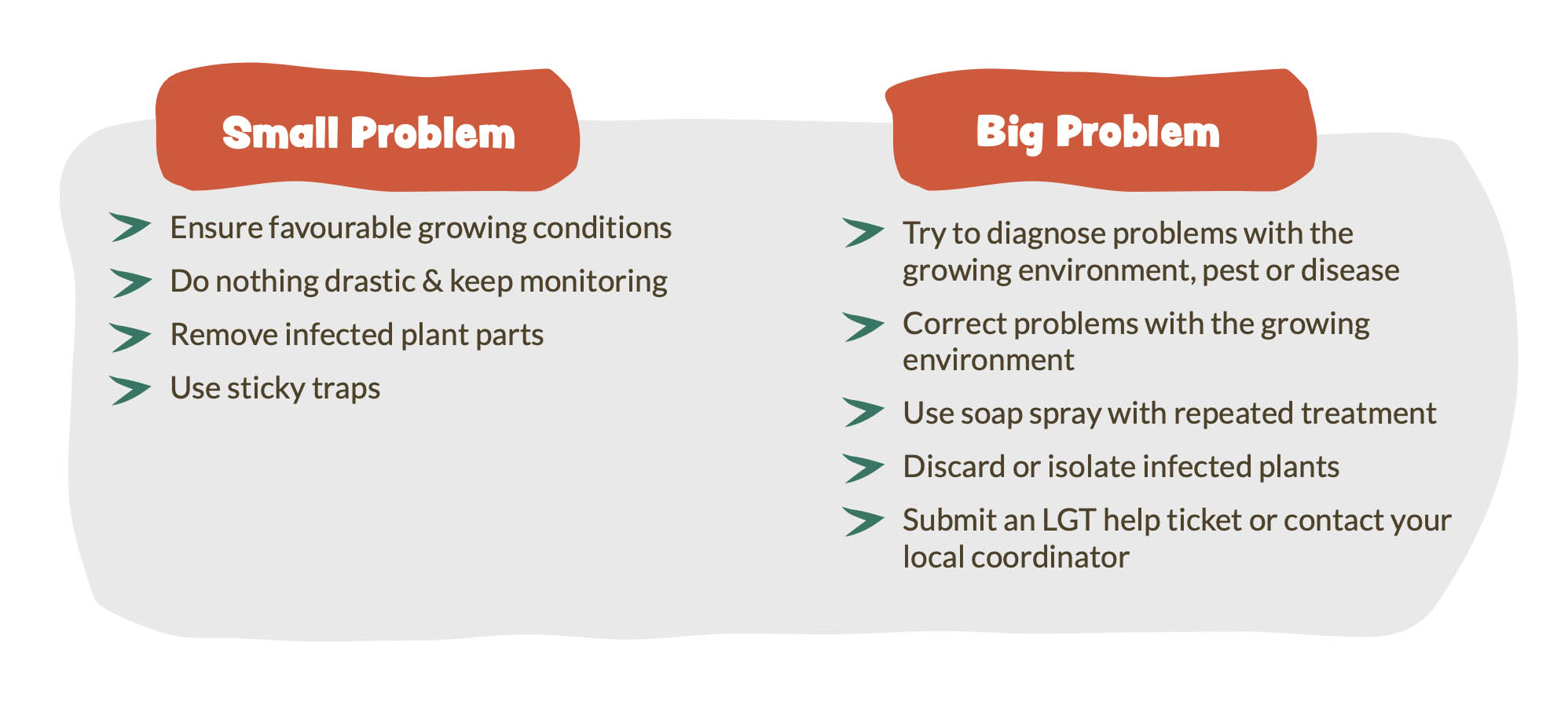
Significant Intervention
It’s too late to just remove a few leaves or a few plants, the disease or pest may be taking over. You can treat a pest issue with a solution of insecticidal soap spray (dish soap, vegetable oil and water). You may even be able to simply vacuum a pest infestation away! If the issue worsens, you may need to salvage as much as you can, throw out the rest, and determine what was wrong with your environment in the first place. In this scenario it can be most helpful if you can identify the disease, pest or environmental disorder. Review the Common Systems and Common Issues before setting on a course of action!
Add links to this page to other pages and add Common symptoms chart and environmental problems chart.
Thanks to Little Green Thumbs for providing the information and images on this page.