Female vs. Male Cannabis
What do they look like and what is the difference?
By Chase BoucherCannabis is dioecious, meaning it produces separate male and female plants. Unless breeding or producing seeds, most cannabis growers are only interested in female plants, as females produce the flowers and resin that are typically cultivated and consumed. Male and female plants can be difficult to distinguish before flowering begins (see the section on preflowers in our vegetative growth article), but they become much easier to identify once flowers start to develop.
Male Cannabis Plants
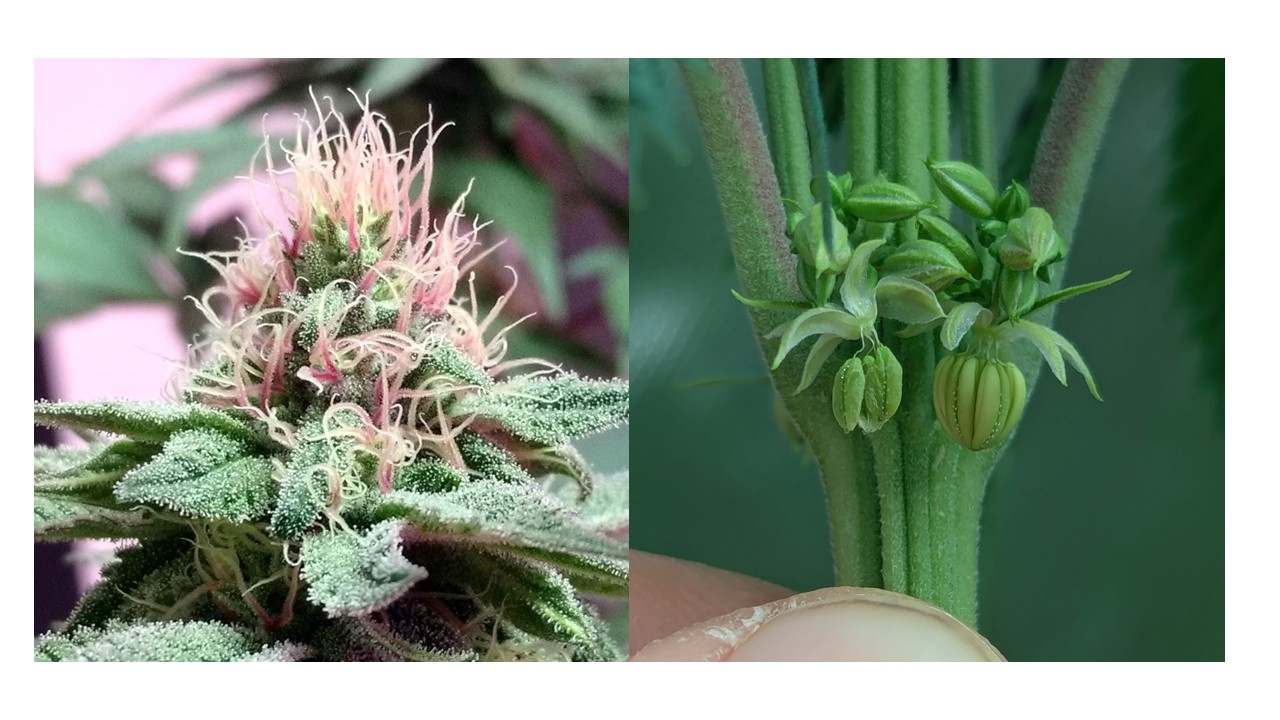
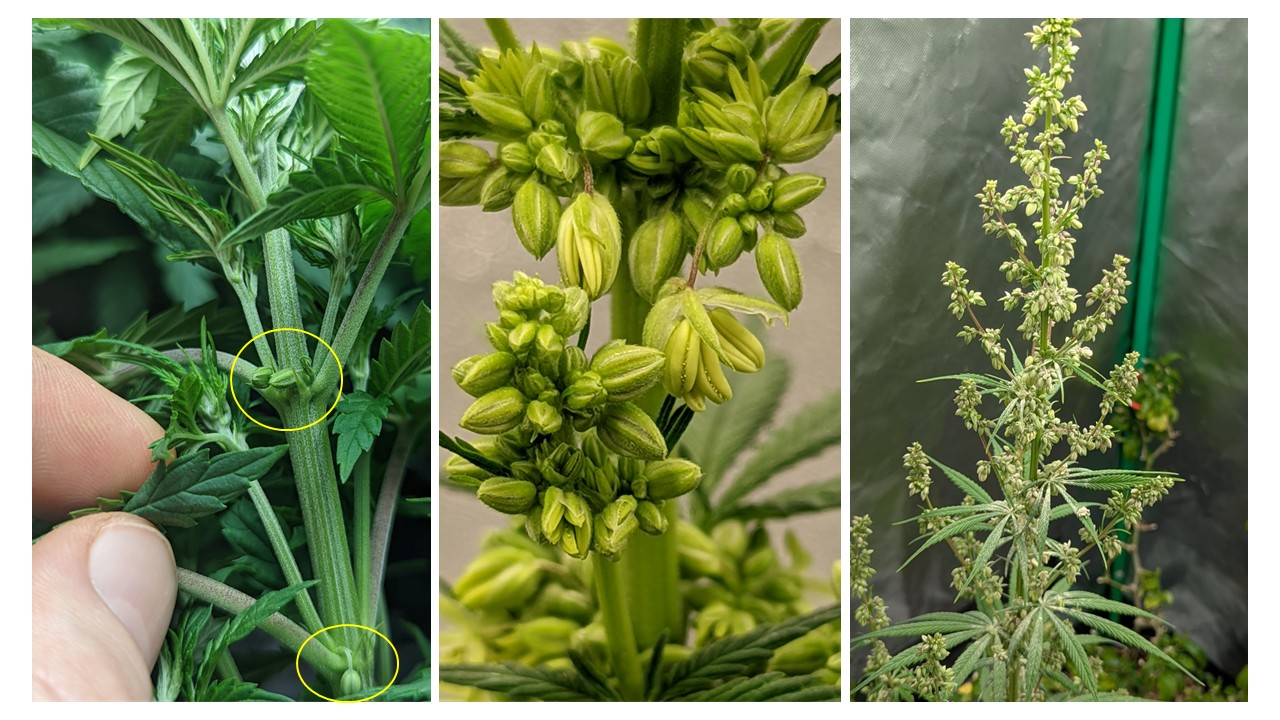
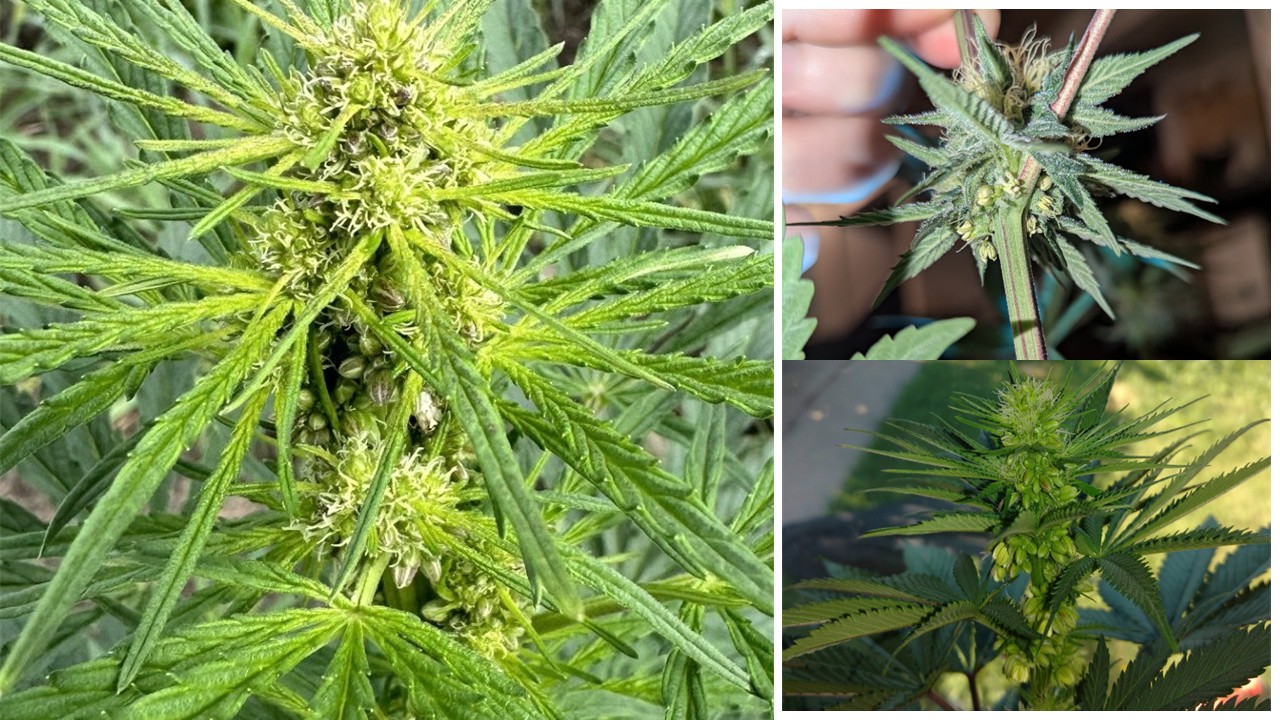
Male plants often grow faster and show preflowers slightly earlier than females. Their flowers are very distinctive, appearing as small hanging mushrooms or rounded pods on elongated stalks. Over time, these pods open to expose the stamens and release pollen.
Preflowers may already contain viable pollen, so take care not to accidentally spread unwanted pollen. Compared to females, male plants generally stretch more, flower earlier, and mature more quickly. If your goal is to produce seedless flowers, all male plants must be removed before they release pollen.
Female Cannabis Plants
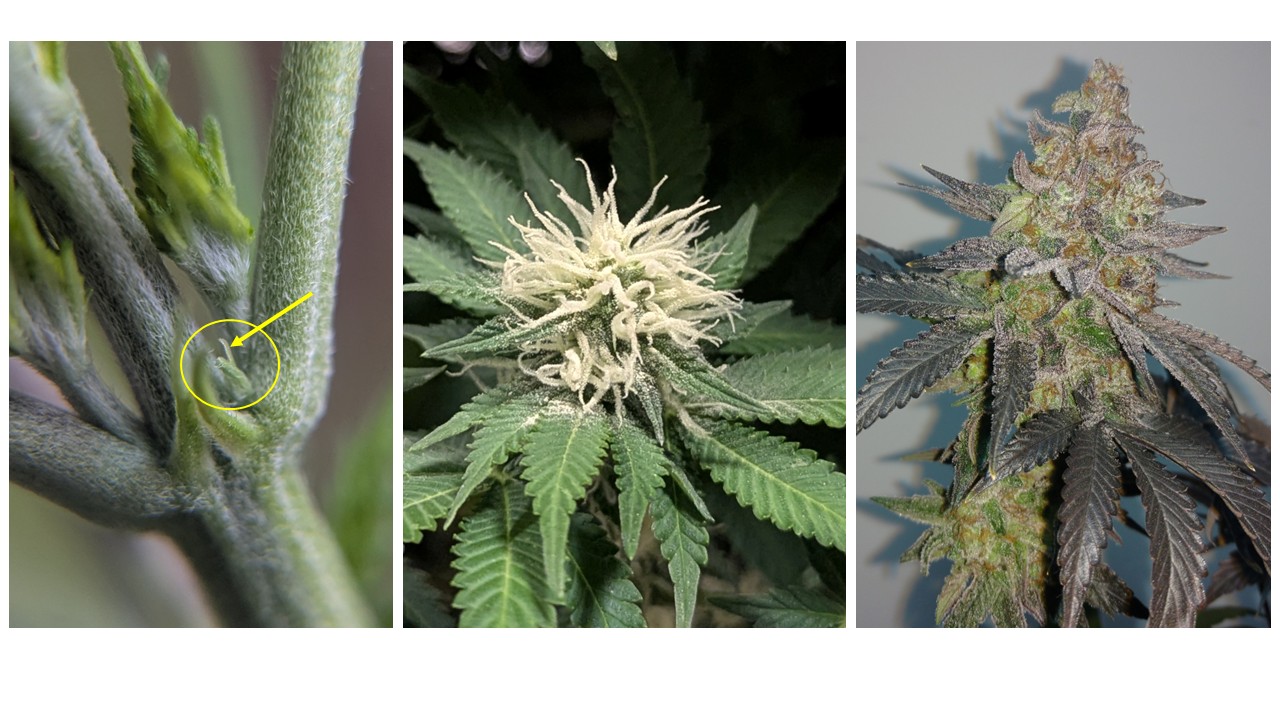
Female plants are identified by the white hairs, known as stigmas, that emerge from their flowers. Female preflowers usually appear slightly later than those of male plants. They resemble small, tear-shaped structures with stigmas protruding from the tip.
Once flowering is induced, clusters of flowers containing numerous stigmas develop at each growing tip. If these flowers are not pollinated, they will continue to grow and enlarge until they are ready for harvest. Female plants generally take significantly longer to mature than males.
Identification Tips
Cannabis plants typically reveal their sex within about one week after the flowering cycle begins. Examining preflowers is often the quickest and most reliable way to determine a plant's sex. This is the author's preferred method. By identifying and removing male plants before transplanting, growers can save valuable time, space, and resources.
It is also possible to send plant tissue samples to a laboratory for sex identification. This testing can be performed very early in a plant's life cycle, but it is often expensive and inaccessible for most home growers. As a result, it is used primarily by researchers and commercial producers.
Gardener's Note: It is not possible to determine whether a cannabis plant will be male or female simply by examining the seed.
Monoecious Cannabis
Cannabis can also be monecious, which means it produces both male and female flowers on the same plant. Most industrial hemp is of this type as it is much more efficient for producing seed since the male flowers grow right next to the females, almost guaranteeing pollination. Some non-industrial hemp-type plants (i.e., consumable cannabis) may also exhibit this feature. For personal consumption this is not a beneficial trait. The severity is variable – some plants may only produce a few male flowers and no pollen, while others can produce copious amounts of viable pollen, capable of fertilizing other plants and producing seeds. If a female plant is beginning to produce male flowers, many growers choose to discard it as the risk of accidental pollination is too high.
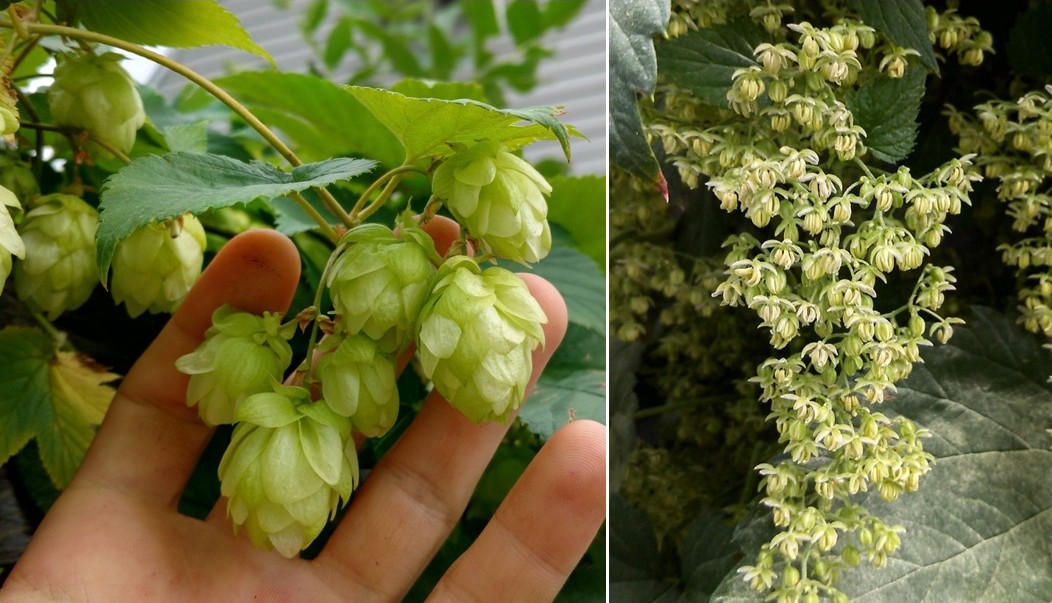
Interesting Fact: The closest relative of cannabis is hops (Humulus lupulus). Hops is also a dioecious species, although most people are only familiar with the female plants, which produce the aromatic cones used to flavor beer. If you have ever seen a male hops plant, however, the close relationship between the two species becomes easy to recognize.