

Natural Fertilizers - Animal-based
Animal-derived fertilizers are a great option for feeding your plants, and can help contribute to a circular economy, utilizing by-products that may otherwise have been discarded.
Overview
Natural fertilizers and amendments come from many sources and thus are quite variable. Some come with potential ethical and or environmental issues and so due diligence is always important when choosing a product that will both address your issues and comply with your values. Needs should be based on a comprehensive, accurate soil test. This can save time, money, and frustration in the future.
Here is some basic information regarding animal-based or animal-derived fertilizers and soil amendments. See the table at the end of this article for details on nutrient composition and availability. Many products are blends of these and other ingredients that may or may not me defined as organic. Always read the labels!
Manures
- Most often derived from cattle, sheep, chicken, and occasionally rabbit.
- Nutrient content variable depending on source and inputs (what the animal was eating). Product availability also can be limited depending on location.
- Cattle, sheep and rabbit manures usually relatively low in N-P-K and high in organic matter and trace elements. Chicken manure often has higher N-P-K but can burn plants if overapplied.
- Slower release of their nutrients. Benefits soil microbes as well as can help improve soil texture and add organic matter.
- Must ensure manure is properly processed and mature. Immature manure can cause issues as it continues to break down in the soil.
- Can contain antibiotics and hormones (know your source!).
Meals (Bone, Blood, Feather)
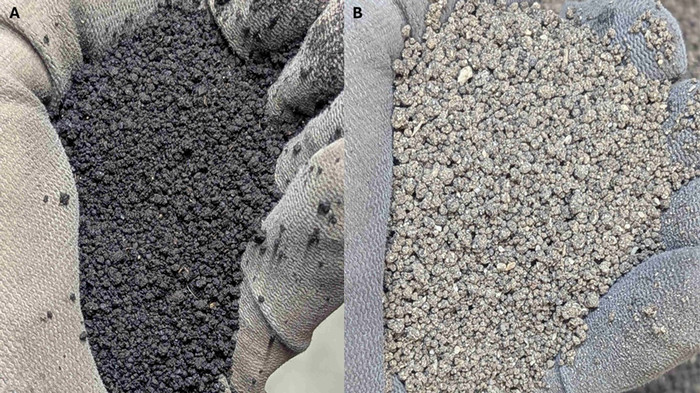
- By-products of the meat industry. Blood meal is the dried blood collected during livestock processing. Bone meal comes from the bones, which are steamed and ground into a meal. Feather meal comes from the poultry industry.
- Blood meal is high in available nitrogen, bone meal (both bovine and fish-derived) contains phosphorus and calcium, and some minor nitrogen.
- Usually readily accessible, especially in areas with intense livestock industry such like we have in Western Canada.
- While blood meal is readily accessible, the phosphorus in bone meal needs a soil pH of less than 7 to be able to be absorbed by plants.
- Blood and bone meals often have a pungent smell that can attract animals looking for something to eat (they are made of blood and bone after all!). They can also repel animals like deer, moose, or rabbits, making them think a predator has made a kill nearby.
Fish-Based Products
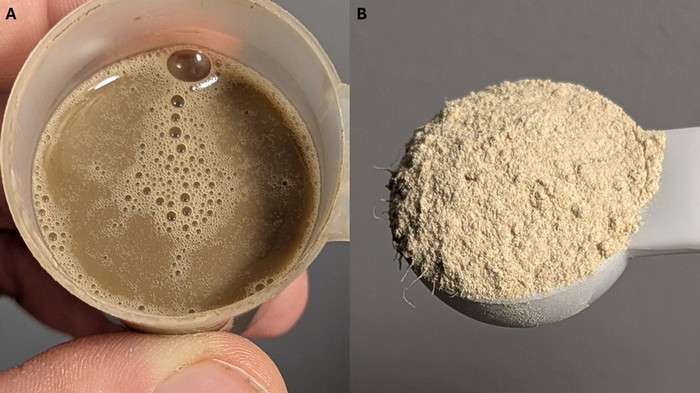
- Most often come as liquid emulsions (heat and chemically processed) and hydrolysates (cold pressed, less processing, hi-DROL-isate), and less commonly as dry powdered meals.
- Contain mostly balanced amounts of N-P-K with a large assortment of micronutrients that are readily available to plants. Fish bone meals lack potassium but are high in calcium.
- Contains organic matter and other compounds beneficial to soil microbe health
- Can be issues with sustainability and ethical harvesting practices – often hard to find details on sources and/or production methods.
- They smell like fish and can attract flies and other, larger animals (dogs, cats, bears) that think there is a free meal nearby. The smell does disappear quickly but should be a consideration, especially in high-risk areas such as Saskatchewan's northern communities.
Insect Frass (poop and shells)
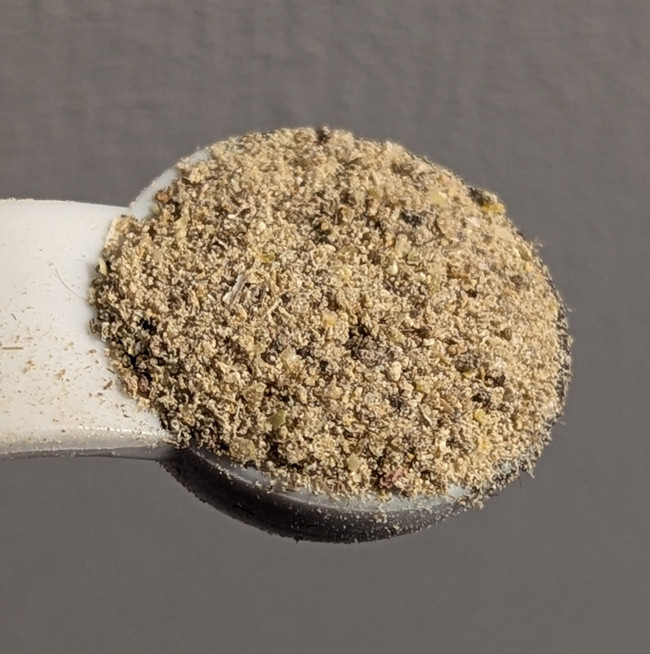
- By-products of cricket, black soldier fly, or mealworm production. Other sources exist but are less common.
- Comes as finely ground powder.
- Varying levels of N-P-K and minor nutrients and often is a complete fertilizer. Nutrient levels highly dependent on species of insect and diet used in production.
- Also contains high levels of organic matter and chitin. Chitin has been shown to enhance plant defense against certain stressors such as insect predation, drought, and salinity.
- Relatively new industry and product; availability can vary depending on location.
- When insects are fed food waste as an input, can have added environmental benefits (waste diversion/valorization).
Crustacean meals (crab/shrimp/lobster)
- By-product of seafood industry – made up of ground shells of various types of crustaceans
- Comes as a light coloured, finely ground, slightly fishy smelling powder.
- Varying levels of N & P, sometimes K. Also contains calcium, magnesium, and many trace elements.
- Contains chitin, which may benefit the plant through inducing resistance to predatory and environmental stressors (insect predation, drought, etc.)
- Can be hard to find; often dependent on local industry for availability.
Wool Products
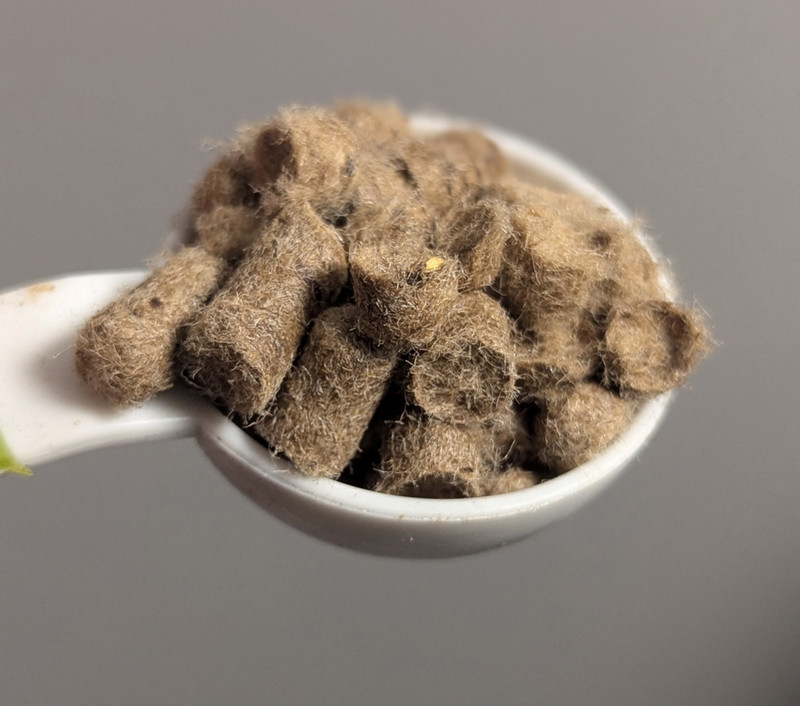
- By-product of the sheep/wool industry. Derived from sheep shearing as well as waste products generated during wool processing.
- Can be raw wool, wool pellets, wool powder, or hydrolyzed wool. Hydrolyzed wool is either liquid or powder and is not commonly available.
- Source of slow-release nitrogen, calcium, sulphur, magnesium, as well as a good variety of micronutrients.
- An excellent and sustainable way to utilize and create value for a waste product and engage in a circular economy but can be hard to find unless local industry exists.
Guanos (poop of bats, seabirds)
- A product of bats or seabirds, depending on source.
- Source of nitrogen, phosphorus, potassium, and some micronutrients. Nutrient amounts depend on type of guano and origin.
- Can also contain heavy metals and hazardous fungal spores (histoplasmosis).
- Heavy environmental and social-based ethical considerations as collecting guano is highly disruptive to local ecosystems, and potentially hazardous to human health.
_____________________________________________________________________________________________________
Table 1. List of organic fertilizers and amendments with typical nutrient content and nutrient availability. Information adapted from product labels, Teaming With Nutrients (Lowenfels, 2013), and Whalen et al. (2020).
|
Fertilizer Type |
Nitrogen (N)% |
Phosphorus (P) % |
Potassium (K) % |
Trace Elements |
Nutrient Availability* |
|
Animal-Derived |
|
||||
|
Blood Meal |
12 |
0 |
0 |
+ |
Fast |
|
Bone Meal |
2-4 |
10-15 |
0 |
+ |
Medium |
|
Fish Bone Meal |
4 |
13 |
0 |
++ |
Medium - Fast |
|
Fish Emulsion |
5 |
2 |
2 |
+++ |
Fast |
|
Fish Hydrolysate |
2-4 |
2-4 |
0.5-2 |
+++ |
Medium - Fast |
|
Insect Frass (Cricket, Mealworm, Black Soldier Fly) |
3-7 |
2-3 |
2 |
+++ |
Fast |
|
Feather Meal |
7-12 |
0 |
0 |
+ |
Medium - Slow |
|
Crab/Shrimp Meals |
2-5 |
3-8 |
0-15 |
++ |
Medium - Slow |
|
Cattle Manure |
0-1 |
0-1 |
0-1 |
++ |
Medium |
|
Chicken Manure |
5 |
3 |
2 |
++ |
Medium - Fast |
|
Rabbit Manure |
0-1 |
0-1 |
0-1 |
++ |
Medium |
|
Wool Pellets |
10 |
0 |
2 |
+ |
Medium - Slow |
|
Bat Guano |
3-10 |
3-10 |
1 |
++ |
Fast |
|
Plant Derived |
|
||||
|
Alfalfa Meal |
3 |
0-1 |
2-3 |
+++ |
Medium - Fast |
|
Kelp/Seaweed (Liquid) |
0 |
0 |
3 |
+++ |
Fast |
|
Kelp/Seaweed (Powder) |
0 |
0 |
17 |
+++ |
Fast |
|
Other plant meals (corn, soy, cotton) |
7 |
2 |
1 |
+ |
Medium |
|
Wood Ash |
0 |
1 |
3 |
++ |
Medium - Fast |
|
Mined Product |
|
||||
|
Garden lime (CaCO3) |
0 |
0 |
0 |
+ |
Slow |
|
Dolomitic Lime (MgCaCO3) |
0 |
0 |
0 |
+ |
Slow |
|
Gypsum (CaSO4) |
0 |
0 |
0 |
+ |
Medium - Slow |
|
Rock Phosphate (Soft/Colloidal) |
0 |
2.5 - 13 |
0-1 |
+ |
Slow |
|
Rock Dusts (Basalt, glacial) |
0 |
0 |
0-1 |
++ |
Slow |
|
Wollastonite (CaSiO3) |
0 |
0 |
0 |
+ |
Slow |
|
Sulfate of Potash** |
0 |
0 |
50 |
N/A |
Medium |
|
Epsom Salts (MgSO4)** |
0 |
0 |
0 |
N/A |
Fast |
|
Azomite |
0 |
0 |
0 |
+++ |
Slow |
|
Diatomaceous Earth |
0 |
0 |
0 |
++ |
Slow |
|
Greensand/Zeolite |
0 |
0 |
0 |
++ |
Slow |
|
Other Amendments |
|
||||
|
Compost |
Variable |
Variable |
Variable |
Variable |
Medium - Slow |
|
Compost Teas |
Variable |
Variable |
Variable |
Variable |
Medium - Fast |
|
Worm Castings |
Variable |
Variable |
Variable |
+++ |
Medium - Fast |
|
Perlite |
0 |
0 |
0 |
N/A |
N/A |
|
Vermiculite |
0 |
0 |
0 |
+ |
N/A |
|
Biochar |
0 |
0 |
0 |
+ |
N/A |
|
Mulch |
0 |
0 |
0 |
+ |
N/A |
* Nutrient availability greatly depends on surface area of the fertilizer. In general, the finer the texture of the material, the more accessible it is likely to be. Availability is also highly dependent on local soil conditions and microbial activity.
** Mainly produced synthetically but some mines exist.
References
Albert, S., & Bloem, E. (2025). Antibiotic contamination of fresh organic fertilizers and processed bio-based fertilizer products. Agrosystems, Geosciences & Environment, 8(1). https://doi.org/10.1002/agg2.70059
Beesigamukama, D., Subramanian, S., & Tanga, C. M. (2022). Nutrient quality and maturity status of frass fertilizer from nine edible insects. Scientific Reports, 12(1), 7182. https://doi.org/10.1038/s41598-022-11336-z
Camilli, F., Focacci, M., Prà, A. D., Bortolu, S., Ugolini, F., Vagnoni, E., & Duce, P. (2025). Turning Waste Wool into a Circular Resource: A Review of Eco-Innovative Applications in Agriculture. Agronomy, 15(2), 446. https://doi.org/10.3390/agronomy15020446
Lowenfels, J. (2013). Teaming With Nutrients: The Organic Gardener’s Guide to Optimizing Plant Nutrition. Timber Press.
Marwa, E. M. M., Andrew, T., & Hatibu, A. A. (2021). Challenges facing effective use of bat guano as organic fertilizer in crop production: A review. International Journal of Engineering and Applied Sciences, 8(8), 8–15. https://doi.org/10.31873/IJEAS.8.8.01
Poveda, J. (2021). Insect frass in the development of sustainable agriculture: A review. Agronomy for Sustainable Development, 41(1), 5. https://doi.org/10.1007/s13593-020-00656-x
Sahin, O., Yagcioglu, K. D., Kadioglu, Y. K., Ozturk, H. S., & Gunes, A. (2025). Valorization of sheep wool: Impact of keratin hydrolysate on the growth and mineral nutrition of lettuce, spinach, and radish plants. Journal of Soil Science and Plant Nutrition, 25(2), 2642–2652. https://doi.org/10.1007/s42729-025-02289-z
Whalen, J. K., Ziadi, N., Schoenau, J. J., Paré, M. C., Burton, D. L., & Bruulsema, T. (2020). Soil nutrient cycling. Digging into Canadian soils: An introduction to soil science. SaskOER. https://www.saskoer.ca/soilscience/chapter/soil-nutrient-cycling/