

Natural Fertilizers - Mined Products
Information regarding fertilizers and soil amendments sourced through mining and/or direct extraction from the earth. These tend to minimally processed or altered and so are often included as options for natural or organic fertilizers.
Overview
Natural fertilizers and amendments come from many sources and thus are quite variable. Some come with potential ethical and or environmental issues and so due diligence is always important when choosing a product that will both address your issues and comply with your values. Needs should be based on a comprehensive, accurate soil test. This can save time, money, and frustration in the future. Many products are blends and can contain other ingredients that may or may not be defined as organic. Always read the labels!
Here is some basic information about mined products. Mined products are different than traditional “organic” fertilizers in that they generally are not complete and are generally classified as soil amendments rather than as a fertilizer proper. These materials are either a by-product of other industries or are primary products themselves, and so may not fit in everyone’s definition of “organic” in the strictest sense. Rock dusts and powders generally have slow to very slow release times and are best used with a longer-term plan rather than for immediate effect.
Limestone (Calcitic or Dolomitic)
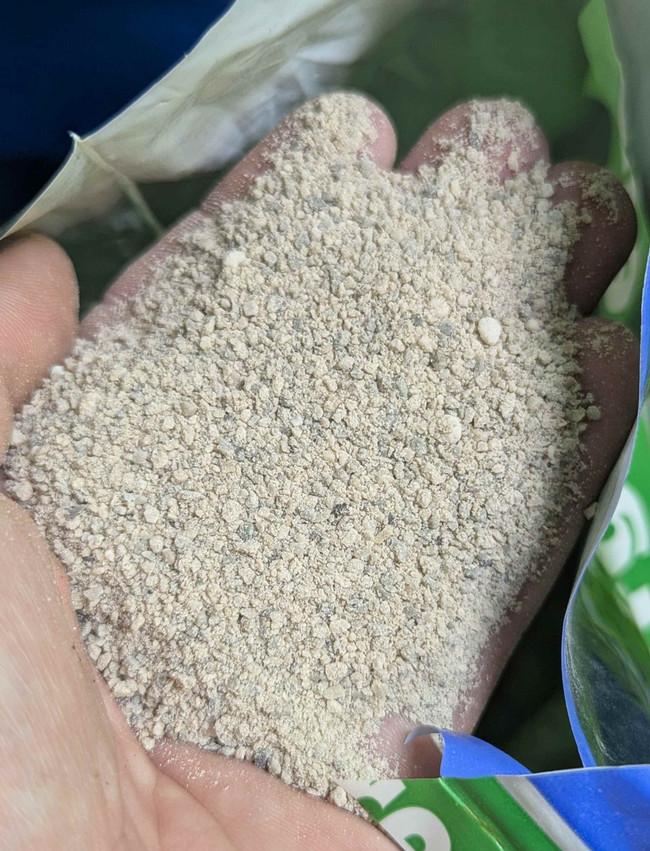
- Also known as lime, garden lime, agricultural lime, aglime, soil sweetener.
- Source of calcium. If dolomitic lime, will also contain magnesium.
- Mainly used as a soil amendment to balance and buffer pH, which helps increase nutrient availability and microbial activity. Can also be used to increase pH in acidic soils (hence the name “soil sweetener”).
- If magnesium is not needed, use calcitic lime.
- Can also help in reducing the concentration of elements such as aluminum (Al3+) and manganese (Mn2+), which can be harmful to plants if levels are too high.
Gypsum
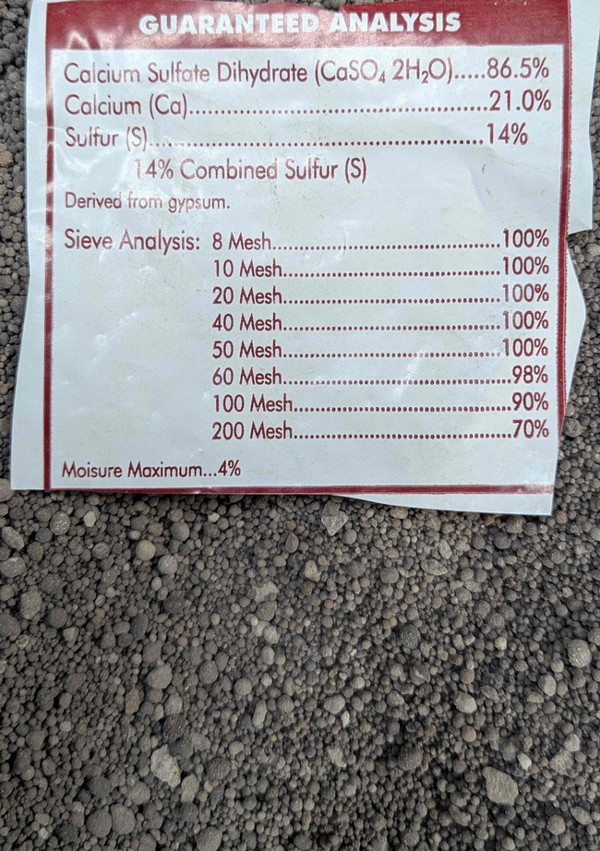
- Provides both calcium and sulfur and is moderately soluble in water. Nutrients are accessible fairly quickly compared with other rock-based materials.
- Can also help to improve soil structure in heavy clay and sodium-rich (sodic) soils
- Does not affect soil pH, unless very low (<4.5) or very high (>8.4).
Rock Phosphate
- Also called soft rock phosphate or colloidal rock phosphate.
- Source of phosphorus and some trace elements.
- Should be placed as close to plant roots as possible as plants absorb phosphorus directly through their roots and so need to be in contact with it.
- Very slow release – usually lasts years.
- Often sourced from caves and can be a product ofbats and their guano, which comes with many ethical considerations with respect to sustainability and human health.
Muriate/Sulphate of Potash (MOP/SOP)
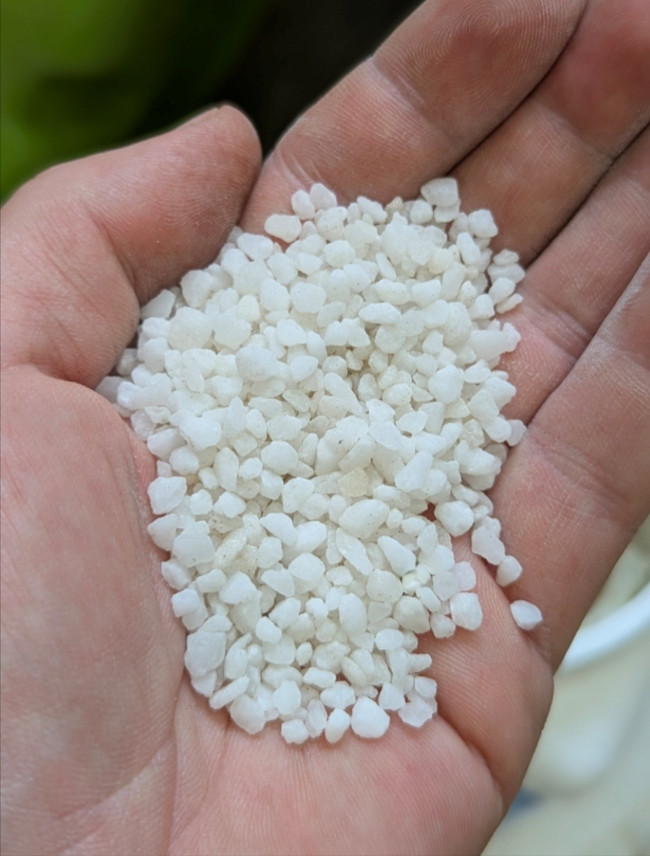
- MOP is potassium chloride (KCl) and often referred to as potash. SOP is potassium sulfate (K2SO4). Both are used as a potassium fertilizer. SOP also contains additional sulphur.
- Very soluble in water. MOP can cause issues due to its chloride content, which can increase the salinity of soils if overused. SOP does not affect salinity.
- MOP is produced by the mining of ancient salt deposits. These deposits contain various types of salts, which are then collected, separated, and concentrated to be packaged and sold. Canada, and specifically Saskatchewan, is the world’s largest producer of MOP.
- SOP can be produced naturally from evaporation of SOP-rich brines (very salty water), which forms crystalline salts which can be collected and concentrated, similar to MOP. Since these brines are relatively rare, however, it is more commonly made using industrial chemical processes.
Perlite/Vermiculite
- Used for increasing aeration and drainage in potting soil mixes, and to grow plants in soilless hydroponic systems. These amendments to not contain any nutrients.
- Perlite is created from the heating and expansion of volcanic glass (obsidian).
- Vermiculite is created by heating vermiculite clay, causing it to exfoliate and expand.
- Vermiculite has been associated with asbestos as some of the mines it was sourced from also contained this mineral. Current regulations require strict testing of all vermiculite products.
- Perlite is composed mostly of silicon dioxide (SiO2) and can be very dusty. Ensure proper protection and ventilation is used when working with perlite.
Diatomaceous Earth (Powdered Silica)
- Derived from the remains of microscopic algae called diatoms. They grow shells made of silica and in the ancient past when they died, their shells built up and form rocks which are then mined.
- Primarily used as an insecticide but can be incorporated into soils for additional silica. Silica has been shown to be used by plants to help with biotic and abiotic stresses such as drought, salinity, and predation by insects.
Other (Azomite, Greensand, Wollastonite, Basalt, Glacial Rock Dust)
- These products are simply ground rocks or minerals with various properties and assorted nutrient assemblages. The nutrient content is based on the mineralogy of the deposit (what it’s made of) as well as its chemical properties (how accesible the nutrients are).
- Most have low overall levels of nutrients and are often used as amendments rather than fertilizer as the time its takes for nutrients to become available tends to be very long (years).
- Can be highly variable between different companies depending on their source.
- Azomite, glacial rock dust, and basalt are mainly used for trace elements. Very minor amounts of potassium may also be present.
- Greensand has potassium and trace elements.
- Wollastonite contains calcium, silica, and minor amounts of magnesium.
- These products are easy to use and apply, but require a long-term plan to be used most effectively
- Not recommended for indoor or soil-less mixes (takes too long to break down).
________________________________________________________________________________________________________
Table 1. List of organic fertilizers and amendments with typical nutrient content and nutrient availability. Information adapted from product labels, Teaming With Nutrients (Lowenfels, 2013), and Whalen et al. (2020).
|
Fertilizer Type |
Nitrogen (N)% |
Phosphorus (P) % |
Potassium (K) % |
Trace Elements |
Nutrient Availability* |
|
Animal-Derived |
|
||||
|
Blood Meal |
12 |
0 |
0 |
+ |
Fast |
|
Bone Meal |
2-4 |
10-15 |
0 |
+ |
Medium |
|
Fish Bone Meal |
4 |
13 |
0 |
++ |
Medium - Fast |
|
Fish Emulsion |
5 |
2 |
2 |
+++ |
Fast |
|
Fish Hydrolysate |
2-4 |
2-4 |
0.5-2 |
+++ |
Medium - Fast |
|
Insect Frass (Cricket, Mealworm, Black Soldier Fly) |
3-7 |
2-3 |
2 |
+++ |
Fast |
|
Feather Meal |
7-12 |
0 |
0 |
+ |
Medium - Slow |
|
Crab/Shrimp Meals |
2-5 |
3-8 |
0-15 |
++ |
Medium - Slow |
|
Cattle Manure |
0-1 |
0-1 |
0-1 |
++ |
Medium |
|
Chicken Manure |
5 |
3 |
2 |
++ |
Medium - Fast |
|
Rabbit Manure |
0-1 |
0-1 |
0-1 |
++ |
Medium |
|
Wool Pellets |
10 |
0 |
2 |
+ |
Medium - Slow |
|
Bat Guano |
3-10 |
3-10 |
1 |
++ |
Fast |
|
Plant Derived |
|
||||
|
Alfalfa Meal |
3 |
0-1 |
2-3 |
+++ |
Medium - Fast |
|
Kelp/Seaweed (Liquid) |
0 |
0 |
3 |
+++ |
Fast |
|
Kelp/Seaweed (Powder) |
0 |
0 |
17 |
+++ |
Fast |
|
Other plant meals (corn, soy, cotton) |
7 |
2 |
1 |
+ |
Medium |
|
Wood Ash |
0 |
1 |
3 |
++ |
Medium - Fast |
|
Mined Product |
|
||||
|
Garden lime (CaCO3) |
0 |
0 |
0 |
+ |
Slow |
|
Dolomitic Lime (MgCaCO3) |
0 |
0 |
0 |
+ |
Slow |
|
Gypsum (CaSO4) |
0 |
0 |
0 |
+ |
Medium - Slow |
|
Rock Phosphate (Soft/Colloidal) |
0 |
2.5 - 13 |
0-1 |
+ |
Slow |
|
Rock Dusts (Basalt, glacial) |
0 |
0 |
0-1 |
++ |
Slow |
|
Wollastonite (CaSiO3) |
0 |
0 |
0 |
+ |
Slow |
|
Sulfate of Potash** |
0 |
0 |
50 |
N/A |
Medium |
|
Epsom Salts (MgSO4)** |
0 |
0 |
0 |
N/A |
Fast |
|
Azomite |
0 |
0 |
0 |
+++ |
Slow |
|
Diatomaceous Earth |
0 |
0 |
0 |
++ |
Slow |
|
Greensand/Zeolite |
0 |
0 |
0 |
++ |
Slow |
|
Other Amendments |
|
||||
|
Compost |
Variable |
Variable |
Variable |
Variable |
Medium - Slow |
|
Compost Teas |
Variable |
Variable |
Variable |
Variable |
Medium - Fast |
|
Worm Castings |
Variable |
Variable |
Variable |
+++ |
Medium - Fast |
|
Perlite |
0 |
0 |
0 |
N/A |
N/A |
|
Vermiculite |
0 |
0 |
0 |
+ |
N/A |
|
Biochar |
0 |
0 |
0 |
+ |
N/A |
|
Mulch |
0 |
0 |
0 |
+ |
N/A |
*Nutrient availability greatly depends on surface area of the fertilizer. In general, the finer the texture of the material, the more accessible it is likely to be. Availability is also highly dependent on local soil conditions and microbial activity.
** Mainly produced synthetically but some mines exist.
References
Compass Minerals. (n.d.). Ogden, Utah (solar evaporation pond). https://www.compassminerals.com/who-we-are/locations/ogden-utah/
Franzen, D., Rehm, G., & Gerwing, J. (2006, November). *Effectiveness of gypsum in the North-central region of the U.S.* North Dakota State University Extension Service. https://www.agronext.iastate.edu/soilfertility/info/EffectGypsumNCRegionUS.pdf
Hussey, T. (Host). (2026, February 10). Foundations series #1: Silicon in plant health & stress resistance with Dr. Wendy Zellner (Originally episode 98) [Audio podcast episode]. In Cannabis Cultivation and Science Podcast. Spotify. https://www.kisorganics.com/blogs/podcast/foundations-series-1-silicon-in-plant-health-stress-resistance-with-dr-wendy-zellner-originally-episode-98
Natural Resources Canada. (2026). Potash facts. https://natural-resources.canada.ca/minerals-mining/mining-data-statistics-analysis/minerals-metals-facts/potash-facts
Lowenfels, J. (2013). Teaming With Nutrients: The Organic Gardener’s Guide to Optimizing Plant Nutrition. Timber Press.
Saskatchewan Research Council. (2022, November 2). Helping industry produce premium potash to support the global agricultural community. https://www.src.sk.ca/blog/helping-industry-produce-premium-potash-support-global-agricultural-community
Whalen, J. K., Ziadi, N., Schoenau, J. J., Paré, M. C., Burton, D. L., & Bruulsema, T. (2020). Soil nutrient cycling. Digging into Canadian soils: An introduction to soil science. SaskOER. https://www.saskoer.ca/soilscience/chapter/soil-nutrient-cycling/
Zellner, W., Tubaña, B., Rodrigues, F. A., & Datnoff, L. E. (2021). Silicon’s role in plant stress reduction and why this element is not used routinely for managing plant health. Plant Disease, 105(8), 2033–2049. https://doi.org/10.1094/PDIS-08-20-1797-FE